Illustration: Liu Rui/GT
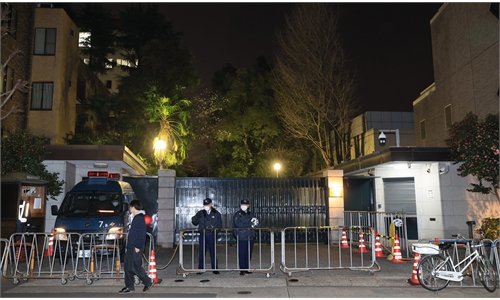
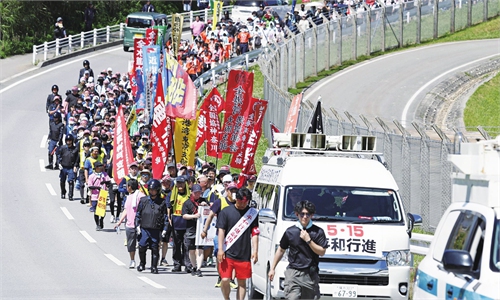
Following the incident in which Kodai Murata, a second lieutenant in the Japan Ground Self-Defense Force (JSDF), broke into the compound of the Chinese Embassy in Japan carrying a knife with an approximately 18-centimeter blade and threatened to kill Chinese diplomatic personnel in the "name of God," viral videos circulated online showing that more than 1,000 Japanese demonstrators gathered at Tokyo's Shinjuku station on Saturday to participate in a local peace festival. Holding placards and glowing sticks, the attendees chanted slogans such as "Apologize to China" and "Prime Minister Takaichi, apologize."In response to this egregious incident which undoubtedly violates the Vienna Convention on Diplomatic Relations and involves threats of violence, the Japanese government has resorted to its old tricks - attempting to gloss over the grave matter with a casual expression of "deep regret." Such evasive and irresponsible behavior is unworthy of a sovereign state and has raised profound doubts among both the Japanese public and the international community.
Following the incident, most Japanese people clearly recognize Japan's undeniable and irrefutable culpability in light of the evident facts. Many netizens expressed shock at how an active JSDF member could carry a bladed weapon, breach security defenses and break into a foreign embassy in Japan. They condemned the perpetrator for violating the law and damaging Japan's national image, and criticized the Tokyo police for their inadequate responses. Moreover, there are concerns that the incident may further strain the already frayed relationship between China and Japan. It's clear that Japan is in the wrong - an indisputable fact.
However, the Japanese prime minister and minister of defense have remained silent throughout. Japan's Chief Cabinet Secretary Minoru Kihara only repeated the word "regret" in his remarks, without issuing a formal apology or announcing specific accountability measures.
From Japan's Cabinet and Ministry of Foreign Affairs to the police and Self-Defense Forces, the entire Japanese official circle has tacitly downgraded the incident, reducing a serious diplomatic incident to a public security matter and framing systemic official dereliction as an isolated individual mishap.
Japanese media have largely maintained a collective silence, either avoiding coverage entirely or minimizing the incident to align with the Japanese government's attempt to "cool down tensions." Kyodo News even distorted the facts, trying to portray the knife-wielding embassy break-in as an attempt to "talk to the Chinese ambassador," a claim sharply refuted by a spokesperson for China's Ministry of Foreign Affairs: "Have you ever seen an individual who, armed with a knife, entered the embassy without permission to convey opinions to the ambassador?"
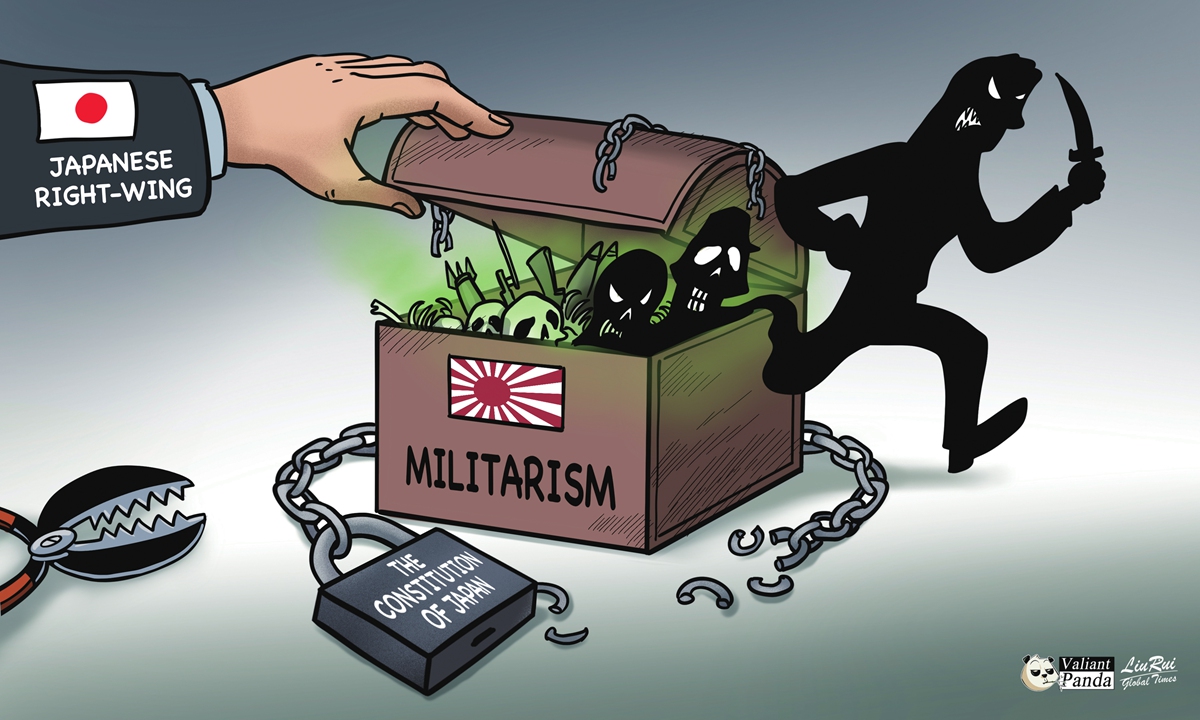
Japan is all too familiar with this playbook of shirking responsibility. From distorting history textbooks to downplaying its crimes of aggression, and from paying homage at the Yasukuni Shrine where Class-A World War II war criminals are enshrined to denying the historical facts of forced "comfort women" and forced laborers, Japan has clung to an absurd logic: If it remains silent long enough and downplays issues hard enough, responsibilities will fade with time. Its evasion of war crimes in the past was an attempt to muddle through historical accountability over time; its low-key handling of the embassy break-in today is an attempt to evade real-world consequences through silence. Clearly derelict in duty yet unwilling to take accountability; clearly provoking tensions yet shifting blame to others - irresponsibility is deeply ingrained in Japan's approach to crisis response. The break-in by an active JSDF member armed with a knife has torn apart the fig leaf covering Japan's accelerating rightward shift, flawed historical education and lack of accountability. Japan must abandon the illusion of downplaying major incidents and getting away with wrongdoing. It needs to confront its culpability, investigate the truth of the incident, hold those responsible accountable and extend a formal and sincere apology to China.
Under the Vienna Convention on Diplomatic Relations, embassy premises are inviolable; the receiving state bears a special obligation to take all appropriate measures to protect embassy premises from intrusion or damage and to prevent any disturbance of embassy peace or affront to its dignity. What happened this time was an attack on the Chinese Embassy in Japan - would Japan respond in the same way if one of its embassies were targeted? Japan owes the international community a responsible answer. If it sinks deeper into the mire of shirking responsibility, it will earn no forgiveness, only condemnation from the whole world.
The author is an international affairs commentator. opinion@globaltimes.com.cn
RELATED ARTICLES