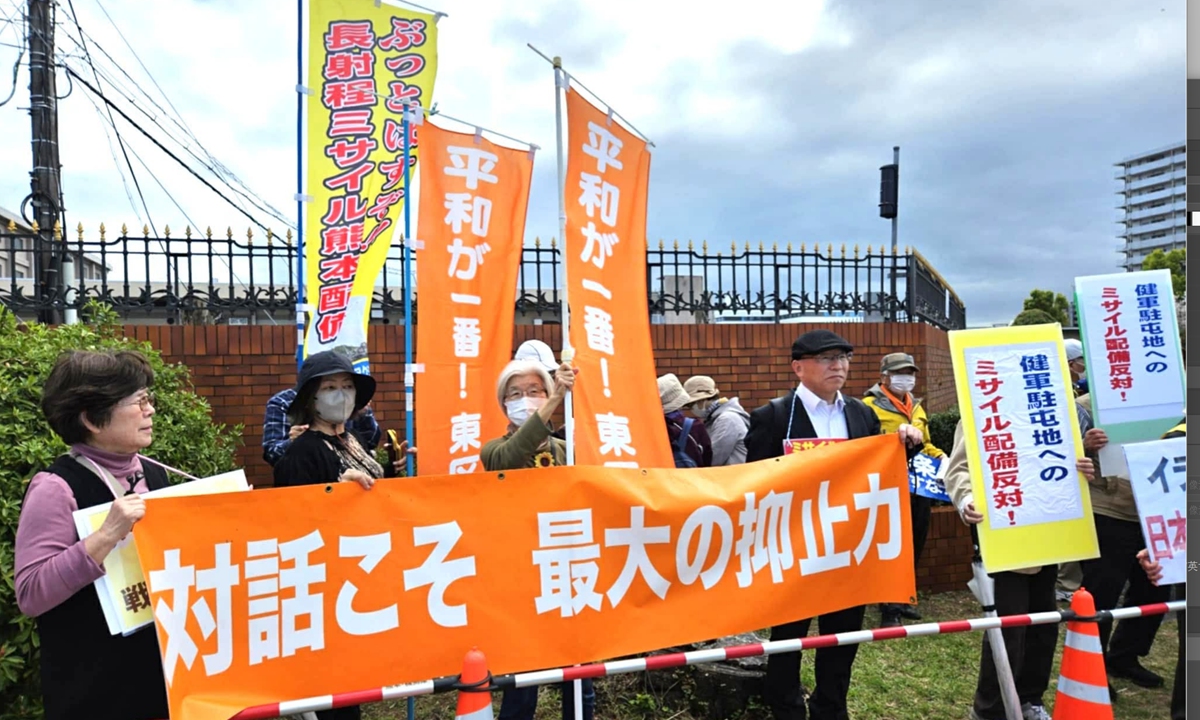
Local residents gather near Camp Kengun in Kumamoto, Japan, on March 31, 2026, to protest against the deployment of the Type-12 anti-ship guided missiles. Photo: Courtesy of Takabayashi
Editor's Note:March 31 sees the deployment of the long-range missiles with counterstrike capabilities at two Ground Self-Defense Force (GSDF) bases in Japan, one of which is Camp Kengun in Kumamoto Prefecture. As the local residents live in such close proximity to the deployment site, how do they view this development? Their voices, however, are often overlooked or muted by Japan's mainstream media. In an exclusive interview with Global Times (GT) reporters Xing Xiaojing and Liu Xuandi, Hideaki Takabayashi (Takabayashi), a Kumamoto-based university professor and member of the Stop Long-Range Missiles-Kumamoto Citizens' Association, shared his perspectives on the questions.
GT: It is reported that Japan's Defense Ministry transported the Type-12 anti-ship guided missiles to the Japan GSDF's Camp Kengun in the city of Kumamoto and deployed them on March 31. What impact has this had on local residents' sense of security and their daily lives? How have local residents responded?
Takabayashi: I live about 200 meters from the GSDF's Camp Kengun. The camp is located in the center of a residential area about 1.5 kilometers from the Kumamoto Prefectural Government Office. Within a two-kilometer radius, there are 29 childcare facilities, 12 elementary schools, 7 junior high schools, 8 high schools and a university. It is natural that local residents feel anxious about the deployment of long-range missiles in such an area, especially with plans to build two ammunition depots within the base.
Another reason for the growing anxiety is that the [Japanese] Ministry of Defense has not held any explanatory meetings for residents since the announcement of the deployment on August 29, 2025. The Kyushu Defense Bureau has merely posted a brief explanation on its website and has provided a contact point for inquiries. Camp Kengun is home to the headquarters of the GSDF's western regional command headquarters, which oversees Kyushu and Okinawa. Deploying the long-range missiles and ammunition depots there would make it more likely to become a target for other countries. When we raised concerns about these risks, the responses we received, such as "it is for deterrence" and "[the] launches would not necessarily occur from the base," did nothing to ease residents' fears.
As the end-of-March deployment deadline approached, the Ministry of Defense invited the governor of Kumamoto Prefecture, the mayor of Kumamoto City and leaders of the community organizations to attend an exhibition of missile launchers and other equipment. However, this was entirely different from the face-to-face explanatory meetings we had been calling for, and can only be seen as a perfunctory activity aimed at deflecting public criticism.
GT: Have residents in Kumamoto organized any protests? What drives their continued opposition, and how has the Japanese government responded?
Takabayashi: In fact, many residents oppose the missile deployment. A survey conducted by the Kumamoto Nichinichi Shimbun found that 59.1 percent of respondents said they did not accept (including "somewhat do not accept") the deployment.
After the deployment plan was announced in August last year, 12 civic groups, including the Kumamoto chapter of the Women's Association for Peace and Against Military Expansion, submitted a petition to the prefectural government, urging it to call on the central authorities to withdraw the plan. The prefectural government responded by saying that national defense falls under the central government's jurisdiction and advised directing requests to the Kyushu Defense Bureau instead. At a prefectural assembly session in September, the governor reiterated that he was not in a position to judge national defense policy. The mayor of Kumamoto City took a similarly "weak" stance, as described by local media. Since then, local authorities have not taken a clear position toward the central government regarding the impact on residents' living environment.
We later held a rally in the Kengun Shopping Street opposing the deployment of long-range missiles, with around 1,200 citizens participating. On February 23, 2026, we also organized a "Peace Circle" event encircling the base, with about 1,200 participants from more than 30 groups across the country, calling for the cancellation of the deployment and the holding of explanatory meetings for residents. On Tuesday, the day the missiles were deployed, we once again took to the streets to protest and make our opposition heard.
GT: The deployment has been moved forward by one year, as part of Japan's "counterstrike capability" to deter "enemies." Do you think the claim is reasonable and justified?
Takabayashi: I do not believe this is a realistic way to achieve peace. Deterrence cannot bring about peace. It is necessary to move beyond an international order based on the logic of the "strong preying on the weak." Non-war and disarmament should serve as fundamental principles, with peace built through human wisdom and dialogue. This is the only way to transcend the deterrence dilemma.
The Japanese government has repeatedly justified the deployment by claiming that Japan faces the most severe and complex security environment since World War II and needs to strengthen deterrence. However, military buildup does not create deterrence. This "most severe and complex security environment" is itself a byproduct of military pressure exerted on neighboring countries through the joint Japan-US military exercises and other actions. It is, in effect, something deliberately shaped by the ruling elites of Japan and the US. Moreover, the notion of "potential adversaries" has likewise been constructed by the political, business, bureaucratic and media circles in both countries.
Since the beginning of the 21st century, the US has pursued a policy of containing China out of concerns over its rise. Using this as justification, the US has pushed its allies to increase military spending and expand arms purchases, and Japan has responded by significantly raising its defense budget. This has intensified fiscal pressures, squeezed social welfare and harmed Japanese people's livelihood, lacking both rationality and legitimacy for Japan and its neighboring countries alike.
GT: Japan has long emphasized an "exclusively defense-oriented" policy, but the missiles deployed this time have a range of about 1,000 kilometers and clearly possess offensive capabilities. Does this signify a shift in Japan's security policy? What kind of effect can this have on the future of Japan?
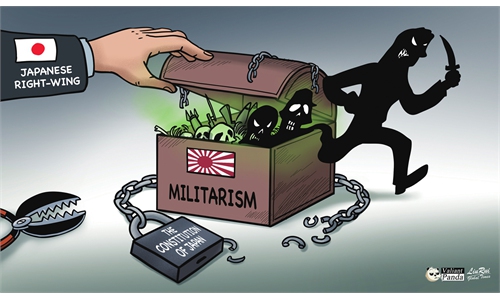
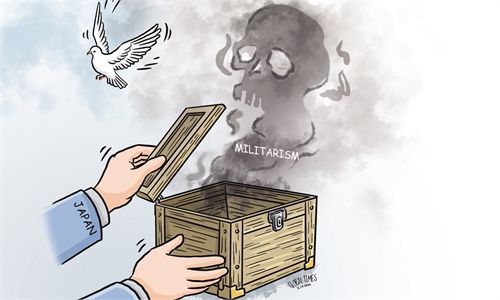
Takabayashi: Japan's constitution is founded on the principles of popular sovereignty, fundamental human rights and pacifism. The deployment of long-range missiles threatens the right to peaceful existence of people in Asia, including Japan, and clearly violates the principle of "exclusively defense-oriented" policy, thereby making it unconstitutional. These policies are based on the three national security documents approved by the [Japanese] cabinet in December 2022, without deliberation in the Diet, thereby undermining the principle of popular sovereignty. Japanese politicians should reflect on the history of past wars of aggression and uphold the constitution.
Although current policies attempt to shift Japan's security trajectory, public opinion still supports the "pacifist constitution." According to an NHK survey in 2024, more than 60 percent of the public evaluate Article 9 [of the Japanese constitution] positively. By pushing forward with the deployment without adequate explanation, the [Japanese] government's approach is flawed both substantively and procedurally. Security policy must be grounded in the constitution, and pacifism should be upheld through civic engagement and public movements to resist military expansion.
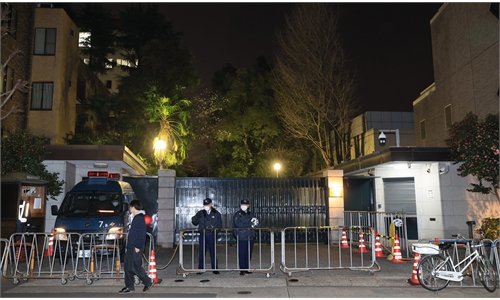
GT: Recently, an active-duty officer of the Japan Self-Defense Forces forcibly broke into the Chinese Embassy in Japan, drawing public attention. In recent years, right-wing forces in Japan have been accelerating the efforts to shift security policy and promote remilitarization. Do you think these trends have already affected Japan's social atmosphere? What concerns do you have as an ordinary citizen?
Takabayashi: Most Japanese remain rational and see this as the act of a small number of right-wing elements. But such incidents are partly linked to hardline rhetoric toward China by some political figures, for example, Prime Minister Sanae Takaichi's remarks on the "Taiwan contingency," which have contributed to negative sentiments among the public.
Domestically, Japan's relative poverty rate is about 15 percent. In this context, many Japanese ordinary people feel compelled to weigh their surroundings carefully before expressing their views. As a result, compliance is often seen as safer than speaking out, and this mind-set has gradually spread. Hardship can erode both judgment and emotional resilience, sometimes leading to irrational behavior.
Over time, successive Liberal Democratic Party governments, including the current Takaichi administration, have contributed to this situation. What is needed is a deeper transformation of Japan's policy and institutional framework. Shifting domestic problems into dissatisfaction with other countries - whether through political rhetoric or rising anti-China sentiment - is, in my view, irresponsible and even shameful. Japanese society should more critically reflect on its power structures and confront its own underlying challenges.
RELATED ARTICLES