Illustration: Liu Rui/GT
Editor's Note:In the face of the various impacts brought about by the US-Israel war against Iran, countries of the Global South, due to their relatively fragile economic foundations, are confronting more severe shocks than their developed counterparts. This is especially true for those more dependent on external energy sources, as oil shortages could lead to food crises, energy crises and geopolitical tensions. In response, some Global South countries have begun exploring joint pathways. The Global Times invites voices from the Global South to share how these countries can navigate potential crises amid the current US-Israel war against Iran.
Javier Vadell, a professor of international relations and chair of the Contemporary China Center at the Pontifical Catholic University of Minas Gerais in Brazil
Since the onset of the conflict involving the US, Israel and Iran, Brazil's foreign policy has followed several clear guiding principles.
While consistent with its diplomatic traditions, this policy has been tempered by heightened caution in response to the aggressive US actions in the Western Hemisphere, specifically a revitalization of the Monroe Doctrine across Latin America and the Caribbean. Consequently, Brazil, as a representative of the Global South and Latin America's largest economy, prioritizes the BRICS group and South-South relations to diversify its trade partnerships and investment streams.
The Global South's reaction to the US-Israel military actions against Iran has been defined by three primary themes: diplomatic condemnation, profound economic anxiety and strategic restraint. While the Global South is far from a monolithic bloc - often divided by internal contradictions and competing interests - certain behavioral patterns have emerged.
Many countries across Latin America, Africa and Asia interpret the strikes as a breach of state sovereignty and a continuation of US-led interventionism that destabilizes the global order.
Economic repercussions are another major point of concern. The conflict is already precipitating direct shocks, including a surge in oil prices, a heightened risk of a global energy crisis, and disruptions to vital food and fertilizer supply chains. Given that oil is deeply embedded in global trade and finance, energy-importing countries, particularly in Africa, are bracing for severe inflation and a spike in the cost of living, while the most vulnerable face the threat of famine. History demonstrates that conflicts between major powers disproportionately penalize the Global South, even when these countries remain non-belligerents.
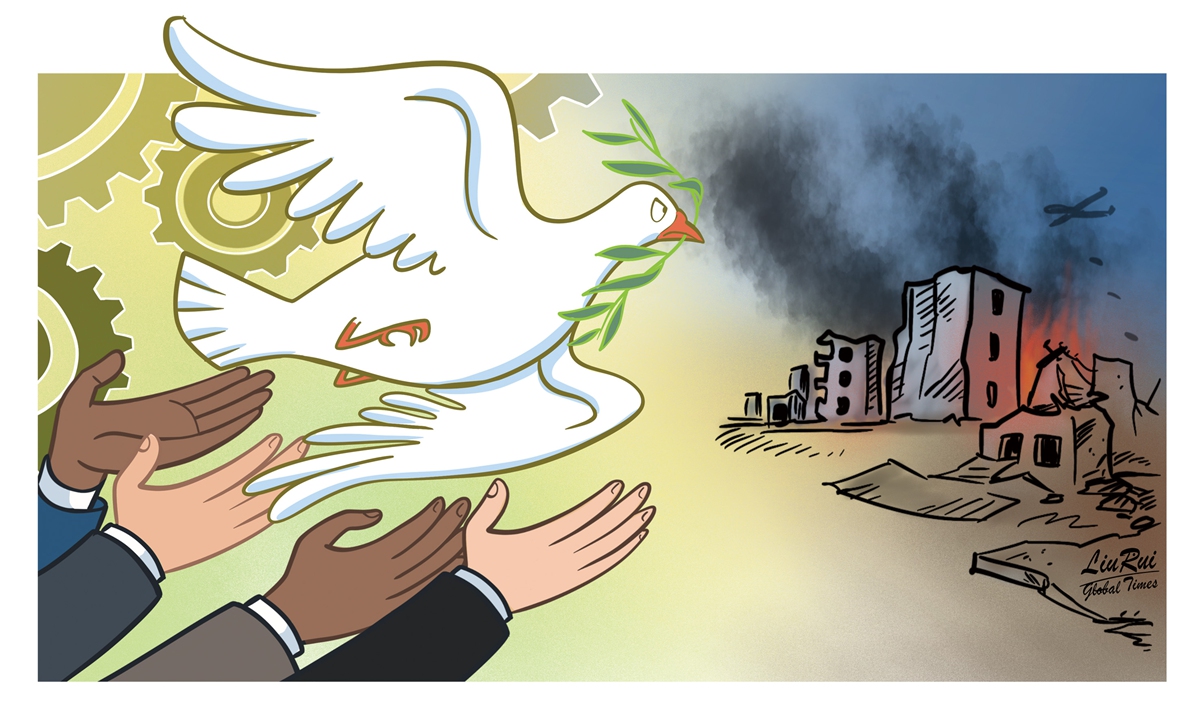
Consequently, in practice, their approach has been defined by advocating for an immediate cease-fire and dialogue, maintaining strategic neutrality and insulating their own economic interests.
In the specific case of Brazil, the sole Latin American full member of BRICS, the commitment to multilateralism is paramount. By championing the UN and diplomatic dialogue, Brazil practices a form of active neutrality that shuns automatic alignment in favor of keeping communication lines open to all sides.
Disturbed by the potential for military escalation, Brazil has highlighted the conflict's broader threats to global energy and trade security. This strategy is part of a larger quest for strategic autonomy during these turbulent times.
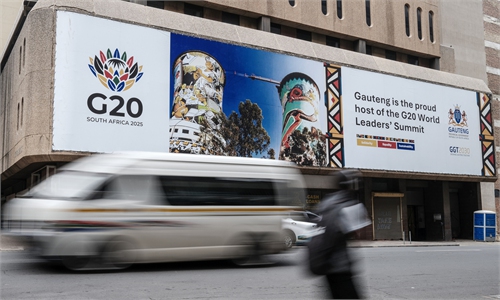
In short, Brazil aims to be a moderating actor, avoiding friction with major powers while deepening ties with Global South partners like South Africa to better manage the challenges of a complex multipolar world.
Sheradil Baktygulov, director of the Institute of World Policy of Kyrgyzstan
The US-Israel war against Iran shows that the current actions of the US and Israel are gradually turning into an existential threat to the Global South countries. There are hundreds of thousands of civilian victims. Homes, schools, hospitals, museums, and monuments of human heritage have been destroyed purposefully.
If Iran falls, the US would be emboldened to go ahead with similar regime-change attempts in other countries around the world. It means recolonization of the Global
South, if not directly, but recolonized in terms of establishing regimes that are subservient to the Global North led by the US.
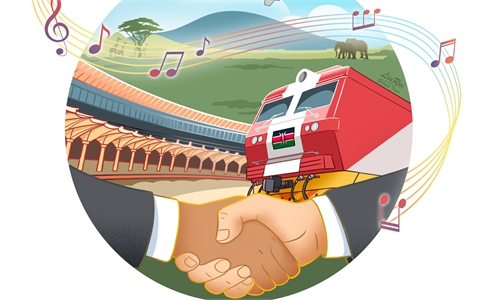
Kyrgyzstan is a country with a small economy, and this circumstance determines the country's weight in international relations. As a result, the voice of Kyrgyzstan is not widely heard. And Kyrgyzstan is not the only country to find itself in this situation. Many countries of the Global South are in the same situation. But when divided voices unite into a single chorus, it can become a powerful symphony, the symphony of peace and respect, and a move toward sustainable development.
The issue is how to make the voices of the Global South heard. Probably, the most efficient way is to build a self-sufficient and strong economy of the Global South community. There are groupings of developing countries oriented at fostering economic cooperation, political cohesion and a multipolar world order.
Key organizations designed to facilitate South-South cooperation include BRICS, the G77, ASEAN, the African Union, and the Arab League. BRICS seems to be the most efficient case of an organization that is fostering interregional economic cooperation among emerging economies of four continents - America (Brazil), Africa (South Africa), Asia (China and India) and Europe (Russia). The self-sufficient economy of the Global South is not about confrontation. It is about building mutually beneficial cooperation between the Global North and the Global South. Humanity deserves peaceful development toward common prosperity.
Joyce Chimbi, a Kenya-based journalist
The Global South is bearing the brunt of the conflict and consequences of the US-Israel war against Iran, which has multiplied economic anxieties by disrupting shipping routes amid growing concerns over the safety of millions of its citizens in the Gulf countries.
The Horn of Africa is particularly vulnerable due to its heavy reliance on fuel imports and its proximity to the Red Sea. Agricultural production in North Africa is at risk as fertilizer prices soar, while the Sahel region deals with the dual challenge of geopolitical risks and internal security crises.
South Africa has been vocal in its condemnation of the war. The African Union and key nations such as Kenya, Nigeria and South Africa are working closely with the wider Global South and particularly China in their calls for maximum restraints, prioritizing global stability to avert further disruption to global trade and security.
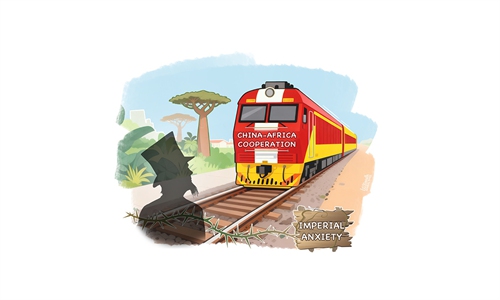
There is increased partnership between Africa and China as the BRICS+ bloc, comprising many key emerging economies in the Global South, is providing economic protection to African countries by expanding trade opportunities to significantly reduce reliance on raw commodity exports.
BRICS is actively providing alternative financing and promoting local currency usage to reduce dependency on the US dollar. South African businesses can transact with China in rand and yuan, a critical move against dollar fluctuations that could trigger a debt crisis.
Ethiopia, Egypt and South Africa are particularly leveraging their positions in the BRICS+ group to unify the Global South to strengthen its economic influence amid the crises. As tensions remain in the Strait of Hormuz, African suppliers such as Nigeria and Angola are emerging as an attractive alternative route.
Nigeria is predominantly expanding oil and refined fuel exports to new regional markets amid a strong likelihood to penetrate other markets in the wider Global South. China maintains strong ties with oil exporters in Africa, actively seeking to diversify by importing from Africa as a broader long-term strategy.
Overall, the Global South is building a model of navigating complex diplomatic, economic and strategic interests toward a society that promotes peace, cooperation and friendship. As the old-world order crumbles, the Global South is stepping up.
RELATED ARTICLES