‘Japan should apologize and take this opportunity to resume dialogue with China’: Japanese scholar
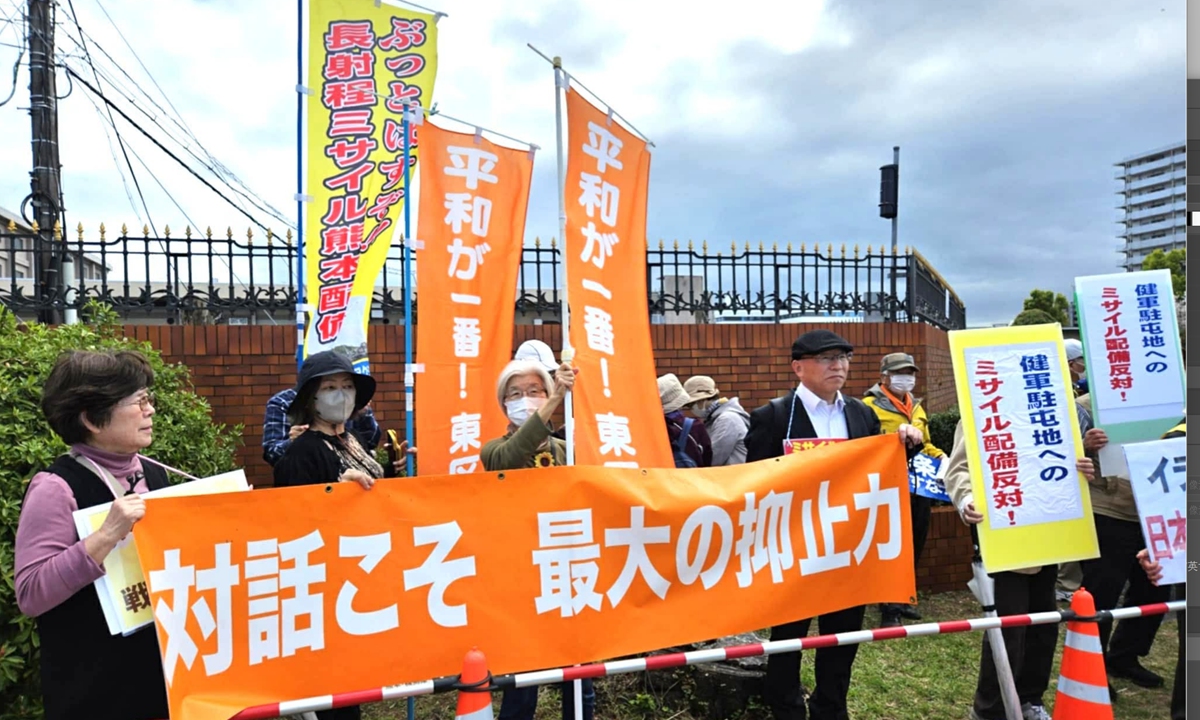
Local residents gather near Camp Kengun in Kumamoto, Japan, on March 31, 2026, to protest against the deployment of the Type-12 anti-ship guided missiles. Photo: Courtesy of Takabayashi
Editor's Note:More than 1,000 Japanese citizens gathered recently to protest a series of dangerous policy moves since Prime Minister Sanae Takaichi took office, demanding that the government properly handle the incident in which a Japanese Self-Defense Forces (SDF) officer forcibly entered the Chinese embassy in Japan. How is the embassy intrusion incident perceived by the Japanese public, and what do they believe the Japanese government should do in response? In an interview with Global Times (GT) reporter Liu Xuandi, Jiro Yamaguchi (Yamaguchi), a professor at Hosei University, shared his perspectives.
GT: How would you describe current public sentiment in Japan regarding the embassy intrusion by an active-duty Japanese SDF officer armed with a knife?
Yamaguchi: Currently, many Japanese experts and public figures, including relatively conservative commentators whose views align with the Japanese government's position, have urged the government to offer an apology to China in accordance with international law regarding the incident.
The responsibility for the incident lies with the Japanese side.
There is a general consensus among Japanese scholars and the public that Japan's most prudent course of action is to formally apologize and take this opportunity to resume dialogue with China.
While it is difficult to gauge how widely a sense of crisis is shared among the general public, many in the older generation - who have long supported Japan's postwar path of peaceful development - are reminded of pre-war acts of violence by Japanese military personnel and feel that the country may be drifting in a dangerous direction.
GT: The Japanese government has only expressed that the incident was "regrettable," without offering an apology or announcing specific accountability measures. How do you assess the Japanese government's response so far? To what extent do you think the long-term rightward shift in propaganda and calls for military expansion should be held accountable for the incident?
Yamaguchi: Since making remarks regarding the "Taiwan contingency" in November, Takaichi has seemingly internalized the idea that taking a hardline stance toward China can help her win public support. Even in this case, where responsibility clearly lies with the Japanese side, offering an apology to China might be seen as undermining her "tough-on-China" image. In my view, this is why the Japanese administration has offered nothing more than saying the incident was "regrettable" as a perfunctory workaround.
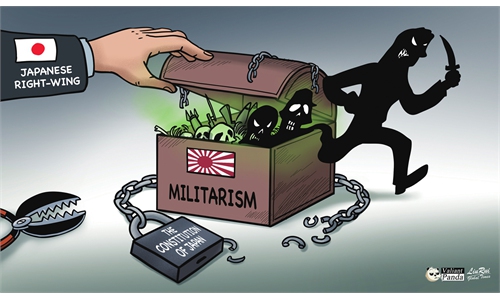
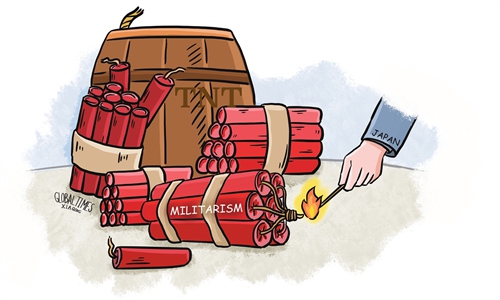
Although I lack sufficient data to fully evaluate how the defense buildup since the second Abe administration has influenced SDF rank-and-file personnel, it is hardly surprising that there are individuals within the SDF who hold views favoring constitutional revision or historical revisionism.
In fact, it is a matter of record that the SDF has invited right-wing commentators with revisionist views to lead personnel training sessions. Therefore, it is imperative that SDF education and training be brought under closer civilian oversight, with a commitment to transparency and public disclosure.
GT: Some Japanese media outlets downplayed the severity of the intruder's crimes and instead urged that China correct its "bad habit" of criticizing Japan. How do you view this narrative?
Yamaguchi: Japanese media have gradually lost their capacity to critically scrutinize those in power over the past two decades. In this weakened state, criticizing China has become the easiest and most convenient topic for them.
GT: In light of Japan's shifting security posture, how would you characterize this incident? What path should Japan take moving forward?
Yamaguchi: Takaichi has wielded power in an increasingly autocratic manner since the Liberal Democratic Party's landslide victory in the House of Representatives election in February. Her perceived sycophancy toward US President Donald Trump during their recent summit triggered a backlash from many scholars and experts.
Meanwhile, the US is pressing Japan to make military contributions to its war with Iran, as the conflict drags into a prolonged stalemate. While the dispatch of the SDF was not raised during the summit, it is possible that Washington may bring this issue to the table in the future.
Japan now faces a critical choice: whether to uphold its constitution, distance itself from American adventurism and pursue an independent path, or to continue making concessions and move toward military involvement.
If Japan really seeks to pursue a path of creating peace, dialogue with neighboring Asian countries is indispensable.
This incident should serve as an opportunity to reopen channels of communication with China. At the very least, Japan's opposition parties should advocate for such a proposal.
RELATED ARTICLES