Illustration: Liu Rui/GT
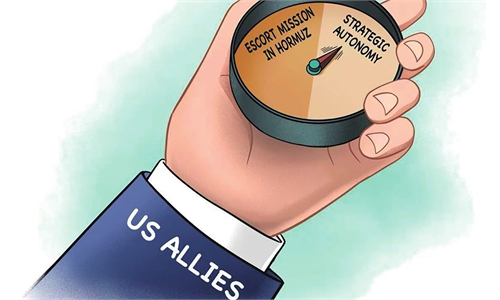
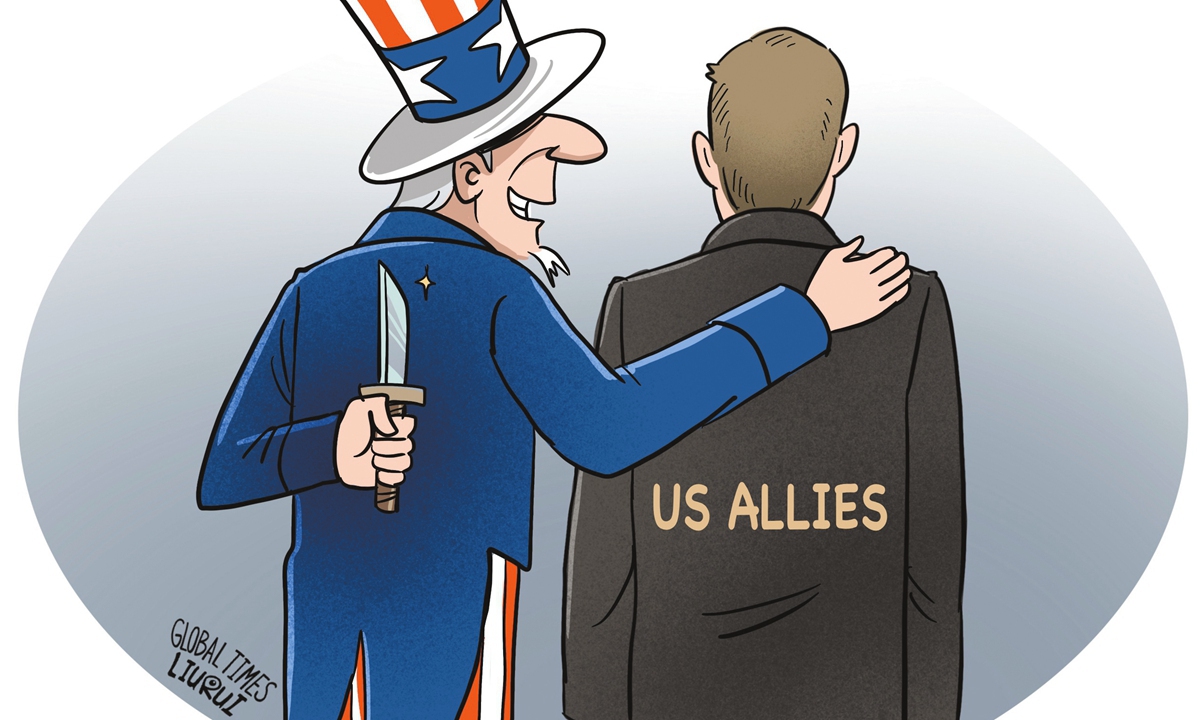
The prolonged and escalating crisis in the Middle East has delivered a stark warning to US allies in Asia. As the US military reportedly redeployed THAAD and Patriot missile defense systems from South Korea and warships from Japan to the Persian Gulf, the myth of US "security guarantee" to its allies was shattered instantly. This large-scale military reshuffle - robbing Peter to pay Paul - reveals two hard truths for those host countries. First, US troops are a burden rather than a shield and are simply unreliable. Second, US military bases are targets of conflict rather than sources of protection, and will only stir up resentment. To achieve genuine security, Asian nations must stop being the pawns of a hegemon and pursue an independent policy of peace.
The high-intensity attrition of the Middle East conflict has pushed US military stockpiles to the brink of exhaustion. When domestic production capacity failed to replenish supplies in time, Washington turned to its Asian allies.
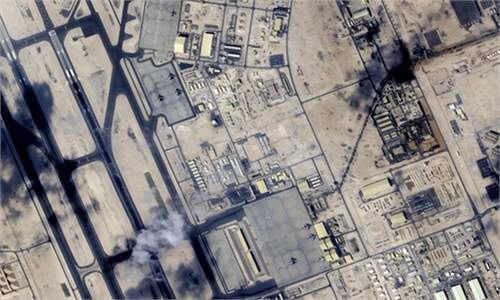
South Korea was the primary target. According to local media reports, the US military's Osan Air Base has been unusually busy since late February 2026, with C-5, C-17 and other transport planes taking off and landing intensively to airlift Patriot air defense systems and other equipment to the Middle East on an emergency basis. What sent shockwaves through the South Korean government and public even more was that the US military did not spare the THAAD missile defense system, which had been touted as a safeguard for the security of the Korean Peninsula, and quietly transferred its core components. South Korea pays about $1 billion annually to host US troops, yet ultimately finds itself footing the bill for Washington's global strategy. The ineffectiveness of its objections underscores Seoul's awkward position.
Japan's predicament is even more passive. Japanese media have revealed that US naval vessels stationed in Japan have been redeployed to the Persian Gulf to participate in military operations against Iran. Under the US-Japan Security Treaty, Japan's provision of facilities and land to US forces is conditional on safeguarding Japan's security and maintaining peace and stability in the Far East. Additionally, US forces stationed in Japan are required to consult with the Japanese side before conducting overseas combat operations. It seems Washington has clearly ignored both provisions, not even bothering to inform Tokyo. In stark contrast to South Korean politicians who have voiced their dissatisfaction, the Japanese government has remained silent, revealing an obsequious obedience toward the US.
From South Korea's "forced concessions" to Japan's "silent obedience," the plight of US allies lays bare a cruel reality: The US military's "security commitments" always serve Washington's own interests, and the "guarantee" to its allies can be sacrificed at will. When these countries realize that the expensive "bodyguards" they have invited may leave at any moment, will they still be willing to play the fool?
US unreliability has plunged its Asian allies into "security anxiety," while the US military bases scattered across Asia expose the host countries directly to the risk of fighting someone else's war. US military bases have never been shields; they are targets that attract resentment. In the Middle East, US bases in several countries have been attacked, making those nations "frontlines" of conflict. This could also happen in Asia. Okinawa could be the most affected, housing more than 70 percent of US forces stationed in Japan. US military bases in South Korea also harbor notable risks.
US military bases bring risk, not peace, to their host countries. These bases are like powder kegs; once a conflict breaks out, the host countries are dragged into the quagmire of war. As the Middle East crisis has shown, more US military bases do not equate to greater security - this is a security trap that all Asian countries must strive to avoid.
For US allies in Asia, breaking the myth of "US security umbrella" and seeking an independent path to security is the only long-term solution. Genuine security begins with independence. It lies not only in parting ways with US military bases but, more importantly, in upholding diplomatic autonomy - breaking free from strategic dependence on the US and making choices based on one's own interests, as well as regional peace and stability.
When China advocates an Asian community with a shared future and a new Asian security concept, it expresses the desire for all Asian countries to respect each other as equals, resolve differences through dialogue and consultation, enhance mutual trust through mutually beneficial cooperation, abandon the Cold War mentality and outdated notions of zero-sum games, transcend the old security concept rooted in hegemonic logic, and embark on an Asian security path of collective efforts, shared benefits, and win-win outcomes. This is precisely the lesson the Middle East crisis has brought to Asia.
The author is an international affairs commentator. opinion@globaltimes.com.cn
RELATED ARTICLES