Illustration: Chen Xia/GT
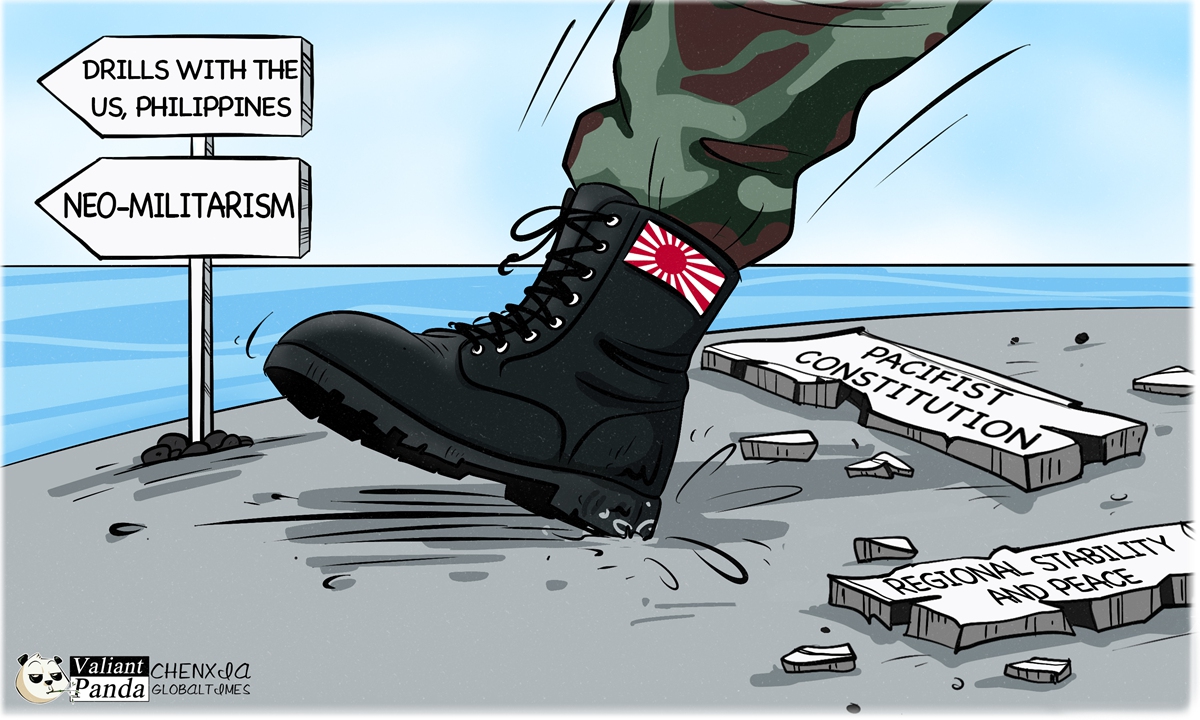
On Monday, the 2026 Salaknib - meaning "shield" in Ilocano - joint military exercise between the Philippines and the US kicked off on the island of Luzon in the northern Philippines. The most striking development this year is that Japan's Ground Self-Defense Force (GSDF) made its official debut as a participant in the drills, including the follow-up Balikatan - meaning "shoulder-to-shoulder" in Tagalog - exercise.
In contrast to last year's presence as an observer, Japan this time has deployed 420 GSDF personnel. This marks a historic breakthrough: For the first time in the 81 years since the end of World War II (WWII), Japanese combat troops have set foot on Philippine soil. In terms of regional security, it signals the rapid acceleration of a trilateral military network rooted in the "Indo-Pacific Strategy," with the US-Japan alliance acting as its primary axis. Inevitably, these shifts are fueling deep-seated regional anxiety.
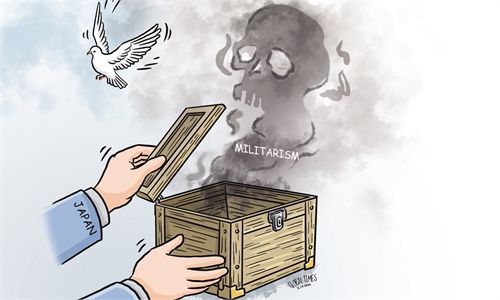
First, without a proper reckoning with history, Japan's participation in the drills has, in fact, bypassed its pacifist constitution. The exclusively defense-oriented policy based on Article 9 of the Japanese Constitution has long been the bedrock of Japan's post-WWII commitment to peaceful development. However, Japan's persistent attempts to deny or whitewash its war aggression history suggest it has yet to truly confront its past, a fact that remains a point of contention for China, South Korea, Singapore and other regional countries. By formally joining military exercises in the Philippines and landing troops there, Japan is accelerating its departure from the pacifism to which it committed. Its intent to use the Philippines as a springboard to expand its military presence and influence in Southeast Asia and around the South China Sea introduces unprecedented volatility to the region.
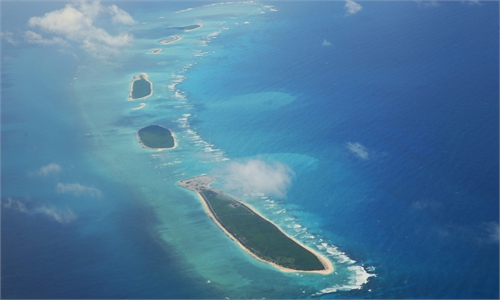
Second, Manila's increasingly radical South China Sea policy and its reliance on external powers like Japan are complicating the dispute. In recent years, the Marcos administration has adopted a hardline stance toward China while leaning heavily on the US. Beyond provocations at several islands and reefs in the South China Sea, Manila has bolstered its alliance with Washington and invited external strategic support from Tokyo through frameworks like the 2025 Reciprocal Access Agreement and the 2026 Acquisition and Cross-Servicing Agreement. These paved the way for Japan's full participation in this year's drills.
Moreover, just this February, the Philippines, together with the US and Japan, conducted its 15th Multilateral Maritime Cooperative Activity military exercises in the South China Sea. This demonstrates that the South China Sea has become the focal point for the Philippines to consolidate its alliance with the US and expand its military cooperation with Japan, hoping to modernize its own military capabilities in the process. Consequently, the accelerating formation of such a trilateral network is heightening the risk of confrontations in the region, leaving neighboring states in a state of high alert.
Third, the US-led "Indo-Pacific Strategy" is driving a more militarized and confrontational regional dynamic. Under Washington's push, Japan's participation in a series of overseas military drills provides the US with reinforced allied support for its intervention in Southeast Asian and South China Sea affairs. Because the exercises are centered in Luzon - covering areas near the Taiwan Straits and the South China Sea, the stability of the region is facing the increasingly significant impact of Washington's militarized regional strategy. Reports indicate that frequent US patrols and drills in the region, combined with "reciprocal tariffs" and interference in other countries' domestic affairs, have damaged the US image in the region, leaving the Southeast Asian public deeply concerned about Washington's role.
Finally, starting with this year's Salaknib and the subsequent series of military exercises, Japan's evolving military role and the future of US-Japan-Philippines relations will cast a long shadow over regional stability. This trend is inextricably linked to Japan's continuous glorification of its history, increasing rightward shift and desire to amend its pacifist constitution to shed post-WWII constraints. There is also a growing anticipation that Japan may use its agreements with the Philippines to establish a permanent presence or deploy heavy weaponry there. As Japan breaks through these barriers, Southeast Asia risks becoming a "frontline" for the US-Japan alliance's confrontational strategy.
Most concerning is that if a trilateral relationship among the US, Japan and the Philippines evolves into a formal multilateral alliance, it will accelerate the building of an Asia-Pacific version of NATO, further exacerbating the region's uncertainty and instability. Such a development would undermine the shared vision of China and the majority of Southeast Asian nations to maintain peace, security and multilateral cooperation. Clearly, most regional states recognize this danger and are fundamentally unwilling to see this scenario become a reality.
The author is a research fellow at the ASEAN Research Center at Guangxi Minzu University. opinion@globaltimes.com.cn
RELATED ARTICLES