Illustration: Liu Rui/GT
Beijing is bustling in April. Flags of multiple countries have once again lined Chang'an Avenue, turning it into a globally watched "meeting room of the world."
In just 10 days, foreign dignitaries including Her Royal Highness Princess Maha Chakri Sirindhorn of the Kingdom of Thailand, Spanish Prime Minister Pedro Sanchez, Crown Prince of Abu Dhabi Sheikh Khaled bin Mohamed bin Zayed Al Nahyan, Vietnamese President To Lam, and Russian Foreign Minister Sergei Lavrov have visited China in succession. Leaders from various countries - including the US, Russia - have also announced upcoming visits.
From neighboring countries to European states, from conflict-affected regions in the Middle East to developing nations across the Global South, leaders from different regions and circumstances have been arriving in China one after another. This "wave of visits to China" is the world casting multiple votes of confidence in China through the most direct means - physical presence.
"China is destined to play a key role in the world's future." This is what Spanish Prime Minister Pedro Sanchez said during his recent visit to China, in a speech delivered at Tsinghua University. He also stated that "cooperation does not weaken science. It strengthens it." The two keywords - "future" and "cooperation" - are the themes running through this diplomatic wave.
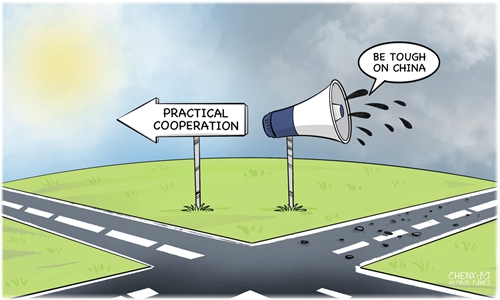
This spring wave of visits to China is rooted in the deeper anxieties of today's world. Conflicts in the Middle East continue, repeatedly disrupting energy and maritime security; global trade frictions are intensifying, with tariffs and sanctions increasingly used as policy tools; uncertainty has become the norm.
So, at such a moment, why are countries choosing China?
First, China represents certainty. Vince Cable, former UK secretary of state for business, innovation and skills, told the Global Times: "Having a great power that is stable and predictable is a great asset." This is one of the answers to why countries are turning to China.
In an era full of volatility, China offers policy continuity, resilient industrial chains, a commitment to multilateralism, and adherence to cooperative commitments. "The international community has widely recognized that China represents new concepts and new practices, and is a force capable of genuinely guiding the world through its transformation toward peace, prosperity, and stability. In contrast stands the outdated logic of bloc confrontation and unilateralism," said Li Haidong, a professor at the China Foreign Affairs University.
Second, China is open and inclusive. A closer look at the composition of visiting delegations reveals a multi-regional and multi-dimensional pattern. Different countries have different priorities, yet all point toward deeper engagement with China. Neighboring countries such as Vietnam seek good-neighborly relations and regional coordination to strengthen the foundation of a community with a shared future; European countries such as Spain seek cooperation in green energy and technological innovation; Middle Eastern countries focus on regional peace. Regardless of their specific goals or positions, countries are willing to approach China because China consistently treats every partner with an open and inclusive attitude. This equal-footing diplomatic approach has enabled China's "circle of friends" to keep expanding.
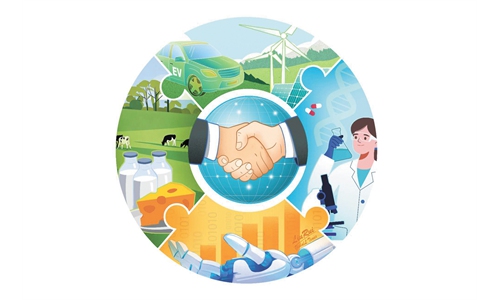
Third, China is a good choice of shared opportunities for cooperation. During Khaled's visit to China, China and the UAE signed 24 Memorandums of Understanding; during Sanchez's visit, he toured the Chinese Academy of Sciences and visited Chinese tech companies, experiencing new products such as automobiles and smartphones; upon arriving in Beijing, To Lam immediately led a high-level Vietnamese delegation on a high-speed rail trip to the Xiong'an New Area.
As China's 15th Five-Year Plan period (2026-30) begins, China's development is offering new opportunities to the world. The frequent visits by foreign leaders reflect their desire to deepen cooperation with China and achieve mutual benefit and win-win outcomes.
The most fundamental driving force behind this wave of visits lies in the fact that the countries have found elements within China's diplomatic vision and practice that align with their own needs. In other words, all countries seek security and prosperity, and global prosperity and security depend on mutual support and assistance. Against the backdrop of today's intertwined instability and change, China's concepts and policies represent the hope of bringing stability and prosperity to the world.
RELATED ARTICLES