Illustration: Xia Qing/GT
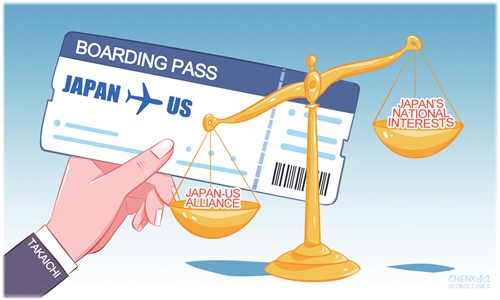
Eighty years ago in May, in a Tokyo courtroom still shadowed by the ruins of Japan's empire, the judges of the International Military Tribunal for the Far East (Tokyo Trials) laid bare a catalogue of violence that stretched from Nanjing to New Guinea. For Australia, these memories are inscribed in the suffering of the prisoners of war along the Burma-Thailand railway and in direct attacks on its northern approaches during the Pacific War.In the decades since, Japan's remarkable post-war transformation has been a prominent feature of Asia's wider security architecture. Yet the equilibrium that underpinned that transformation is now shifting. Under the leadership of Japanese Prime Minister Sanae Takaichi, debates once confined to the margins have moved to the center stage. Defense spending is climbing to record levels, reinterpretations of Article 9 of the Japanese Constitution continue by increments, and official rhetoric frames regional tensions as "existential."
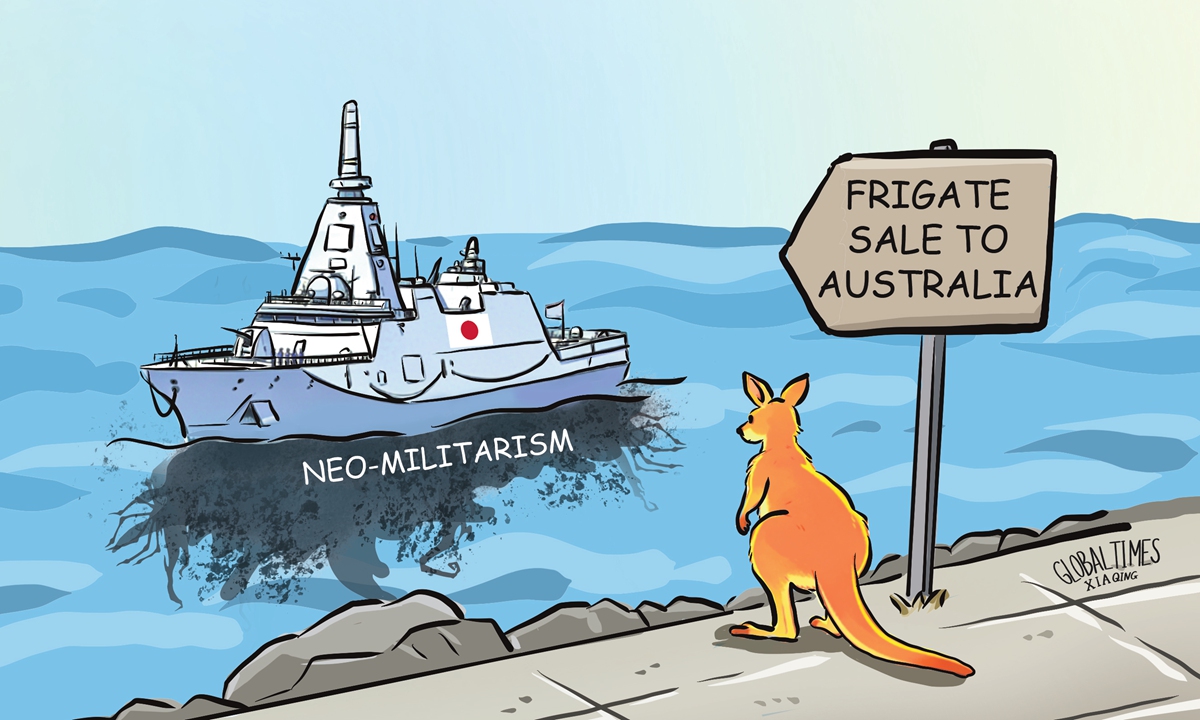
This shift coincides with a more assertive effort by Tokyo to project influence beyond its immediate territory, including the relaxation of restrictions on defense exports. The recent agreement for Australia to acquire upgraded Mogami-class frigates signals a qualitative change. This deal is an outward expression of Japan's re-entry into the region's strategic-military networks.
At the same time, the Japanese historical narrative underpinning its wartime conduct remains contested. Periodic attempts to soften or reinterpret the record of atrocities in the 1930s and 1940s continue to reverberate across China and the Korean Peninsula, and through the capitals and communities of Southeast Asia.
Against this backdrop, Australian Foreign Minister Penny Wong's visit to Tokyo - part of a broader North Asia tour encompassing Seoul and Beijing - lands with awkward timing. That it coincides with the 80th anniversary of the beginning of the Tokyo Trials suggests, at best, a diplomatic insensitivity to the deeper historical currents that continue to inform regional attitudes. Symbolism matters in international relations, and here the symbolism is discordant.
The strategic environment compounds these sensitivities. The long-standing assumption of American primacy in Asia is increasingly difficult to sustain. The credibility of US deterrence has been eroded by the growing vulnerability of forward-deployed bases and the evident strains on its military-industrial capacity. Magazine depletion, supply chain bottlenecks and the challenges of sustaining prolonged high-intensity conflict raise questions about whether Washington retains either the capability or the political will to underwrite regional security in the same way it once did.
This evolving reality creates a vacuum - one that Japan appears increasingly willing to fill. While elements of this shift align with US preferences for burden-sharing among allies, they also reflect Tokyo's own strategic ambitions. The risk is that such a trajectory, particularly when coupled with heightened rhetoric around Taiwan island, may be read in Beijing and across Southeast Asia as a destabilizing departure from the post-war settlement.
In this context, security frameworks rooted in Cold War binaries appear increasingly anachronistic. The newly articulated Australian national defense strategy, with its emphasis on "balance" through US engagement, struggles to articulate what such balance looks like in a materially transformed environment, especially one in which US retrenchment is a reality.
For Australia, the implications are profound. Closer defense integration with Japan carries longer-term risks. It raises the prospect of strategic entanglement in Northeast Asian contingencies that are geographically distant yet potentially catastrophic. It also risks alienating key partners in Southeast Asia, where historical memory of Japanese occupation and a strong tradition of strategic neutrality continue to shape regional diplomacy.
None of this is to suggest that Australia should disengage from Japan, but engagement requires calibration. It demands an awareness that today's decisions are read through the prism of history, and that strategic alignment, once deepened, is not easily unwound.
The lesson of World War II is not simply that militarism leads to catastrophe. It is that the conditions enabling militarism - strategic anxiety, short-term opportunism and historical revisionism - can accumulate gradually, often beneath the surface of immediate policy choices. Australia would do well to remember that lesson. In a region already marked by flux, prudence is called for. Now is a good time to reflect more deeply.
The author is an adjunct professor at the Queensland University of Technology and former advisor to former Australian prime minister Kevin Rudd. opinion@globaltimes.com.cn
RELATED ARTICLES