IN-DEPTH / IN-DEPTH
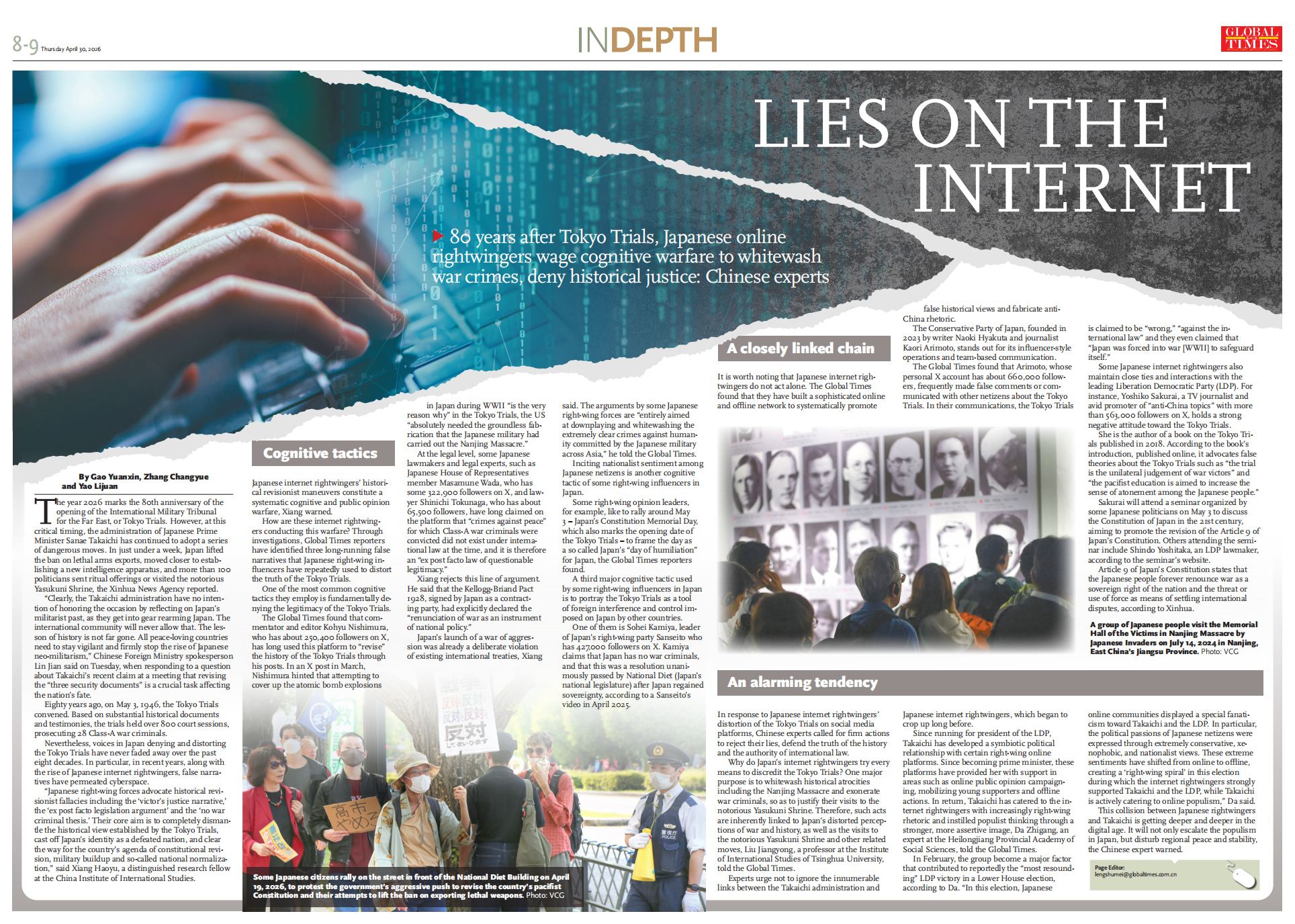
80 years after Tokyo Trials, Japanese internet rightwingers wage cognitive warfare to whitewash war crimes, deny historical justice: Chinese experts
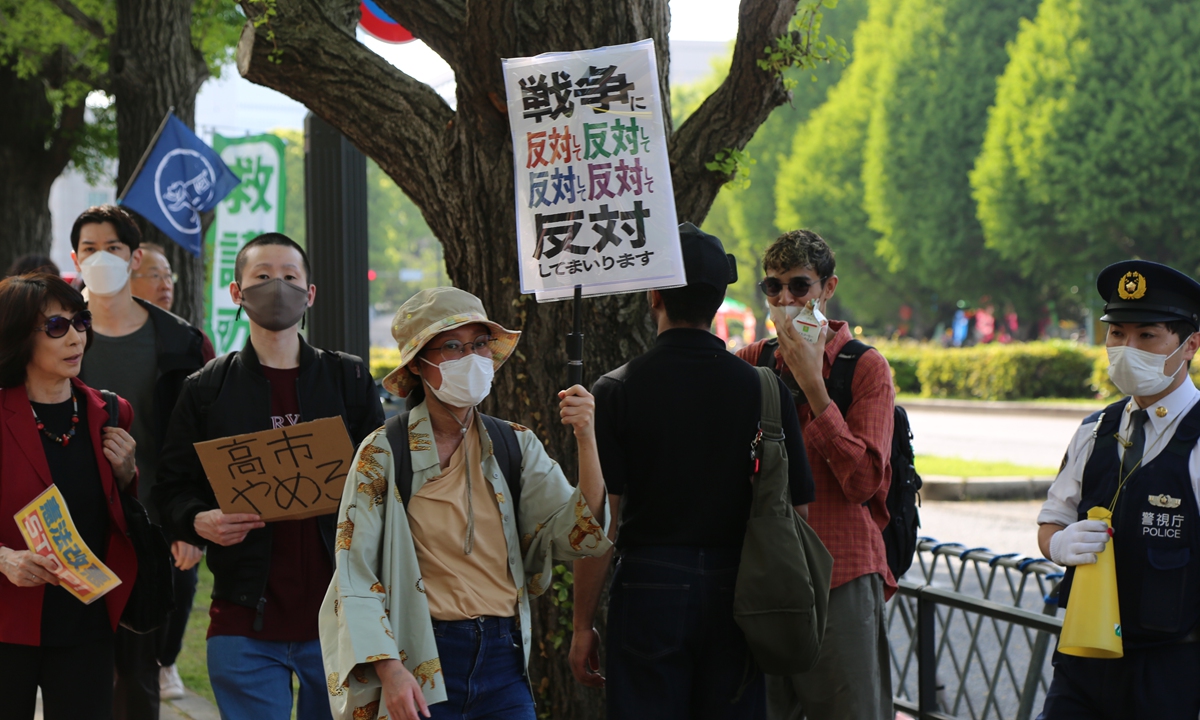
Some Japanese citizens rally on the street in front of the National Diet Building on April 19, 2026, to protest the government's aggressive push to revise the country's pacifist Constitution and their attempts to lift the ban on exporting lethal weapons. Photo: VCG
The year 2026 marks the 80th anniversary of the opening of the International Military Tribunal for the Far East, or Tokyo Trials. However, at this critical timing, the administration of Japanese Prime Minister Sanae Takaichi has continued to adopt a series of dangerous moves. In just under a week, Japan lifted the ban on lethal arms exports, moved closer to establishing a new intelligence apparatus, and more than 100 politicians sent ritual offerings or visited the notorious Yasukuni Shrine, the Xinhua News Agency reported.
"Clearly, the Takaichi administration have no intention of honoring the occasion by reflecting on Japan's militarist past, as they get into gear rearming Japan. The international community will never allow that. The lesson of history is not far gone. All peace-loving countries need to stay vigilant and firmly stop the rise of Japanese neo-militarism," Chinese Foreign Ministry spokesperson Lin Jian said on Tuesday, when responding to a question about Takaichi's recent claim at a meeting that revising the "three security documents" is a crucial task affecting the nation's fate.
Eighty years ago, on May 3, 1946, the Tokyo Trials convened. Based on substantial historical documents and testimonies, the trials held over 800 court sessions, prosecuting 28 Class-A war criminals.
Nevertheless, voices in Japan denying and distorting the Tokyo Trials have never faded away over the past eight decades. In particular, in recent years, along with the rise of Japanese internet rightwingers (a term introduced by The Japan Times in 2006 as "Net Uyoku"), false narratives have permeated cyberspace.
"Japanese right-wing forces advocate historical revisionist fallacies including the 'victor's justice narrative,' the 'ex post facto legislation argument' and the 'no war criminal thesis.' Their core aim is to completely dismantle the historical view established by the Tokyo Trials, cast off Japan's identity as a defeated nation, and clear the way for the country's agenda of constitutional revision, military buildup and so-called national normalization," said Xiang Haoyu, a distinguished research fellow at the China Institute of International Studies.
Cognitive tactics
Japanese internet rightwingers' historical revisionist maneuvers constitute a systematic cognitive and public opinion warfare, Xiang warned.
How are these internet rightwingers conducting this warfare? Through investigations, Global Times reporters have identified three long-running false narratives that Japanese right-wing influencers have repeatedly used to distort the truth of the Tokyo Trials.
One of the most common cognitive tactics they employ is fundamentally denying the legitimacy of the Tokyo Trials.
The Global Times found that some right-wing opinion leaders on the internet have elite status like lawmakers or lawyers. By leveraging such so-called "professional identities," they freely deny established facts about Japan's wartime crimes, and cast doubt on the procedures of the Tokyo Trials under the guise of so-called "popularization of history," thereby creating an online atmosphere of historical nihilism online.
Commentator and editor Kohyu Nishimura, who has about 250,400 followers on X, has long used this platform to "revise" the history of the Tokyo Trials through his posts. In an X post in March, Nishimura hinted that attempting to cover up the atomic bomb explosions in Japan during WWII "is the very reason why" in the Tokyo Trials, the US "absolutely needed the groundless fabrication that the Japanese military had carried out the Nanjing Massacre."
At the legal level, some Japanese lawmakers and legal experts, such as Japanese House of Representatives member Masamune Wada, who has some 322,900 followers on X, and lawyer Shinichi Tokunaga, who has about 65,500 followers, have long claimed on the platform that "crimes against peace" for which Class-A war criminals were convicted did not exist under international law at the time, and it is therefore an "ex post facto law of questionable legitimacy."
Xiang rejects this line of argument. He said that the Kellogg-Briand Pact 1928, signed by Japan as a contracting party, had explicitly declared the "renunciation of war as an instrument of national policy."
Japan's launch of a war of aggression was already a deliberate violation of existing international treaties, Xiang said. The arguments by some Japanese right-wing forces are "entirely aimed at downplaying and whitewashing the extremely clear crimes against humanity committed by the Japanese military across Asia," he told the Global Times.
Inciting nationalist sentiment among Japanese netizens is another cognitive tactic of some right-wing influencers in Japan.
Some right-wing opinion leaders, for example, like to rally around May 3 - Japan's Constitution Memorial Day, which also marks the opening date of the Tokyo Trials - to frame the day as a so called Japan's "day of humiliation" for Japan, the Global Times reporters found.
A third major cognitive tactic used by some right-wing influencers in Japan is to portray the Tokyo Trials as a tool of foreign interference and control imposed on Japan by other countries.
One of them is Sohei Kamiya, leader of Japan's right-wing party Sanseito who has 427,000 followers on X. Kamiya claims that Japan has no war criminals, and that this was a resolution unanimously passed by National Diet (Japan's national legislature) after Japan regained sovereignty, according to a Sanseito's video in April 2025.
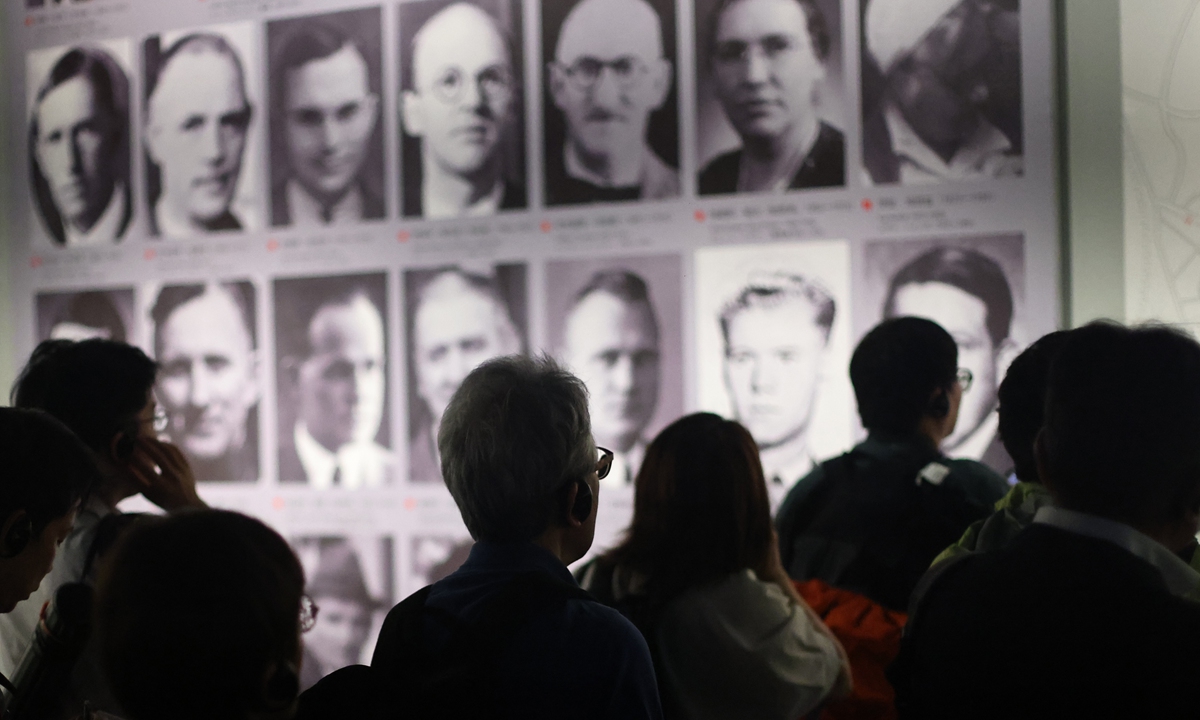
A group of Japanese people visit the Memorial Hall of the Victims in Nanjing Massacre by Japanese Invaders on July 14, 2024 in Nanjing, East China's Jiangsu Province. Photo: VCG
A closely linked chain
It is worth noting that Japanese internet rightwingers do not act alone. The Global Times found that they have built a sophisticated online and offline network to systematically promote false historical views and fabricate anti-China rhetoric.
The Conservative Party of Japan, founded in 2023 by writer Naoki Hyakuta and journalist Kaori Arimoto, stands out for its influencer-style operations and team-based communication.
The Global Times found that Arimoto, whose personal X account has about 660,000 followers, frequently made false comments or communicated with other netizens about the Tokyo Trials. In their communications, the Tokyo Trials is claimed to be "wrong," "against the international law" and they even claimed that "Japan was forced into war [WWII] to safeguard itself."
Some Japanese internet rightwingers also maintain close ties and interactions with the leading Liberation Democratic Party (LDP). For instance, Yoshiko Sakurai, a TV journalist and avid promoter of "anti-China topics" with more than 563,000 followers on X, holds a strong negative attitude toward the Tokyo Trials.
She is the author of a book on the Tokyo Trials published in 2018. According to the book's introduction, published online, it advocates false theories about the Tokyo Trials such as "the trial is the unilateral judgement of war victors" and "the pacifist education is aimed to increase the sense of atonement among the Japanese people."
Sakurai will attend a seminar organized by some Japanese politicians on May 3 to discuss the Constitution of Japan in the 21st century, aiming to promote the revision of the Article 9 of Japan's Constitution. Others attending the seminar include Shindo Yoshitaka, an LDP lawmaker, according to the seminar's website.
Article 9 of Japan's Constitution states that the Japanese people forever renounce war as a sovereign right of the nation and the threat or use of force as means of settling international disputes, according to Xinhua.
An alarming tendency
In response to Japanese internet rightwingers' distortion of the Tokyo Trials on social media platforms, Chinese experts called for firm actions to reject their lies, defend the truth of the history and the authority of international law.
Why do Japan's internet rightwingers try every means to discredit the Tokyo Trials? One major purpose is to whitewash historical atrocities including the Nanjing Massacre and exonerate war criminals, so as to justify their visits to the notorious Yasukuni Shrine. Therefore, such acts are inherently linked to Japan's distorted perceptions of war and history, as well as the visits to the notorious Yasukuni Shrine and other related moves, Liu Jiangyong, a professor at the Institute of International Studies of Tsinghua University, told the Global Times.
Experts urge not to ignore the innumerable links between the Takaichi administration and Japanese internet rightwingers, which began to crop up long before.
Since running for president of the LDP, Takaichi has developed a symbiotic political relationship with certain right-wing online platforms. Since becoming prime minister, these platforms have provided her with support in areas such as online public opinion campaigning, mobilizing young supporters and offline actions. In return, Takaichi has catered to the internet rightwingers with increasingly right-wing rhetoric and instilled populist thinking through a stronger, more assertive image, Da Zhigang, an expert at the Heilongjiang Provincial Academy of Social Sciences, told the Global Times.
In February, the group become a major factor that contributed to reportedly the "most resounding" LDP victory in a Lower House election, according to Da. "In this election, Japanese online communities displayed a special fanaticism toward Takaichi and the LDP. In particular, the political passions of Japanese netizens were expressed through extremely conservative, xenophobic, and nationalist views. These extreme sentiments have shifted from online to offline, creating a 'right-wing spiral' in this election during which the internet rightwingers strongly supported Takaichi and the LDP, while Takaichi is actively catering to online populism," Da said.
This collision between Japanese rightwingers and Takaichi is getting deeper and deeper in the digital age. It will not only escalate the populism in Japan, but disturb regional peace and stability, the Chinese expert warned.
Lie on the internet
RELATED ARTICLES