Young Chinese generations tap personal passion, local resources in career, defying ‘lying flat’ stigma
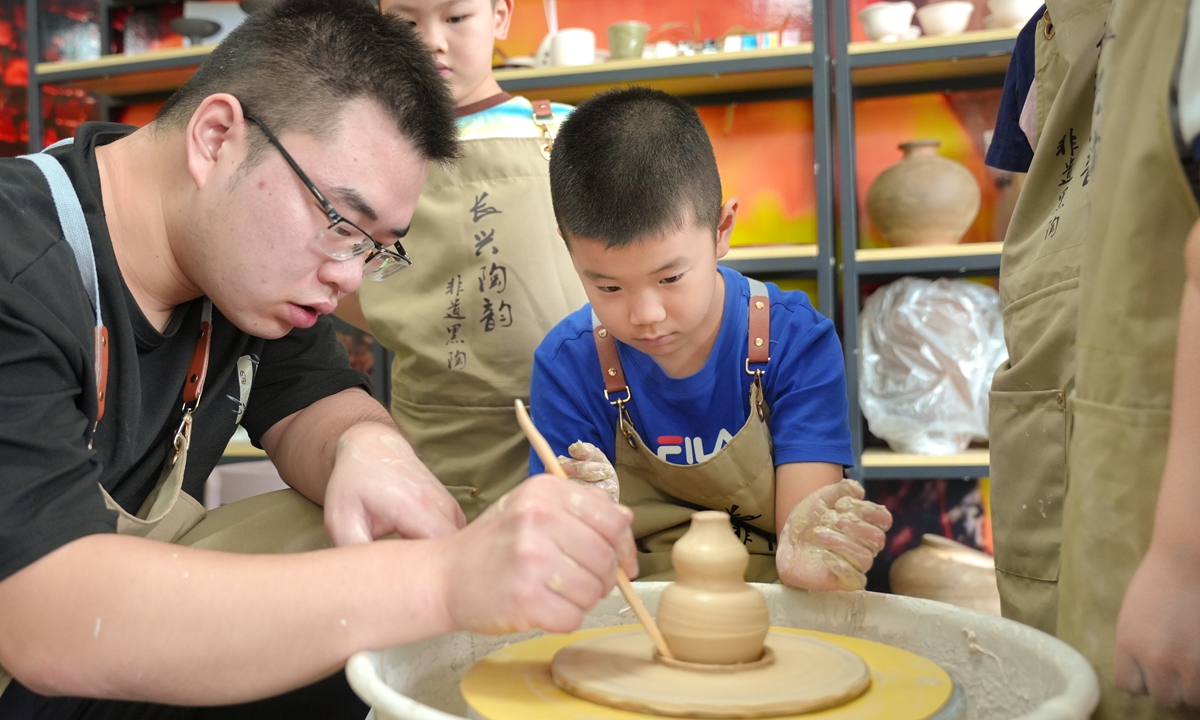
A child tries pottery making, a form of intangible cultural heritage, under the instructions of a young returning entrepreneur in Huzhou, East China's Zhejiang Province on September 20, 2025. Photo: VCG
From county‑town coffee shops and rural homestays to livestreams helping local farmers sell produce and endeavors to revitalize intangible cultural heritage, profound transformations are reshaping the entrepreneurial and employment patterns of young Chinese.In addition to traditionally seen "golden career" in big corporations or public service system, and striving for better future in top-tier cities, young Chinese are also increasingly favoring integrating personal passions, local endowments, digital technologies and lean low‑cost operations to explore more flexible, diversified and sustainable professional paths, in many cases in a modest town or rural areas.
Fresh ways
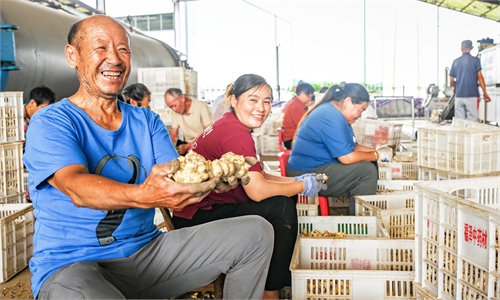
Citing official data, the Xinhua News Agency reported on February 24, 2025 that over 12 million people across China have launched diverse rural‑based ventures. In recent years, a growing number of young university graduates and urban white‑collar professionals have returned to or relocated to rural areas to start up their own business.
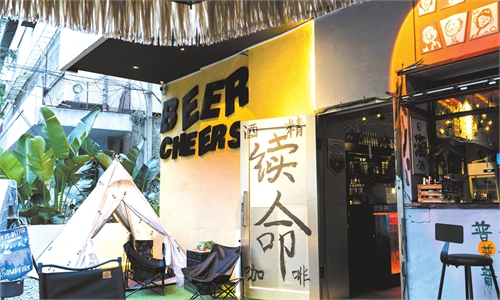
Peng Bailing, once worked in Nanchang, East China's Jiangxi Province, has returned to the Hubei village where she grew up, and opened the village's first coffee shop.
"Life here offers more freedom - it's the kind of life I wanted to live," Peng shared with the Global Times on Tuesday, explaining her decision to return to her hometown for work. She added, "Some of the villagers watched me grow up, and I also hope to create a space where they can try new trends and chat."
Now, during the week, the cafe has become the villagers' communal living room, where locals gather to chat and catch up over a cup of coffee. On weekends, the village - just a 40-minute drive from provincial capital Nanchang - draws scores of tourists, and the cafe has become a must-visit destination, selling around 200 cups on a single weekend day.
Apart from launching her new venture in the countryside, Peng has, with support from local authorities, encouraged more young people to return and start up their own business to become "new villagers."
For instance, Liu Hanye, who was born in the 90s, rented an abandoned old house and renovated it into a handcrafted jewelry studio; Zhang Feihua, a young entrepreneur who once ran a coffee shop in a scenic area, brought his cafe business to the village, integrating pottery making and tie dye experiences. Other young innovators have repurposed idle structures in the village into bookstores, bakeries, dessert parlors, study‑tour bases and glamping sites.
These establishments also sell handcrafted artworks and local agricultural produce made and grown by villagers. Peng said that elderly residents no longer need to travel to fairs, as they can earn an income right on their doorstep.
The collective income of Hubei village reached 700,000 yuan ($96,000) in 2024, a 14-fold increase from 2016, local media outlet jxnew.com reported.
In addition to launching hometown startups, young people draw inspiration from short‑video platforms - one of their favorite pastimes - and pivot to become livestream hosts, fueling economic growth through digital and innovative approaches. Livestream host was officially listed among 19 new occupations announced by three authorities including the Ministry of Human Resources and Social Security on July 31, 2024.
Xu, born in Southwest China's Chongqing, earned her degree in computer science and stepped into the e‑commerce sector in Hangzhou in East China's Zhejiang Province, China's "hub of e-commerce, where she gained hands‑on live‑streaming experience. Drawn to the relaxed vibe of live‑stream interaction, she thought there was no reason not to give it a try, and thus returned to her hometown of Chongqing to embark on her journey of livestream sales for local produce.
Over the past two years, Xu has hosted or taken part in more than 100 rural revitalization livestreaming sessions, selling nearly 4,000 orders of local dried radish strips. She also mentioned that once, 55 jin (approximately 27.5 kg) of her family's yellow peaches had sold out in less than a minute after being listed. "A day of livestreaming can bring in more than 1,000 yuan in sales," Xu said.
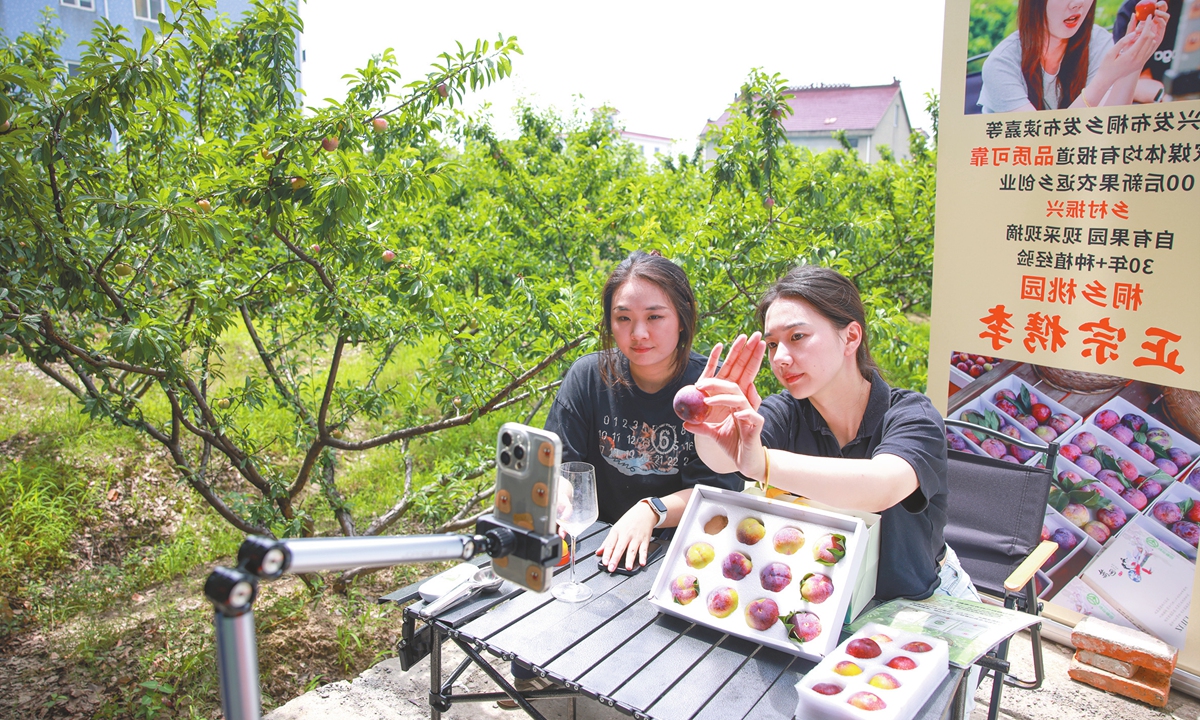
Two young entrepreneurs livestream to sell local plums from the fields of Taoyuan village in Tongxiang, East China's Zhejiang Province on June 19, 2025. Photo: VCG
'Lying flat' isn't youth's traitWhile young Chinese are redefining work in a relaxed manner and generating social and economic values in a different way from previous generations, some Western media outlets smeared such career choices. For instance, the Associated Press claimed in a report on March 13 that a growing movement of young professionals opt to move to sparsely populated towns, amid a faltering property market and rising youth unemployment.
Xu and Peng, both of whom seemingly belong to the group some Western media falsefully labeled as "lying flat" - unanimously dismissed such reports as "utterly absurd." Xu said she did not return home to start a business due to unemployment. She gained valuable experience and enjoyed her life in a big city. "I simply wanted to see if there were more possibilities in my life….and embrace a new way of living," she said.
Addressing "lying flat" and "boomerang kid" stigma, Xu said she has not stopped working hard after returning to her hometown. She keeps thinking about how she can attract more viewers to her livestreams, engage with different groups to sell more, and better help local villagers earn higher incomes.
During live sessions, Xu estimates viewers' age and gender from their screen names to deliver tailored product explanations. "If I think a viewer is middle aged from their username, I will introduce preservation tips and practical cooking methods for farm goods. If I sense they are in their 20s or 30s, I incorporate internet slang to make my introductions lively and engaging," Xu shared.
Peng echoed Xu's views, saying that the "lying flat" has never been the inherent trait of Chinese young people. The Western anti‑China forces that hype up "lying flat" are, in essence, "distorting the choices of young Chinese through their own prejudice," she added.
"Our generation has never been afraid of hard work; We simply no longer blindly chase the monolithic equation that 'big city equals success.' Nor have we ever given up our passion for life. We can grow and succeed in places that suit us," Peng said.
"Those 'lying flat' labels can never define us," Peng said. Young people, through our efforts, bring a better life to ourself and our family, which also drives local employment and boosts consumption vitality - "this is our most powerful refutation against the stigma," Xu said.
RELATED ARTICLES