Illustration: Liu Rui/GT
When Xavier Brunson, commander of US Forces Korea, declared that South Korea is like a "dagger in the heart of Asia," maybe it was intended as a compliment to the alliance. However, the reaction suggested otherwise, as South Korean public opinion turned sharply critical. On Saturday, the Blue House confirmed that it was aware of the remarks and that officials at multiple levels — including the National Security Adviser Wi Sung-lac, and officials from the Ministry of National Defense and the Ministry of Foreign Affairs — had already conveyed Seoul's position to Washington through established channels.The South Korean presidential office declined to disclose the substance of those consultations but indicated that it had likely expressed regret and called for restraint.
The Chinese Embassy in South Korea piled on, with a spokesperson describing the comments as "hostile, aggressive and crossing the line," urging the general to show respect for regional nations.
A single remark by a theater commander should not, in normal circumstances, trigger a diplomatic chain reaction of this magnitude. That it did tells us something important about where American alliance management in Asia now stands — and about the deepening fault line between Washington's strategic logic and the interests of the countries it expects to follow.
Seoul's response is calibrated but unmistakably firm. South Korea does not publicly rebuke an ally in strident terms — it is too dependent on the American security umbrella for that. But the mobilization of the national security apparatus across three ministries to push back against a single commander's remarks signals acute discomfort.
The anxiety is not really about Brunson. It is about what his words inadvertently revealed: that within American strategic thinking, South Korea exists primarily as an instrument — a dagger, pointed and purposeful — rather than as a sovereign nation with its own complex equities.
Those equities include a substantial and irreplaceable relationship with China. China is South Korea's largest trading partner, biggest export market and top source of imports, while South Korea is China's third-largest trading partner. The two countries share deep economic interdependencies built over decades. For a senior American military commander to publicly reframe South Korea as a weapon aimed at China — without apparent regard for Seoul's own strategic calculations and its relationship with China, as Korean commentators noted — is not strategic communication. It is strategic carelessness of a kind that accumulates into resentment.
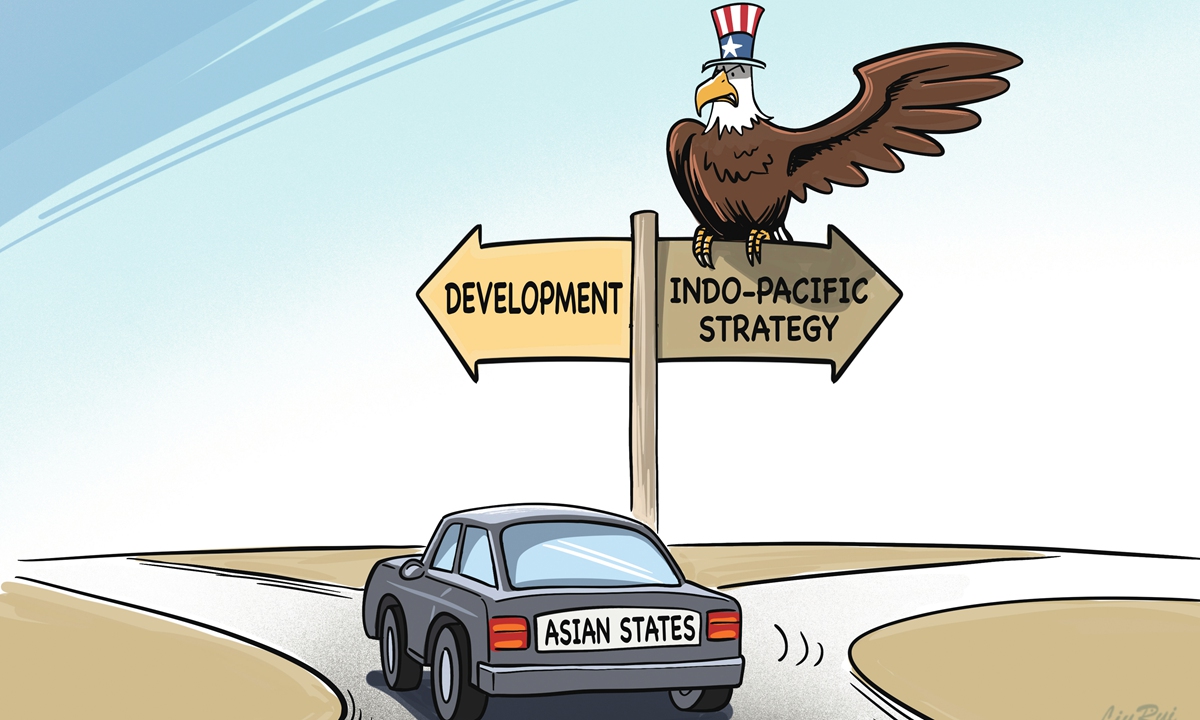
The broader American approach has long carried this same insensitivity. Washington's "Indo-Pacific Strategy" is increasingly organized around the containment of Chinese influence, with decoupling from Beijing's industrial and technology supply chains as a central instrument. The logic, from a purely American vantage point, has a certain coherence. From Seoul, Tokyo or Kuala Lumpur, it demands costly choices that serve American primacy more than regional well-being.
Asia's economy clashes with the framework. The Regional Comprehensive Economic Partnership, comprising 15 nations, is the world's largest free trade area. China, Japan and South Korea's free trade talks persist. Chinese demand drives Asian economies. Asking them to treat Beijing as an adversary forces them to sacrifice their development for others' geopolitical comfort.
The generational shift compounds this. Asian governments today are more self-assured than their predecessors, and rather more clear-eyed about the reliability of American commitments after years of policy oscillation — the withdrawal from the Trans-Pacific Partnership, the imposition of tariffs on nominal allies, the lurch from engagement to confrontation and back again. The lesson drawn, quietly but consequentially, is that strategic autonomy is not an optional luxury. It is a prerequisite for national survival.
Even Washington is beginning to register the friction. Some of the harder edges of the containment agenda have been quietly filed down under pressure from American businesses with deep Asian operations. These adjustments are not merely cosmetic. They are admissions that the original framework overclaimed.
But adjustments at the margins will not resolve a structural contradiction. As China's economic weight continues to grow and Asian states grow more confident in asserting their own national calculus, the gap between what Washington's strategy demands and what Asian governments are willing to deliver will not narrow, it will widen.
Brunson's "dagger" metaphor was imprudent. The problem it exposed is systemic — it is becoming increasingly difficult for the US to advance a strategic alliance framework aimed at China, and its efforts to maintain its hegemonic position in Asia will prove even more futile.
RELATED ARTICLES