China and Kenya expand horizons for cooperation
By Published: Jun 07, 2026 09:18 PM


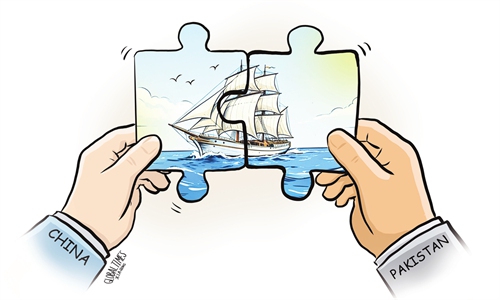
Illustration: Liu Rui/GT
It was nearly 11 pm when my phone buzzed - an email from my longtime Kenyan friend, Joyce."There is a discussion I am following on X about how China's solar light technology is being used to protect communities against lions," she wrote.
Attached was a photo: a row of glimmering solar lights encircling a Maasai animal enclosure, standing guard like silent sentinels under the night sky.
She continued, "Nowadays, Kenyans are extremely interested in China's cutting-edge technologies, including those touching on clean energy and how to integrate green spaces in their cities."
Her words carried me back to late 2019, when I was on a reporting trip to Kenya. She had taken me to experience riding the newly built Mombasa-Nairobi Railway. "Chinese infrastructure changes our lives," she said then.
That was more than six years ago. Now, what amazes me is this: From infrastructure to clean energy, Chinese technology has been quietly and gently facilitating the lives of Kenyans.
For years, China's presence in Kenya has largely been defined by high-profile projects including the Standard Gauge Railway, Nairobi Expressway, Nairobi Global Trade Centre and Talanta Sports Stadium.
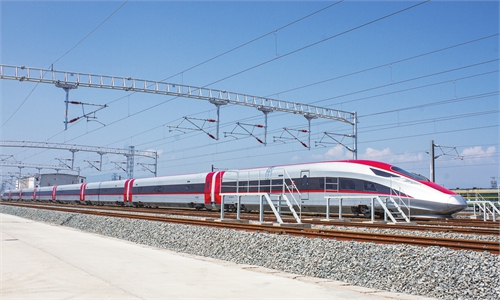
Take the Mombasa-Nairobi Standard Gauge Railway - the first railway built in Kenya since independence. It links the country's eastern port city of Mombasa with the capital, Nairobi, in the west. Since its completion, the railway has boosted the local logistics industry. Goods loaded in Mombasa in the morning can reach Nairobi by the afternoon, while logistics costs have been cut by as much as 40 percent.
During my reporting trip to Kenya in 2019, a wholesale merchant in Nairobi told me that the Mombasa-Nairobi railway was his "rice bowl." In the past, he had to suspend his business for a full week just to get goods from Mombasa. Now, he no longer has to.
The development of the Mombasa-Nairobi railway was integrated with the Kenyan government's plan to develop the Port of Mombasa and the Mombasa Special Economic Zone. What China could offer was not just its technology, but also valuable experience in industrial and logistics chains.
Yet over the past few years, this pattern is quietly changing. The cooperation is evolving - from concrete and steel to solar lights, smart logistics, and clean power - along with China's own changing direction. This change has, in turn, reshaped how China engages with foreign partners like Kenya.
Kenya's development priorities are changing, too.
Since taking office, the Kenya president has made "green industrialization" a central pillar of his agenda. Vision 2030, Kenya's long-term national development focus, envisions a newly industrializing middle-income nation that provides a high quality of life to all citizens by the year 2030, in a clean and secure environment. The country is also focused on reducing its carbon footprint, and has set 2050 as the deadline to achieving Net Zero status. As a Kenyan media outlet noted, "the collaboration with Chinese technology providers will remain the bedrock of that ambition." Kenya's growing demand for technology transfer, green growth, and high-value local industries calls for Chinese cooperation, opening up a new and more relevant chapter.
Take electric vehicles. Kenya, like much of Africa, is still in the early days of embracing electric mobility. Yet, over the past four years, a quiet transformation has been unfolding on the streets of Nairobi. Electric vehicles have begun to appear - most of them tracing their origins back to China.
"Which EV brand should I go for?" My Kenyan friend Joyce asked in her email. She'd just sent me a link listing all the Chinese car brands sold in Kenya - BYD, Geely, and a few others. I had to tell her I wasn't much help. "Back in China," I explained, "my friends are driving all sorts of different brands. There are just too many to choose from."
I suddenly realized that the cooperation between China and Kenya has turned a page. From a railway that changed logistics to solar lights that keep lions at bay, and now EVs running on Nairobi roads, the story of China-Kenya cooperation is evolving. No matter how, what China offers aligns remarkably well with what Kenya needs. The result is an expanding space for cooperation, where new technologies and shared aspirations create opportunities.
The author is director of the Opinion Department of the Global Times. The article is originally published in The Star, a daily newspaper published in Nairobi, Kenya. opinion@globaltimes.com.cn
RELATED ARTICLES