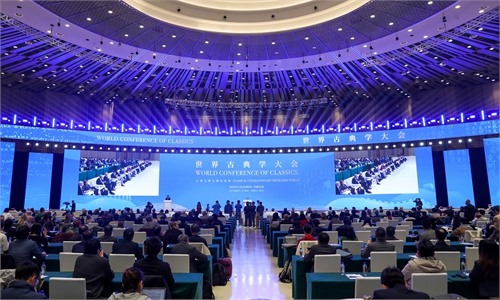
From Beijing to Athens: Touching the warmth of civilizations
By Published: Jun 11, 2026 10:06 PM

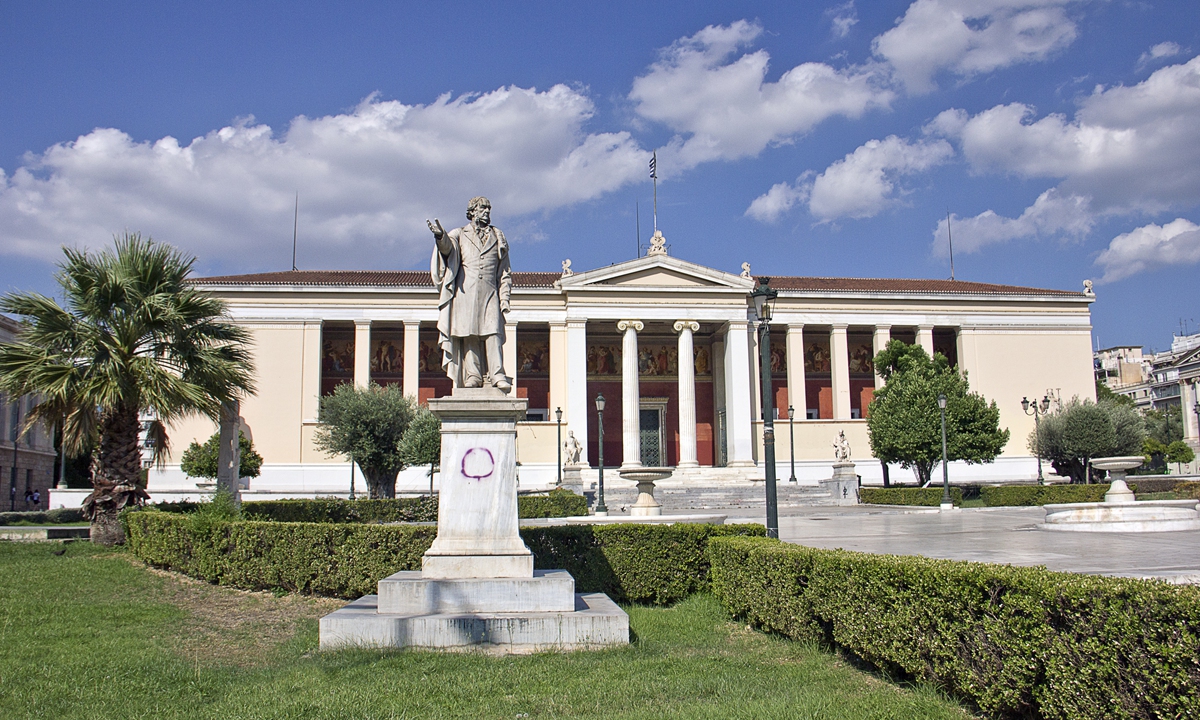
The University of Athens Photo: VCG
Reading the news about the just concluded Second World Conference of Classics in Athens reminds me of my touching experience in Athens three years ago.On that sunny afternoon, I found myself nearly lost near the entrance of the Center for Mutual Learning of Civilizations between China and Greece at Athens University. I had only a hand-drawn map from my contact.
Then, by chance, I stepped into what looked like a small bus station. A young couple noticed my trouble right away. Though not locals, they stopped to help. In their imperfect English, they checked their phones, made calls, and asked around. Finally, they spoke quickly in Greek to a bus driver about to leave. The kind driver waved me onto his bus, drove slowly, and stopped at the nearest corner. He leaned out, using simple hand signs and gestures until I nodded that I understood. Only then did he smile warmly and drive off with a wave.
That simple, warm help from ordinary people felt like a key unlocking something deeper. Civilizational mutual learning is not just grand talks in big halls; it is also the patient gesture, or kind directions from strangers on a hot street.
When I finally reached the office, sunlight shone on the silver hair of Stelios Virvidakis, Secretary General of the Greek side at the center, giving him a wise and gentle glow.
"I once taught in Wuhan," he recalled warmly. "A Chinese colleague and I chatted about a poem by a Greek Nobel winner. She quickly found the Chinese translation. In that moment, we shared the same feelings about its beauty. I realized that people in Beijing and Athens feel beauty in the same way."
Virvidakis explained that this "people-to-people connection" is the true heart of the center. From its planning at the request of Greece's Education Ministry to its official opening on February 20, 2023, he has worked hard to build this bridge. "But it is not enough yet," he added thoughtfully. "Greek philosophy focuses on the individual, while Chinese philosophy values the harmony of the whole. These two wisdoms are like two sides of the same sunlight - both are needed."
He sees a natural pull of Chinese culture in the West. Young Greeks quietly enjoy Chinese art, poetry, detective stories, and Zhang Yimou's films.
As an expert in ancient Greek philosophy, Virvidakis especially loves how ideas intersect. Confucius is widely studied in Greece, and his words - "Do not do to others what you do not want done to yourself" - echo those of Socrates. Aristotle's thoughts on friendship also find surprising parallels in Confucian wisdom.
Not far from the university stands the Hellenic National Archaeological Museum. In its grand Sacred Altar Hall, gods and thinkers from over two thousand years ago stand together: Pan, Heracles, Aphrodite, Plato, and Aristotle. Among them now rests a bronze sculpture of Laozi, titled "Unity of Men and Heaven - Laozi," created by Chinese artist Wu Weishan. Its free, expressive style brings a special warmth to this hall of classical realism.
Museum director Anna Vassiliki Karapanagiotou described it beautifully: "Wu Weishan's Laozi points his hands to heaven and earth. The missing body is like a cave - empty yet full, like a vast universe." It stands in quiet dialogue with Aristotle nearby, showing how the two civilizations complete each other.
From the golden masks of Sanxingdui gazing across three thousand years toward Agamemnon, to Laozi finding his home in this special hall, and now to the Second World Conference of Classics in Athens, the dialogue between China and Greece is stepping out of museum cases. It lives today in every street, every helpful hand, and every conversation about our shared future.
The sun burns bright, whether in Beijing or Athens. But I no longer feel lost. In the corners of these cities, ancient wisdom meets modern kindness. Together, they light the path ahead for all human civilizations.
This warmth from real people fills me with joy and hope. When civilizations meet with open hearts, they do not clash - they shine brighter together. In a busy and sometimes divided world, these small stories of help and understanding remind us what truly connects us.
China and Greece, though far apart, share this light. May more such bridges grow, warming hearts from East to West.
The author is director of the Culture Desk with the Global Times. The article is originally published in the Greek financial website Capital.gr. xuliuliu@globaltimes.com.cn
RELATED ARTICLES