Europe's political elites must rethink and learn from China
By Published: Jun 22, 2026 07:53 PM

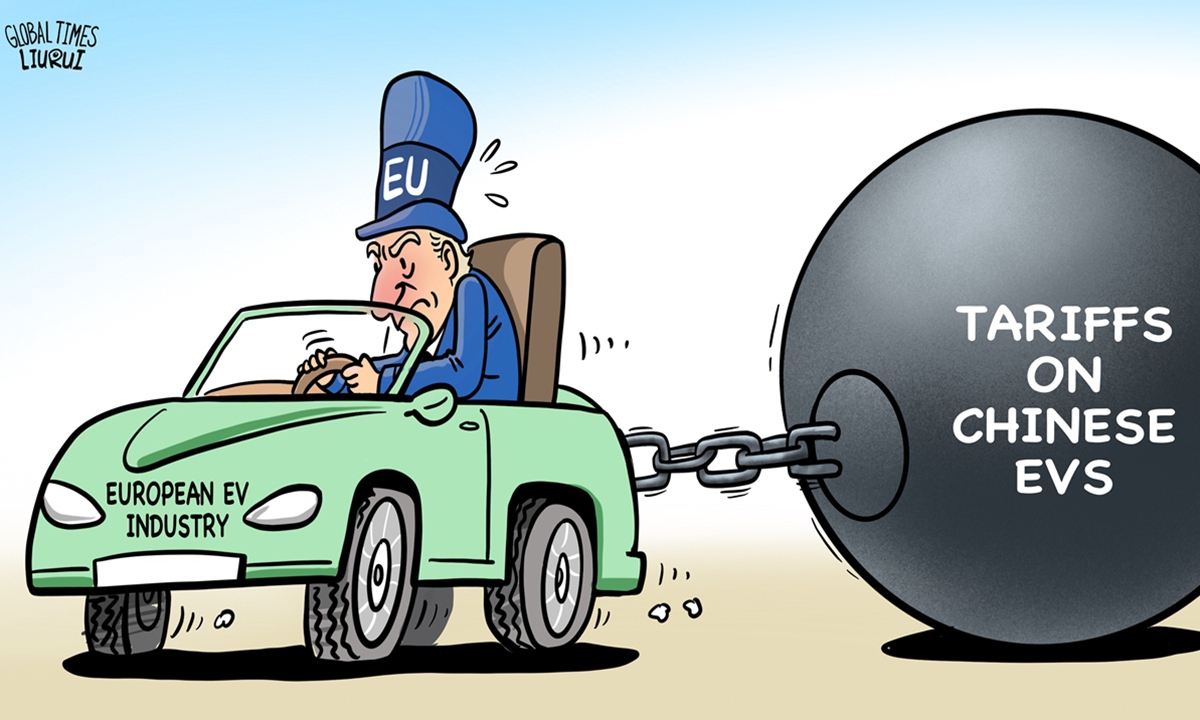
Illustration: Liu Rui/GT
Europe is not in a good place. It is bereft of the kind of technology sector enjoyed by China and the US. Since the Western financial crisis in 2008, apart from the Eastern European economies, Europe has barely grown. This stagnation largely explains the near-universal disillusionment with Europe's political elites, the rise of the far right, and extreme political volatility. Over the last two decades, the European economy has been greatly outperformed by the US economy. To compound matters, Europe now finds itself increasingly cut adrift by a US administration that no longer believes in the Western alliance, a bedrock of Europe since 1949.
The result has been major shifts in European public opinion. There is widespread disillusionment with the US; a larger share of people in France and Germany believe that China is more dependable than the US and that their countries should move closer to China. Most people in these countries believe that China is more technologically advanced than the US. And a majority in these countries believe that China will be the dominant world power in 10 years.
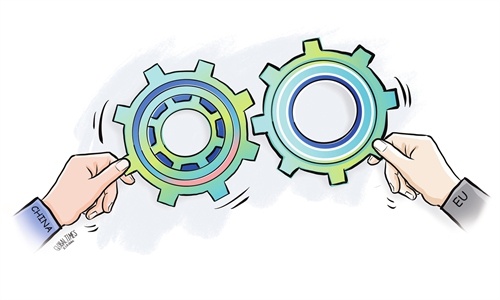
Europe's political elites have belatedly come to recognize that "America First" reflects deeper trends in US politics and culture. Meanwhile, their response to China's economic rise has become increasingly protectionist. Initially, they claimed that Chinese electric vehicles (EVs) were competitive because of unfair subsidies rather than a long-term strategy that resulted in superior technologies and a more advanced production system. This became obvious as Chinese EVs increasingly dominated the Chinese market and won growing market shares elsewhere. European manufacturers found themselves on the defensive: copying Chinese EVs, selling unused European plants to Chinese manufacturers, utilizing their Chinese plants to produce more competitive exports, and linking up with Chinese partners to achieve technology transfer in what was a dramatic reversal of the relationship that existed between Europe and China in the early days of the reform period.
EVs are a microcosm of China's remarkable economic rise and Europe's economic decline. Instead of blaming China, they need to learn from China. Alas, Europe's political elites, in denial of the harsh realities of European decline, are opting for protectionism. China's EVs already face EU tariffs of up to 45 percent. And the problem is not confined to EVs. China has overtaken Europe in countless technological areas. China accounts for almost one-third of global manufacturing products. Should Europe be so foolhardy as to provoke a trade war with China, there can be no winners.
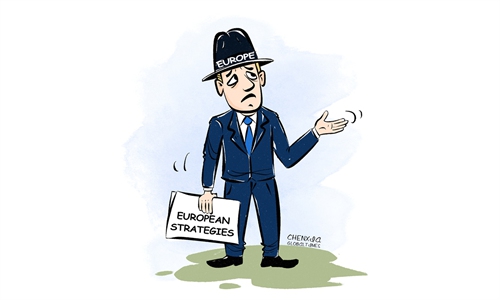
Europe's political elites are living in the past. Their failed policies have been responsible for Europe's stagnation. Europe needs to engage with and learn from China, the main source of economic dynamism and growth in the world.
How do we explain Europe's reluctance in this regard? This is a very deep problem, at the heart of which is Europe's belief in its own civilizational superiority on the one hand and its disdain for China's profoundly different and highly sophisticated civilization on the other. The European elites refuse to study China, preferring to live in blissful ignorance.
Europe is composed of a multitude of countries with differing views. France is inclined toward protectionism, while Germany favors greater openness. Spain sees China as central to its future. The UK has not imposed any tariffs on Chinese EVs. Yet, the EU, with its 27 member countries, tends to move as one on such matters.
The most likely upshot of the present trade negotiations will be the EU having no choice but to retreat from its more extreme protectionist demands, while failing to address the underlying causes of its decline. The European car industry will over time become the defining metaphor for Europe's economic decline. Until a few years ago, the car industry was Europe's most important manufacturer and employer. Over time, it will continue to lose market share to Chinese companies.
Alas, there is little sign of Europe showing itself capable of halting, let alone reversing, its long-term economic decline, and the huge political, social and cultural consequences this will have.
The author is a visiting professor at the Institute of Modern International Relations at Tsinghua University and a senior fellow at the China Institute, Fudan University. Follow him on X @martjacques. opinion@globaltimes.com.cn
RELATED ARTICLES