Illustration: Chen Xia/GT
On June 29, African trade ministers will gather in Abuja, Nigeria's capital city, for the African Continental Free Trade Area (AfCFTA) Council of Ministers, the centerpiece of the continent's biggest trade week of 2026. The agenda reads as technical: certificates of origin, digital trade protocols, a billion-dollar adjustment fund. The undercurrent is anything but.What is taking shape rewrites the script of Western-led development cooperation: African countries set the terms of their own integration, on their own timeline, and by their own rules. A single market of 1.5 billion people. A Pan-African Payment and Settlement System now linking over 160 banks across the continent. Protocols framed around "flexibility" and "special and differential treatment" - a quiet assertion that the terms of development cooperation can be written differently.
The older script, in which "development" was something the Global North defined and the Global South qualified for, is cracking. One can see the crack widening in two very different factory yards: one in Lesotho and one in Rwanda.
In Maseru, the capital of Lesotho, 48-year-old Maboitumelo Ramakatane had been stitching Trump-branded golf shirts for 18 years. "I do it perfectly," she told NPR last summer, with a proud smile. A year later, she is among the tens of thousands who have lost their livelihoods. Her factory, Precious Garments, laid off its entire 4,000-strong workforce by early 2026. The 50-percent US tariff that landed in April 2025 was later cut to 15 percent - but by then, orders had vanished, and Africa's "denim capital" was already unraveling.
A continent away, in a backyard workshop outside Kigali, Rwandan farmer Suzanne Nikuze grows edible mushrooms in plastic tubes packed with chopped grass. Trained at the China-Rwanda Agriculture Technology Demonstration Center in 2018, she now trains other women, mostly heads of household, to do the same. The mushroom value chain seeded by Fujian agronomists since 2006 supports over 4,000 Rwandan farming families and 30,000 jobs.
Two livelihoods. Two very different stories about what "development cooperation" looks like when it actually reaches the ground.
For decades, the dominant narrative ran through Washington and the OECD: "good governance," "high standards" - a vocabulary that made development sound like a school exam graded by foreign teachers. The African Growth and Opportunity Act (AGOA) was Exhibit A: duty-free access to the US market in exchange for annual report cards on political and market reform, issued by Washington. The supplier set both the syllabus and the grade.
That arrangement is now coming apart, and from the inside. AGOA expired last September, was hastily extended for one year, and now sits on USTR Jamieson Greer's desk to be "modernized to align with America First." A senior US State Department official this spring summed up Africa policy as a switch to "trade not aid." Washington no longer dresses self-interest in the costume of universal values.
The buried question returns: Who gets to define "development?"
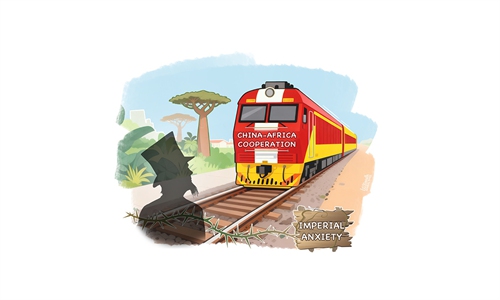
China, itself still a developing country, has spent seven decades building a different model in practice, and 2026 marks 70 years of diplomatic ties with Africa. From medical teams dispatched to Algeria since 1963, through the Tazara railway, to smallholder capacity programs like Suzanne Nikuze's mushroom workshop, the approach has consistently tied aid, investment and trade to local capability rather than governance report cards. Peer-reviewed research tracking projects from the 1950s onward finds that African countries receiving more Chinese aid in earlier decades have tended to export more to China over time and in more sophisticated product categories.
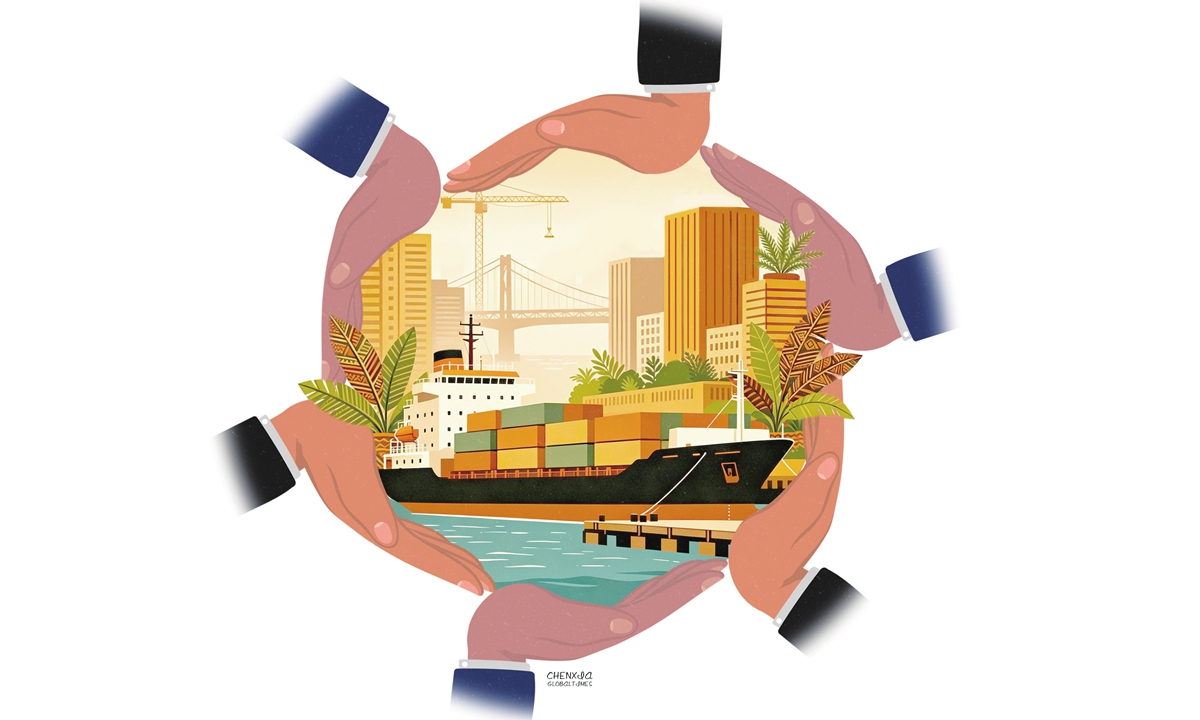
The May 1 zero-tariff rollout - China opening its market to all 53 African countries with which it has diplomatic ties - was designed to dovetail with what Africa is already building. Afreximbank, the institution behind the Pan-African Payment System, joined China's yuan settlement network as a direct participant last June, letting African trade clear without routing through dollars. A standing expert group now links the China-Africa cooperation framework with the AfCFTA Secretariat. Developing partners align their tools with the rules Africa itself is writing.
Africa's path is far from smooth. Many parliaments are slow to ratify AfCFTA rules, and cross-border roads, rails and power lines are still missing. But one thing has already changed for good: Washington has now thrown that script out, openly trading aid for tariffs and leverage. The old question it used to cover up is suddenly in plain view: Who actually gets to say what development is, and who it is for? That is why the Abuja meeting matters. African ministers are not waiting for an answer from outside - they are writing one, rule by rule, market by market. Partners willing to work with those rules, rather than around them, will find a place at the table. Maboitumelo and Suzanne were never meant to be graded by distant examiners. They are the people to whom the answer is finally owed.
The author is a non-resident research fellow with the School of International Development and Cooperation, University of International Business and Economics. She can be reached at chenchenchen@alu.ruc.edu.cn.
RELATED ARTICLES