Observe the true state of Europe’s modernization through heatwaves
By Published: Jul 01, 2026 08:16 PM

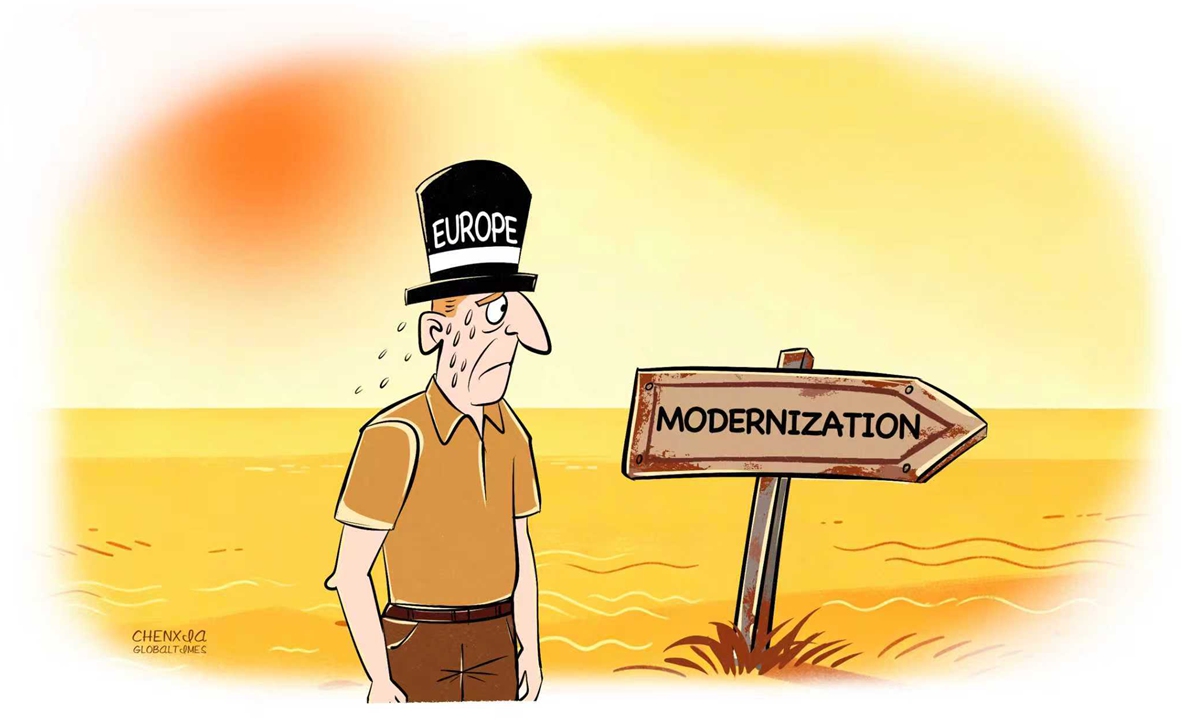
Illustration: Chen Xia/GT
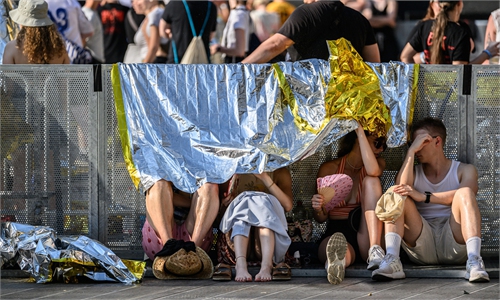
This summer, Europe is once again baking in relentless heat, with temperatures flirting with or breaching 40 C. The data from public health authorities, such as France's initial estimates of around a thousand excess deaths during a single heatwave, are grim. It is a recurring tragedy, and yet, the continent remains shockingly unprepared.The issue is not merely the weather itself; it is Europe's persistent inability to adapt to it. What we are witnessing is a systemic failure of agility. When the heat hits, a desperate scramble for air conditioning begins, but the market responds with a heavy, bureaucratic lag. The sudden surge in demand collides with a supply chain that operates in months and years, not days.
Even when units do arrive from global factories, they face a more formidable domestic bottleneck: a severe lack of skilled labor. An air conditioner is not a plug-and-play appliance; it requires a local ecosystem of technicians, structural permits, and grid compatibility. In Europe, qualified installers are a rare breed. During peak season, waiting lists stretch for weeks, leaving thousands of expensive units sitting idly in warehouses. Add to this is the staggering cost of electricity on a continent struggling with energy transitions, making the simple act of staying cool an unattainable luxury for many.
Defenders often frame this lack of cooling as a conscious, "green" choice - a commitment to energy preservation and architectural heritage. But this argument rings hollow. Environmental sustainability is a noble goal, but it cannot be bought at the expense of human lives. Protecting the most vulnerable from lethal heatwaves is a fundamental duty of any capable state. When a society fails at this basic level of protection, its claims to superior "progress" begin to look incredibly fragile.
This goes far beyond domestic appliances. It exposes a fundamental shift in what it actually means to be a modern society in the 21st century. For decades, we measured modernization by what was already built: mature industrial bases, robust welfare states and established institutional frameworks. Under these 20th-century metrics, Europe was the gold standard. But the challenges of the 21st century are entirely different.
Today, progress is measured by adaptability, systemic resilience and the speed at which a society can reconfigure its infrastructure to meet unprecedented crises. Modernization is no longer a destination you reach and settle in; it is an ongoing process of rapid adaptation.
From this perspective, Europe's greatest strength has become its heaviest anchor. Because its systems were built so early and so well, the cost of changing them is astronomical. Centuries-old historical buildings are notoriously difficult to retrofit. Highly regulated labor markets make it nearly impossible to quickly scale up service sectors, and a deeply entrenched bureaucracy slows down infrastructure overhauls.
Perhaps the most significant and deeply rooted barrier is intellectual. Europe has, over an extended period of time, grown accustomed to and comfortable within the narrative of being "developed," to the point where that identity feels settled and unquestioned. This long-standing self-perception has gradually diminished the sense of urgency and hunger needed to continue evolving and adapting.
As a result, it increasingly sees its current social structures and physical infrastructure not as works in progress, but as the final and perfected form of civilization. Rather than viewing these systems as temporary arrangements that require ongoing reassessment and renewal, they are often treated as complete and enduring, which reduces the perceived need for continuous improvement and change.
An air conditioner is a mundane piece of technology. But when it intersects with global supply chains, labor shortages, skyrocketing energy costs, rigid building codes and public health, it becomes a diagnostic tool.
The current crisis is a warning sign that the continent is losing its capacity to modernize. If Europe wants to remain a model for the world, it needs to realize that the rules of the game have changed. You cannot solve 21st century problems by simply reading from a 20th century playbook.
The author is a senior editor with the People's Daily and currently a senior fellow with the Chongyang Institute for Financial Studies at Renmin University of China. dinggang@globaltimes.com.cn. Follow him on X @dinggangchina
RELATED ARTICLES