Illustration: Liu Rui/GT
On Wednesday, Chinese authorities singled out Raymond Greene, director of the American Institute in Taiwan, for criticism. It was pointed out that his support for the Democratic Progressive Party's (DPP) provocative pursuit of "independence" runs counter to the serious statements made by US President Donald Trump and undermines peace and stability across the Taiwan Straits. Just one day later, an anonymous spokesperson for the US State Department responded via email, claiming that "China's accusations are baseless" and emphasizing that Greene "fully represents the US government's position."
This response appears tough on the surface, but it is inherently weak. It simultaneously puts two contradictory questions on the table: First, what exactly qualifies as "baseless"? Second, who really has the final say over the US' policy toward the island of Taiwan?
Let us address the first question. The claim that the accusations are "baseless" is a statement that cannot hold water. Anyone with a discerning eye can see that the evidence lies right in Greene's own public words and actions. Previously, he deliberately distorted the cross-Straits "status quo," peddled the fallacy that the mainland required "preconditions to be met before dialogue," urged Taiwan to build "a hornet's nest" of drones, and advocated for helping Taiwan enhance its "asymmetric capabilities." In essence, this is inciting confrontation and war, and amounts to supporting the DPP authorities in continuing to lean on the US to seek "independence" and resist reunification by force.
Why did the mainland single Greene out for criticism? Because his actions and words - disguised under the pretexts of the drone industry and regional security - constitute direct interference in China's internal affairs, stoking the fires and creating chaos in the Taiwan Straits. Beijing's "grounds" are Greene's own grandiose and unbridled remarks. A simple phrase like "baseless accusations" cannot erase established facts, nor can it cover up the underlying intent behind these words and actions to substantially incite "Taiwan independence" separatist forces.
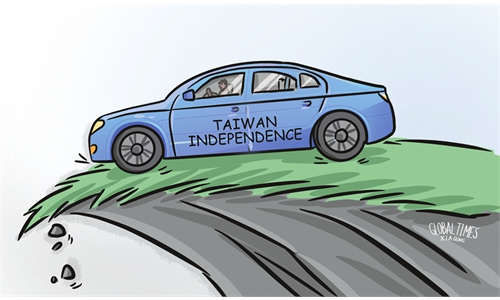
Even more noteworthy is that Greene's remarks run completely counter to, and contrast sharply with, the "four noes" signals previously sent by President Trump: "not looking to have somebody go independent," not wanting US troops "to travel 9,500 miles to fight a war," not backing "Taiwan independence," and noncommittal to continued arms sales to the island of Taiwan. The signal delivered by these serious political statements is crystal clear: The US does not want to be dragged into the Taiwan question if the situation goes out of control, let alone pay the price for "Taiwan independence" adventurism.
Yet, Greene's approach follows a completely different logic. While Trump talks about cooling things down, Greene is stoking the flames; while Trump says the US will not back "Taiwan independence," Greene continues to prop them up; while Trump speaks of avoiding conflict, Greene sends signals to intensify preparations for conflict. This glaring inconsistency demonstrates that the US' policy toward Taiwan suffers from a disconnect between rhetoric and execution, as well as a misalignment between top-level leadership and lower-level implementation.
This brings us to the crux of the second question: Who really has the final say over the US' policy toward Taiwan?
If that anonymous spokesperson truly represents the stance of the US State Department, it means the US government is publicly admitting that Greene's provocative words and actions are not personal improvisations. Rather, they are supported by departments, tacitly approved by policy, and endorsed by the White House. This proves that while the US says "it does not support Taiwan independence," still, it continues to create the political illusion of "supporting Taiwan independence."
If Trump's statements are what counts, then this email response from the State Department spokesperson looks particularly jarring. This is because it amounts to using an anonymous, ambiguous, and speculative method to dilute, hollow out, and even hedge against the signal of restraint coming from the presidential level. The White House stays quiet, Trump himself remains silent, yet the State Department apparatus claims that Greene "fully represents the US government's position." This exposes the most familiar playbook of the US bureaucracy: The president is responsible for principled statements, while the diplomatic apparatus handles concrete actions; the president is responsible for leaving wiggle room, while the executive level pushes the boundaries; and if things go wrong, they fall back on the four-word safety net - "our policy hasn't changed."
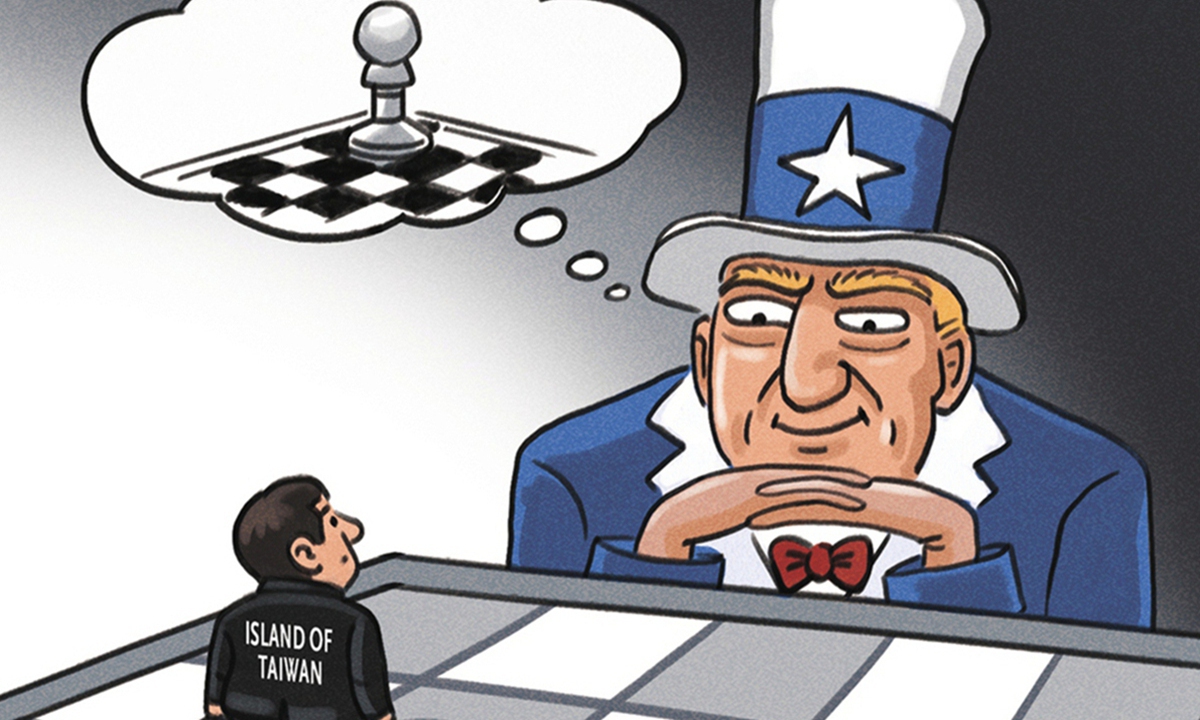
The US' policy toward the Taiwan region is not simply a matter of "who has the final say," but rather a hybrid of multiple voices, multiple lines of operation, and multiple layers of calculation. The US president has his own considerations, the US Department of State has its own agenda, the US military-industrial complex has its own interests, and the "hawks" in the US Congress have their own political stage. The Taiwan question, in particular, has become the most useful card for all of these forces. Some use it to pressure China, some use it as a bargaining chip, some use it to signal their ideological posture, while others exploit it to advance personal or institutional interests.
This also explains why the US has long said one thing and done another on the Taiwan question: verbally claiming that it does not want conflict across the Taiwan Straits while continuously arming the island; saying it does not support "Taiwan independence" while in practice repeatedly creating room for the "Taiwan independence" separatist forces to make dangerous miscalculations; insisting that its policy toward the Taiwan region has "not changed" while at the same time acquiescing in, or even encouraging, frontline officials to keep pushing the boundaries. The Greene incident is a concentrated exposure of this structural contradiction.
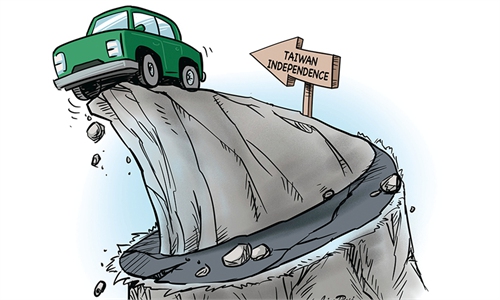
What truly warrants vigilance is not merely Greene himself, but the US policy machinery on Taiwan operating behind him. Its greatest danger lies in the fact that, on the one hand, it exploits strategic ambiguity to create room for maneuver, while on the other hand, "hawkish" forces within the system continually push that ambiguity toward substantive support. Over time, what the world sees is no longer that "the US position is complicated," but rather that there are always people within the US backing "Taiwan independence." Once the DPP authorities mistake this illusion for reality, the risks across the Straits will be driven higher step by step.
Viewed in the broader context, the Greene incident is far more than a verbal dispute. It could directly shape the overall trajectory of China-US relations in the second half of the year. At the China-US summit on May 14, the two sides discussed "building a constructive China-US relationship of strategic stability." The Taiwan question was again featured prominently during the June 30 phone call between the two top diplomats, when Chinese Foreign Minister Wang Yi explicitly pointed out that "the Taiwan question is a highly sensitive issue that may have far-reaching implications." If Washington truly values the important high-level engagements between the two countries, it should not allow such noise, distractions, or even disruptive signals to continue spreading.
Whether future high-level China-US interactions can remain stable will not depend on fine-sounding rhetoric, but on whether Washington can first rein in these dangerous words and actions on the Taiwan question. For China, what the US says certainly matters, but what matters even more is what it does. What the White House says is important, but even more important is whether frontline officials at the US State Department continue to skirt the boundaries, cross red lines, and send misleading signals.
Therefore, the claim that "China's accusations are baseless" is, in fact, itself the most baseless. The real basis lies in Greene's own words and actions. The real question is not why China has singled him out for criticism, but how many people within the US system are still verbally aligning themselves with the US president's stated position while, in practice, handing knives to the "Taiwan independence" separatist forces. Unless this problem is addressed, Greene will not be the last source of "noises," and the Taiwan question will inevitably continue to be the most dangerous variable affecting the overall China-US relationship.