New Zealand officials hype China’s routine missile test; activity used as a pretext to push NZ toward ‘bloc politics,’ says Chinese expert
By Published: Jul 13, 2026 08:56 PM


New Zealand Foreign Minister and NZ First MP Winston Peters speaks to reporters at Parliament in Wellington, New Zealand on June 25 2026. Photo: VCG
New Zealand officials' comments on China's recent submarine-launched missile test are "using a pretext to escalate and bundle issues" and risks pushing the country's foreign and security policy further toward "bloc politics," Chinese experts said on Monday after local media reported Foreign Minister Winston Peters' comments. Peters claimed that New Zealand "should not be fazed" by any possible Chinese objection to its intention to join a new defense alliance.
In an interview with RNZ on Monday, Peters claimed, "It's important that Pacific countries and those seriously concerned about the long-term implications of such potential behavior are resistant right here and right now, and that's what we're doing."
On Monday, acting Prime Minister David Seymour also made further criticism on China.
Australia is promoting a new defense pact with Fiji, which includes a mutual defense obligation and has been interpreted by some Western media through the lens of countering China.
Speaking to local media on Monday, Peters confirmed New Zealand is in exploratory talks with Australia and Fiji about joining their military alliance.
New Zealand Foreign Minister Peters' remarks appear on the surface to be a response to China's recent missile test, but in essence, he is using this routine military activity as a pretext to push New Zealand's foreign and security policy further toward "bloc politics," Chen Hong, director of the Asia Pacific Studies Centre at East China Normal University, told the Global Times on Monday.
The Chinese People's Liberation Army (PLA) Navy successfully conducted the test launch of a strategic missile by a submarine on July 6. This marks the second time in two years that the PLA has conducted an intercontinental ballistic missile test in the Pacific Ocean.
The test launch is a routine arrangement of the annual training of the PLA Navy, the navy said, adding that the Chinese side has already notified relevant countries in advance, according to Xinhua.
The New Zealand officials' comments are aimed at hyping up regional security anxieties to create favorable public conditions for New Zealand to join the so-called "Ocean of Peace" Alliance, the expert noted.
"A truly open, inclusive mechanism that does not target any third party has no need to justify its existence by portraying China as a threat," Chen stressed.
On the issue of joining the Ocean of Peace Alliance, acting Prime Minister Seymour hinted that "it is highly likely that we will soon join that," according to the country's media outlet.
This alliance is not a simple dialogue mechanism but a security arrangement with collective defense characteristics, the Chinese expert said.
It is necessary to clearly recognize the bloc-oriented nature of the alliance, and avoid allowing regional security to be hijacked by misleading narratives that undermine the long-term interests and autonomy of Pacific Island countries, Chen warned.
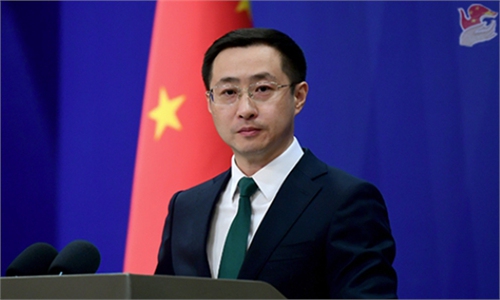
When asked to respond to a mutual defense treaty and a new agreement signed by Australia and Fiji to develop ties, as this is part of Canberra's campaign to shore up its influence in the South Pacific and to limit China's influence, Chinese Foreign Ministry spokesperson Mao Ning said on July 6 that China always upholds the principles of mutual respect, equality, mutual benefit, openness and inclusiveness in carrying out cooperation with Pacific island nations.
"We do not engage in geopolitical rivalry or seek selfish political gains. It is hoped that the country concerned will truly respect the independence of Pacific island nations, focus on their sustainable socioeconomic development, and avoid targeting any third party or harming the interests of any third party," Mao said during the press conference.
RELATED ARTICLES