Photos: VCG
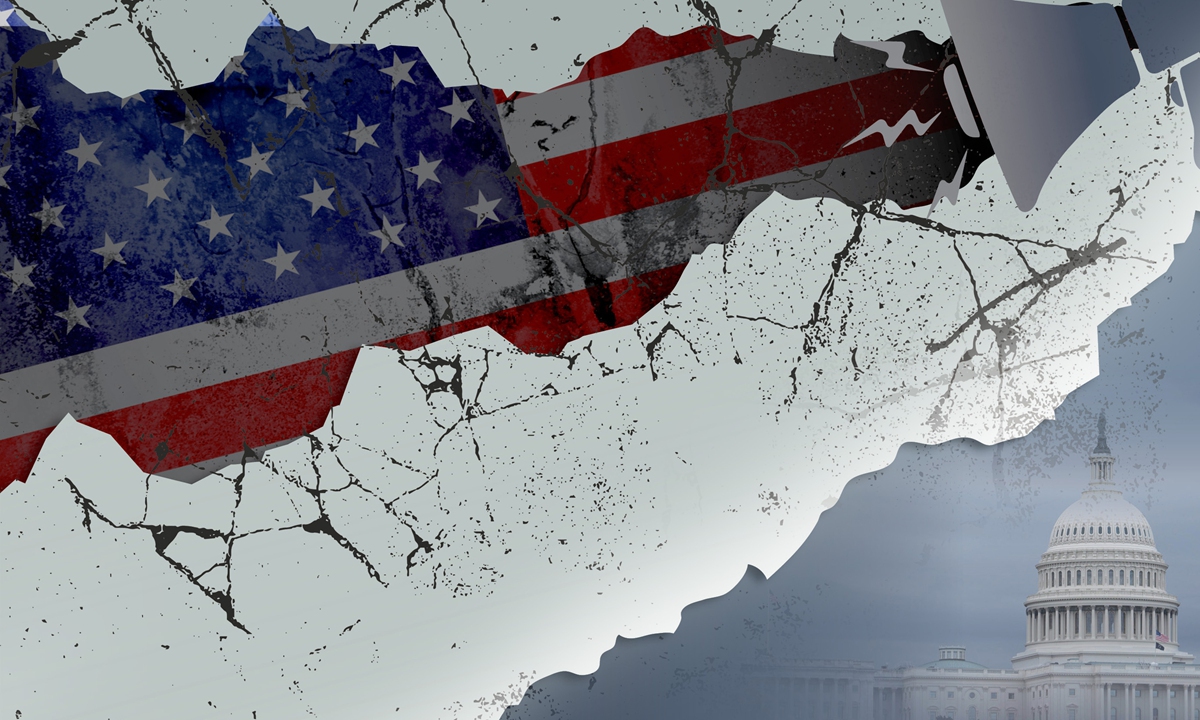
Not long ago, Ian Bremmer, president and founder of Eurasia Group, suggested that the US may be falling into the "Gracchi Trap."The reference comes from the ancient Roman Gracchi brothers, whose failed reform efforts worsened domestic political dysfunction, caused allies to drift away and contributed to the republic's eventual decline. Bremmer drew a direct parallel, saying this is what is happening in the US now.
Is this merely alarmism, or a sobering warning for the US today?
During the middle-to-late period of the Roman Republic, political and social tensions grew increasingly sharp. Tiberius and Gaius Gracchus, serving successively as tribunes, pushed a series of reforms.
These measures threatened the interests of the aristocracy, then the Gracchi brothers were killed, and their reforms failed. Historians often view the failure of the Gracchi reforms as the prelude to the Roman civil wars and a key turning point from prosperity to decline.
The term "Gracchi Trap," drawn from this history, has become a concept in Western political science. It serves as a warning that a major power risks internal political paralysis that accelerates its overall decline. Is the US now falling into this trap? Will internal governance failures and their chain reactions hasten the US' decline? Bremmer offered a rather pessimistic assessment.
Objectively speaking, compared with the period before the 2008 global financial crisis, the US is facing more severe domestic political polarization and social division. Its international image - including its credibility among allies and partners - has also been steadily declining.
The US' political difficulties have intensified, with growing public dissatisfaction with the government's domestic and foreign policies. Unable to improve governance through meaningful domestic reforms, Washington has increasingly turned to "curing internal problems through external means" - diverting troubles outward. The US has moved away from supporting free trade toward unilateralism and protectionism. It is also reluctant to bear high costs to maintain the global alliance system, instead demanding that allies shoulder more defense responsibilities and expenses.
Such actions not only risk deepening domestic political divisions and socioeconomic chaos, but also constrain the US' international maneuverability and harm its long-term interests.
The US initiated the latest conflict in the Middle East but was unable to end it. Disruptions in the Strait of Hormuz have caused international energy prices to soar, along with shortages of petrochemical products and food. Washington bears undeniable responsibility for the resulting damage to the global economy - a burden that grows heavier each day. Trust in the US among the international community, including some allies, has continued to erode.
It is in this context that Bremmer invokes the ancient "Gracchi Trap" to warn that the US' internal governance failures may be accelerating its transition from strength to decline, leading to prolonged low-intensity domestic turmoil and making its global hegemony increasingly difficult to sustain.
The question of the US' "relative decline" has attracted growing attention in recent years. Yet the US remains the world's sole superpower - a reality often highlighted in international discussions on "the American problem."
Whether the US will truly fall into the "Gracchi Trap" will depend on several critical questions: How much more time can dollar hegemony buy for domestic reforms and adjustments? How much policy flexibility does the US' institutional self-correction capacity still offer? And how long can today's international order tolerate the US' unrestrained behavior?
Viewed through the historical lens of the "Gracchi Trap," more questions arise: If the US' debt and financial disruptions worsen, could the country face another financial crisis on the scale of 2008? If "veto politics" becomes even more extreme, will partisan warfare and governance failures remain mere "storms in a teacup"? If the US continues its current global strategic path, what changes await its alliance system and broader foreign relations?
As answers to these questions emerge, the fuller picture of American hegemonic decline will unfold across a longer historical horizon.
The author is a research fellow at the Institute of American Studies, the China Institutes of Contemporary International Relations. opinion@globaltimes.com.cn
RELATED ARTICLES