Illustration: Liu Rui/GT
Recently, the story of a French man who spent around 1,400 yuan ($206.70) to buy a portable air conditioner in Shanghai and checked it as baggage back to Paris for his 93-year-old mother sparked widespread attention on Chinese social media.Against the backdrop of European heatwaves and local supply shortages, the story serves as a vivid microcosm of the real-world needs, as well as real-world shifts in global industrial capacity, consumer habits, and social psychology in today's era.
In the past when Chinese consumers traveled abroad to buy luxury or branded goods, Western media often framed it as a symbol of China's lagging development. Today, European consumers are bringing Chinese-made air conditioners, cars, smartphones and drones back to their own countries.
Through its rapid development, China is breaking the mind-set that "Western modernization is the only blueprint," offering its own answers through high-speed rail, mobile payments and a stable supply of industrial goods.
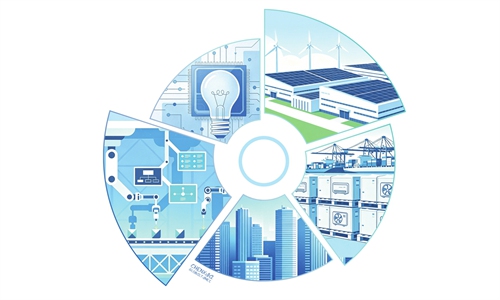
Behind every affordable, portable, and easy-to-use Chinese air conditioner is a vast industrial ecosystem. It includes compressors, semiconductors, plastics processing, metallurgy, e-commerce platforms, and modern logistics. This complete industrial system enables Chinese companies to quickly organize production, significantly reduce costs, and continuously improve product performance. It also ensures that Chinese society can access modern industrial products at relatively affordable prices.
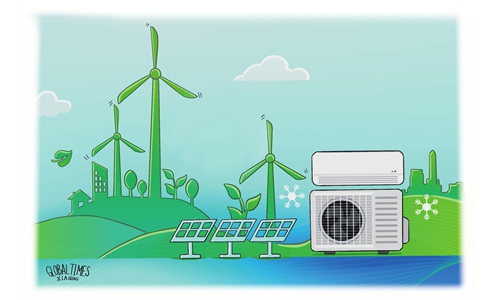
Affordability, however, does not mean low quality. China's air conditioning industry is shifting from volume-based competition to competing on technology, branding and services. In the first half of 2026, Chinese air conditioner exports to the European Union continued their rapid upward trajectory. The international market's recognition of Chinese manufacturing stems from a comprehensive edge built on scale, technology, supply chain resilience and service capabilities.
What is even more noteworthy is how the fruits of China's development are benefiting the world through goods, technology and supply chains.
The French man's decision to bring an air conditioner to his elderly mother was driven by simple, heartfelt family care. The ability of Chinese enterprises to meet such demands is a micro-level example of how China is actively contributing to the improvement of global livelihoods.
China's contribution of the manufacturing industry to the world is reflected in its continuous provision of high-quality, diverse and affordable products. For developing countries, affordable industrial products help improve infrastructure and production conditions. For developed countries, China's stable and efficient supply chains help ease pressure from rising living costs among consumers.
Beyond that, China continues to pursue higher-level opening-up, creating market, employment and growth opportunities for countries through cooperation under the China-proposed Belt and Road Initiative, international industrial capacity cooperation and green development partnerships.
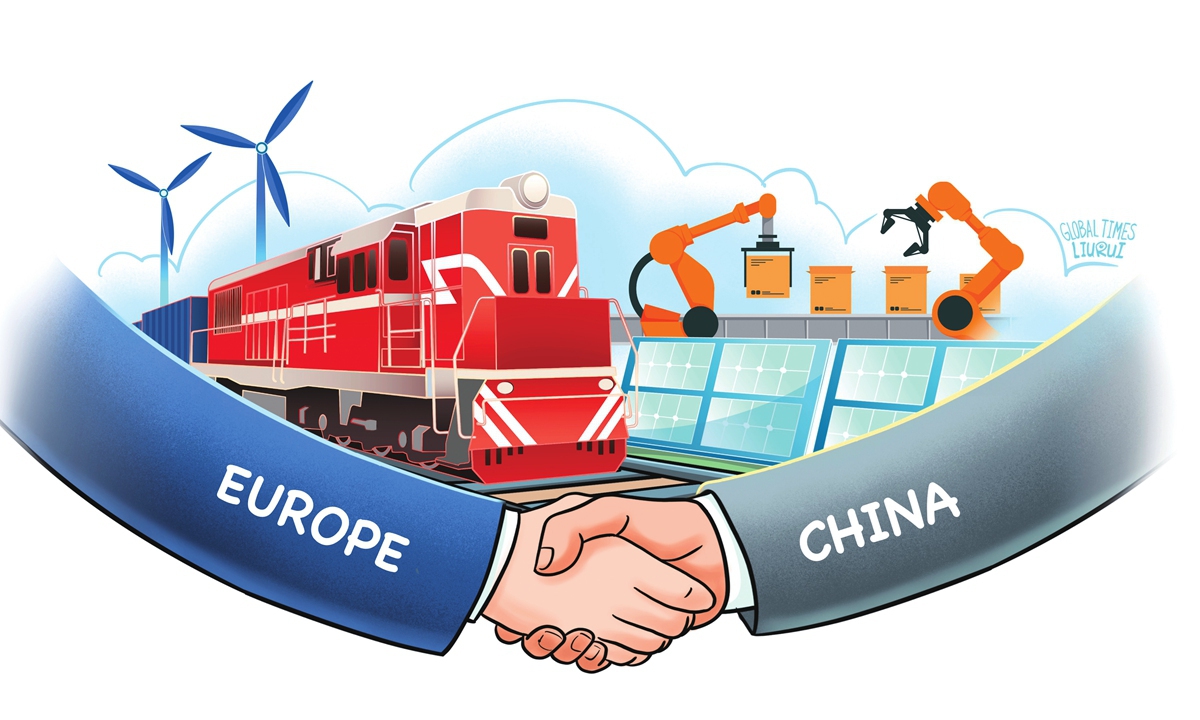
Some people are accustomed to viewing international economic and trade relations as a zero-sum game. But reality shows otherwise. When Chinese companies provide air conditioners, European consumers gain more choices, Chinese workers receive orders. Transportation, retail, installation and after-sales services all generate employment opportunities. Open cooperation allows countries to leverage their respective comparative advantages and ultimately expand shared interests.
An air conditioner crossing the sea and entering a European household may appear to be an ordinary consumer transaction, but it reveals a more diverse and equal vision of the world: Innovation can cross borders, and people in different countries can choose lifestyles that best suit their needs.
When a country can continuously create products that stand the test of the market, making life more convenient for its own people while providing more choices for others, its development gains significance beyond national borders.
This cross-border air conditioner reflects the solid foundation of Chinese manufacturing, the human-centered warmth of China's development, and China's openness in sharing opportunities and pursuing common development with the world.
The author is a professor and the executive director at the Centre for National Security Studies, Fudan University. opinion@globaltimes.com.cn
RELATED ARTICLES