Illustration: Chen Xia/GT
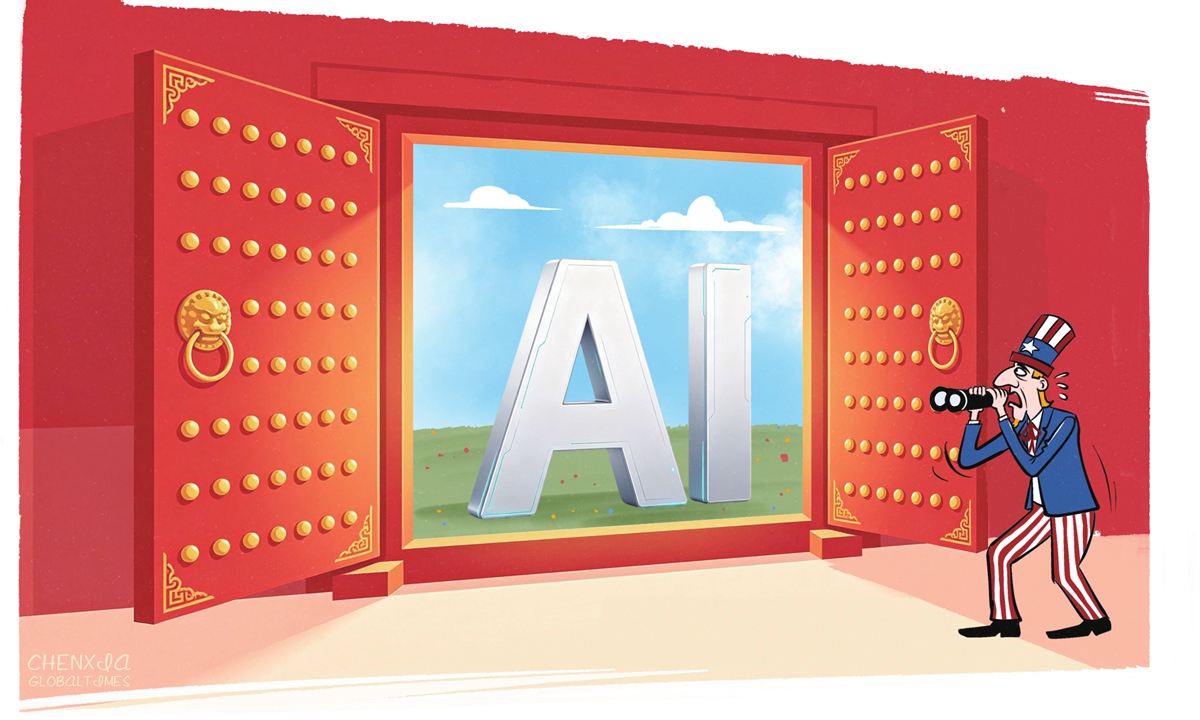
If artificial intelligence (AI) is supposed to transform the world for the better, why is it making Silicon Valley nervous?
Search "China AI" on Western search engines and one will see the same word pop up again and again - "race." But click through the headlines, and the real dominant emotion is something else - anxiety.
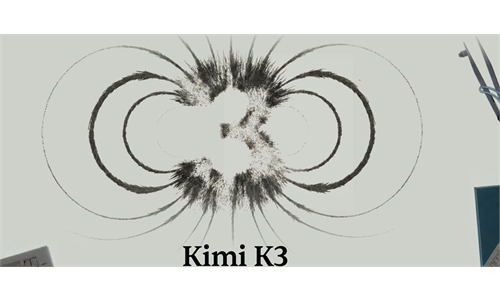
Business Insider put it bluntly: "Silicon Valley is freaking out over China's open-source AI strategy." Axios was even more direct: Kimi K3, a new open-source AI model by Beijing-based Moonshot AI, "dazzled developers, jolted Silicon Valley and reset the AI race overnight."
An American venture capitalist captured the mood perfectly on social media: "The future is open source … Imagine if America closed the door on open source. We would explicitly be forcing American companies to pay $26-56 per 1MM tokens for the same intelligence their adversaries/competitors around the world would pay $0.50-1 for. This is economically unsustainable unless AI is bullshit." A White House's ex-AI adviser went further, saying "woke lobotomized models" (AI models crippled by political correctness) are enemies of American competitiveness.
This wave of unease traces back to one event - the 2026 World AI Conference (WAIC) in Shanghai. There, China didn't just unveil the upgraded Kimi K3 model - it also launched the World Artificial Intelligence Cooperation Organization (WAICO), sending a clear signal of a very different approach to AI development, which is hitting US' model where it hurts most.
At its core, the US' AI strategy is a capital-driven race. Pour in massive investment, keep the most powerful models closed and proprietary, and layer on export controls. The result? Sky-high valuations for a handful of giants - OpenAI, Anthropic, Google DeepMind - and short-term dominance for the US.
Stock prices soared. Investors cashed in. But the downsides are now impossible to ignore: extreme costs and heavy reliance on artificial scarcity. The moment low-cost, open alternatives become widely available, the system could quickly fall apart.
This brings us to the question: Who is AI for?
In America's approach, AI is mostly a high-end tool - a profitable product designed for wealthy nations and big investors. It widens the gap between rich and poor, developed and developing countries. Even more chilling is the long-term vision quietly discussed: a future where a tiny elite escapes to Mars while Earth is left to decay, or where a handful of tech oligarchs use AI and embodied robots to control the majority of the resources - and, by extension, humanity itself. This cold, hierarchical techno-fantasy reveals the deep flaw in US' approach: technology ultimately serving the power and wealth of the few.
China is offering a radically different vision: AI as a global public good - something meant to benefit all of humanity.
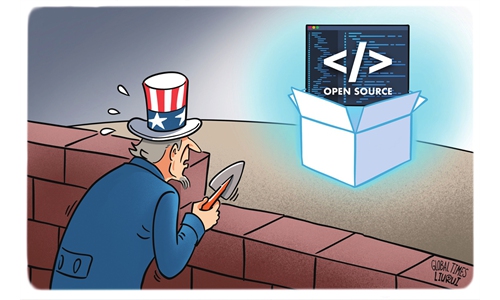
Real public goods don't come with exorbitant price tags, high barriers, or monopolistic control. By embracing open-source models, China has released code, weights, and training insights for the world to use, modify, and build upon. It rejects the old playbook of gatekeeping and rent-seeking. The focus is to make AI easier to use, more productive, and accessible to everyone.
AI is already moving from the digital world into the physical one - reshaping energy, manufacturing, healthcare, agriculture, and cities. The UAE is using AI for autonomous driving. Brazil is deploying it for smart farming. China is sharing relevant capabilities with countries in the Global South. Public goods, after all, aren't supposed to be luxuries.
The "AI iron curtain" the US has tried to build is being dismantled by China's open-source push. In the end, the real winner of the AI race won't be the one who builds the most powerful model in a lab. It will be the one who creates the broadest prosperity in the real world.
The US is playing for capital gains and technological hegemony. China is betting on shared abundance and human progress. The ultimate question has never changed: Should technology serve all of humanity, or merely a privileged few? China has given its answer.