Illustration: Chen Xia/GT
Open weights or closed models? That question now sits at the heart of who controls AI's future.
A recent New York Times report gave us a glimpse of something the leading AI companies usually hide behind their polished exterior: real anxiety over losing control of AI's market and standards.
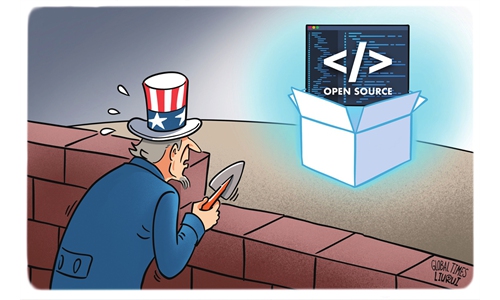
Anthropic and OpenAI are pushing to restrict Chinese open-source models, citing security risks. Microsoft and Nvidia are standing on the other side, arguing for openness. Nvidia's Jensen Huang posted on the X platform that the world needs both closed and open frontier models. Nine minutes later, Microsoft's Satya Nadella followed up, saying open source is essential to a healthy AI ecosystem. The two later signed a joint public letter backing open-source development.
The split itself is the real signal. What's more telling, though, is how the other half of Silicon Valley has responded. Nvidia and Microsoft aren't joining the alarm. They're standing up for open source instead.
Why? Because their business depends on one unified global tech ecosystem - selling chips and cloud services. Whose model gets used matters less than whether people are running workloads on their hardware and platforms.
The frontier labs want to build walls to protect their moat. The hardware and cloud giants want to tear those walls down to expand their market. Both sides, in the end, are fighting over who gets to control the market and set the standards.
This split also reveals that China's position in this competition has fundamentally shifted. China's open-source models have grown strong enough to unnerve America's top AI labs. Two years ago, names like Zhipu AI and Moonshot AI barely registered in the American tech press. Now their models are going toe-to-toe with those from Anthropic and OpenAI. The panic makes sense.
Silicon Valley now sees clearly that China has become a worthy competitor in the AI race. OpenAI and Anthropic's business models rest on scarcity. Frontier capability is valuable because you can't get it anywhere else. However, now you can get it elsewhere - for free. That strikes at the foundation.
So they've reached for the "data harvesting" narrative, accusing Chinese firms of distilling American model outputs to train their own products. It's an accusation that blends genuine technical concern with political calculation, and it's hard to tell which part carries more weight.
China isn't just on the stage - it holds its ground there, and the conversation has shifted to how America should respond. That shift tells us more than any leaderboard ranking could.
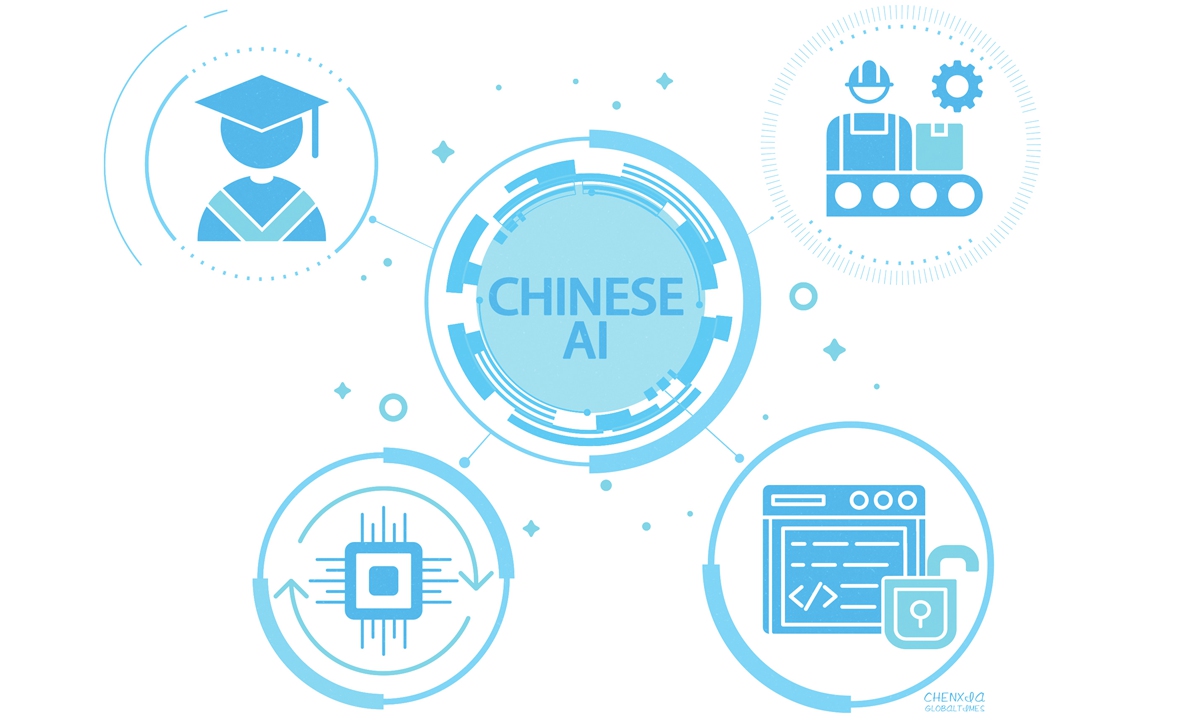
Export controls haven't stopped any of this. Chip restrictions raised China's R&D costs and forced greater engineering efficiency, but they didn't prevent these models from emerging. Structural progress in talent, workarounds in hardware optimization, and the fusion of open-source AI with large-scale manufacturing - together, these form a momentum that sanctions alone cannot dismantle. The idea of pushing China entirely out of this race is no longer realistic.
The fact that Silicon Valley is now forced to argue over open versus closed publicly is itself proof that China has moved to the center of the game.
Of course, the failure to eliminate China doesn't mean the contest is over. Quite the opposite: The less likely elimination becomes, the more the fight shifts to narrower, more contested terrain.
For China, this is not a moment to relax. The failure of the elimination strategy has pushed Washington's approach from "exclusion" back toward "delay and positional maneuvering."
Zoomed out to the broader US-China relationship, Washington no longer expects to knock China out in one blow. Instead, it's trying to stretch the timeline, holding on to its window of advantage for as long as possible.
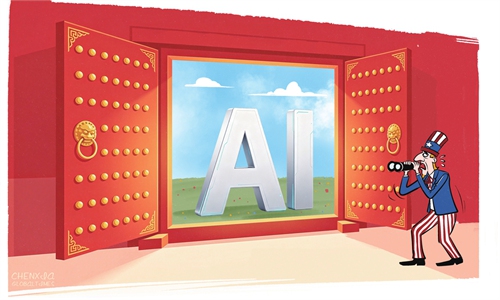
That approach demands a faster, more determined response from China. Open source has opened one door; the fusion with manufacturing has opened another. With both doors open, China's AI development - in hardware capability and in scale of application alike - will accelerate rapidly. As long as China stays true to a development path suited to its own realities, it will, in time, earn the standing it deserves in shaping AI's norms, rules, and standards of access.
RELATED ARTICLES