Slovak President Pellegrini arrives in Beijing for three-day state visit
Successive visits by Slovak leaders highlight pragmatic push for stable ties amid EU de-risking move
By and Li Yu Published: Jul 27, 2026 09:36 PM

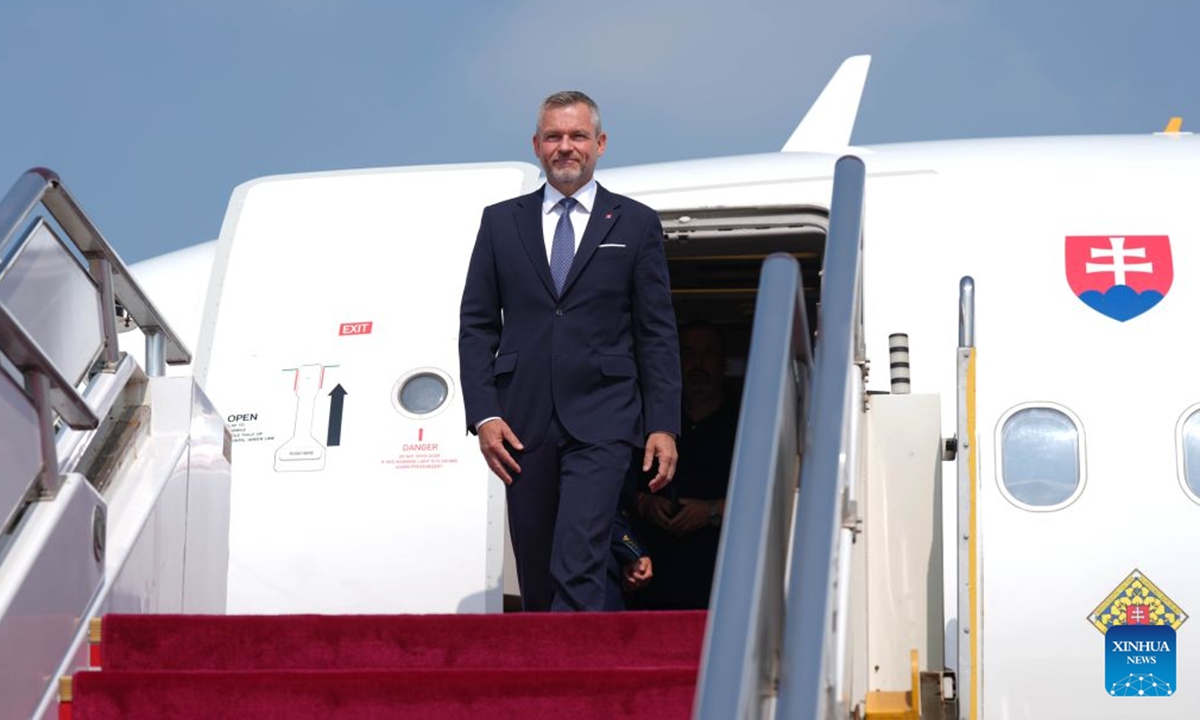
Slovak President Peter Pellegrini arrives in Beijing on July 27, 2026. Photo: Xinhua
Slovak President Peter Pellegrini arrived in Beijing on Monday for a three-day state visit to China. Before departing, he underscored the importance of bilateral ties, writing on social media that strengthening the relationship is "crucial for our future."
Following the prime minister's earlier visit, it underscores the continuity of Slovakia's China policy and helps strengthen the political foundation for cooperation in trade, technology and people-to-people exchanges. Amid rising EU-China trade tensions, Slovakia's pragmatic approach could also contribute to more stable China-EU relations, said Chinese experts.
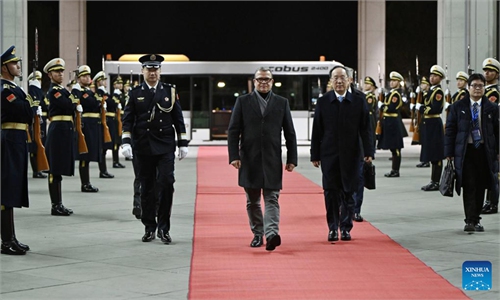
"Departing for my first state visit to China as President of the Slovak Republic! This marks only the second state visit in Slovakia's history, highlighting the significance of our relationship," Pellegrini wrote on X, adding that "In these dynamic times, strengthening these connections is crucial for our future." Alongside the post is a photo of himself walking on a red carpet.
Slovakia is among the first countries to recognize and establish diplomatic relations with New China, and is also China's important cooperation partner in Europe, Chinese Foreign Ministry spokesperson Lin Jian said on Friday.
This is President Pellegrini's first visit to China since he took office. Through this visit, China is ready to work with Slovakia to deepen traditional friendship and political mutual trust, better synergize development strategies, expand exchanges and cooperation in various fields, advance high-quality Belt and Road cooperation and cooperation between China and Central and Eastern European countries, and add new dimensions to the China-Slovakia strategic partnership, said Lin.
Slovak president's latest visit to China reflects Slovakia's commitment to maintaining a stable and consistent China policy. Following Prime Minister Robert Fico's earlier trips, Pellegrini's visit is primarily aimed at consolidating friendly political ties and deepening strategic and practical cooperation, Jian Junbo, director of the Center for China-Europe Relations at Fudan University's Institute of International Studies, told the Global Times on Monday.
As state visit, it carries particular symbolic significance and could help elevate the China-Slovakia strategic partnership. The successive visits also provide a solid political foundation for broader cooperation in trade, technology and people-to-people exchanges, said Jian.
The visit also aims to reaffirm existing areas of partnership and open up further opportunities for cooperation in science and research, transport, logistics, industry, agriculture and tourism, according to a release from the website of the Office of the President.
The release also noted that the visit is taking place amid the rapid development of economic cooperation between the two countries and demonstrates Slovakia's interest in maintaining constructive and pragmatic dialogue with China.
Slovak president's visit comes at a critical inflection point as the EU is increasingly shifting toward economic nationalism, protectionism and broader "de-risking," while trade tensions with China are rising. Against this backdrop, Slovakia, one of the EU's member states, is seeking to maintain stable bilateral ties and further expand trade and investment - a pragmatic strategy to strengthen its strategic leverage, Xin Hua, director of the Center for European Union Studies of the Shanghai International Studies University, told the Global Times on Monday.
The visit could help further expand bilateral trade and investment, particularly in advanced manufacturing and emerging technologies. China's manufacturing and infrastructure expertise can support Slovakia's industrial upgrading and infrastructure renewal, creating substantial room for further cooperation, said Xin.
Slovakia's news agency TASR reported through its news portal Teraz.sk that the visit will also include tours of major technology centers. The Slovak president will visit Baidu, one of the world's leading companies in artificial intelligence, cloud technology and autonomous mobility. The itinerary also includes a visit to Robot Mall, described as the world's first center dedicated to showcasing and promoting the commercial use of humanoid robots.
Currently, EU member states remain sharply divided in their approaches toward China, just as they frequently differ in their positions on broader foreign policy issues. Against the backdrop of growing EU pressure on China and mounting trade frictions, Slovakia's pragmatic and friendly approach toward China carries both symbolic and practical value for stabilizing China-EU relations, said Jian.
As an EU member state and a Western country, Slovakia's constructive engagement with China could encourage other European countries to pursue more pragmatic relations with Beijing.
RELATED ARTICLES