Brazil pushes back against US political meddling amid a new tide of LatAm autonomy
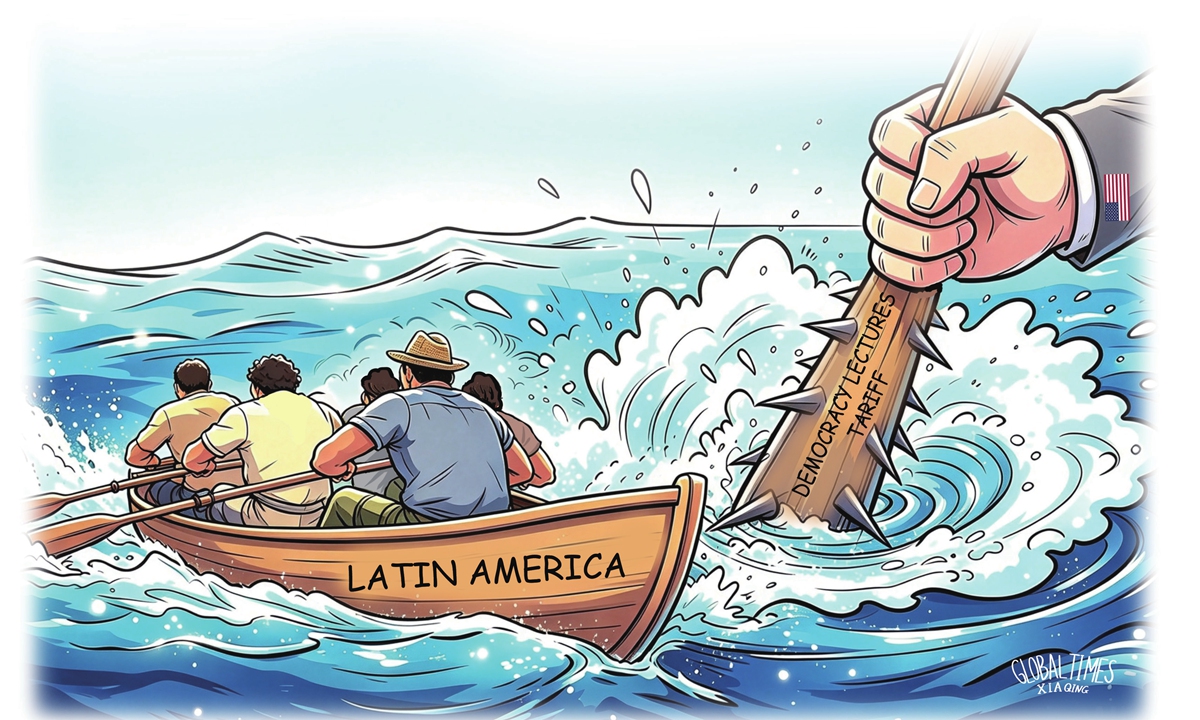
Illustration: Xia Qing/GT
A Washington Post report published lately brought a diplomatic row between the US and Brazil into the spotlight: the Brazilian government denied visas to two senior US State Department officials whom the current administration planned to dispatch on a mission to cast doubt on the "fairness and integrity" of the country's electoral system.With Brazil's general election scheduled for this October, Washington's move to dispatch senior officials to question the "fairness of Brazil's electoral system" speaks volumes about its ulterior motives: to undermine the ruling party's reputation and drum up support for the opposition.
Brazil delivered a swift and forceful pushback by simply denying the officials' entry visas. As Latin America's largest and most populous nation, Brazil's firm response stands as a telling outburst of the region's widespread resentment toward US meddling.
The standoff between the US and Brazil does not end there. Starting in late July, Washington has repeatedly wielded the tariff stick to pressure Brazil: On July 22, the US concluded its Section 301 probe into Brazil and announced a 25 percent tariff on certain Brazilian goods; Two days later, it imposed an additional 12.5 percent tariff under the pretext that Brazil had "failed to address forced-labor practices."
This series of unilateral US actions has sparked strong protests from Brazil. The country has requested WTO dispute consultations and plans to roll out reciprocal counter-tariffs, as it actively diversifies its trade partners. Faced with Washington's dual pressure of tariffs and "democracy" lectures, Brazil's response has grown increasingly clear: It will no longer passively accept either economic coercion or political interference.
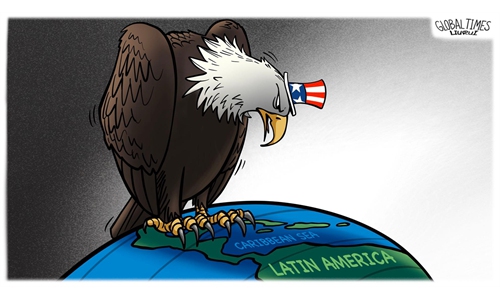
The recent spate of diplomatic and economic clashes between the US and Brazil is a consistent playbook of Washington's centuries-long hegemony over Latin America. Over more than two centuries of US-Latin American ties, Washington has adopted a condescending, patronizing attitude, treating this continent as its exclusive backyard. Rooted in the hegemonic logic of the Monroe Doctrine, the US keeps refining its interventionist toolkit: It resorts to military force at will, orchestrates long-term political meddling and foments regime change, and deploys an endless array of coercive tactics.
This logic of action completely disregards the basic principles of international law and international relations, including sovereign equality and non-interference in the internal affairs of other countries. It seriously undermines the international order based on the UN Charter and international law, making the US the greatest destabilizing force in the region.
For a long time, the US' unrestrained plundering and exploitation of Latin America's resources have severely hindered the normal development of the region and led to numerous serious social problems.
Brazil has long recognized the reality: Only by formulating domestic and foreign policies with true independence and autonomy can it more effectively defend its sovereign integrity and fully secure room for development.
Most Latin American countries with similar historical experiences strongly resonate with Brazil's stance. An increasing number of countries in the region are proactively resisting external interference in their internal affairs, actively expanding diverse forms of international cooperation and pursuing independent development.
In March 2026, the 10th Summit of Heads of State and Government of the Community of Latin American and Caribbean States endorsed the Declaration of Bogotá, vowing to boost regional integration and stand firm against hegemony. On July 27, during a phone call with Chinese leaders, Brazilian President Lula clearly stated that Brazil stands ready to enhance multilateral coordination with China, uphold the authority of the UN, strengthen solidarity and cooperation within BRICS, firmly safeguard multilateralism, resolutely oppose power politics, adhere to resolving hotspot issues through dialogue and consultation.
In the long run, a unified pursuit of independence and self-reliance has awakened and swept rapidly among Latin American nations. The momentum toward defending their rights through greater international cooperation is unstoppable and will not be reversed by one-off external pressure.
Moving forward, Latin American nations will undoubtedly resist external interference with even greater resolve and contribute regional strength to building a new type of international relations featuring mutual respect, fairness, justice and win-win cooperation.
The author is a professor at the Institute of International Relations, China Foreign Affairs University. opinion@globaltimes.com.cn
RELATED ARTICLES