Illustration: Liu Rui/GT
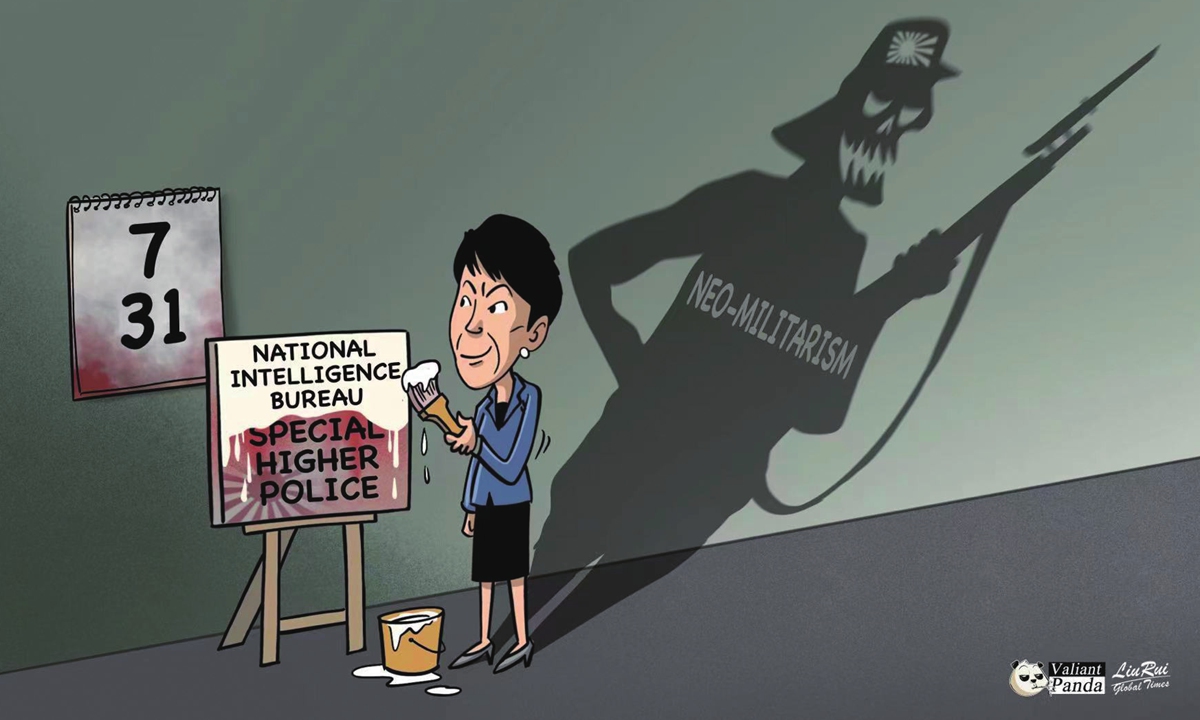
The Japanese government recently approved the launch of a new national intelligence bureau and scheduled the first meeting of the national intelligence council for July 31. The date is particularly striking, as it inevitably evokes memories of Unit 731, the notorious Japanese germ-warfare detachment established during World War II (WWII).As the most sweeping overhaul of Japan's intelligence system since WWII, this institutional restructuring is far from a routine administrative adjustment. It is a key maneuver by Japan's right-wing forces to break through the postwar peace framework and accelerate the militarization of the country's security apparatus. It represents a modernized pre-war intelligence mobilization system built to serve military expansion, which has not only drawn sustained resistance from the Japanese public but also sparked deep concern among Asian neighbors and the international community.
In the aftermath of WWII, Japan established a decentralized intelligence framework featuring checks and balances, given the historical lessons learned. This framework divided functions such as intelligence research, security surveillance, defense intelligence and foreign affairs analysis across multiple independent agencies. Relying on mutual checks and separation of powers, this system was designed to prevent the resurgence of pre-war centralized intelligence machines like the "Special Higher Police" (Tokko) at an institutional level. This balancing mechanism was not only an important component of Japan's pacifist constitution but also a crucial institutional safeguard that constrained Japan's military ambitions and helped maintain peace and stability in East Asia.
However, Japan has completely overturned its postwar intelligence governance rules with the establishment of the new national intelligence bureau.
By creating a national intelligence decision-making mechanism under the direct command of the prime minister, alongside a cabinet-led intelligence coordination executive body, Japan has achieved comprehensive integration and unified coordination of intelligence resources across diplomacy, defense, public security and other domains.
The previous system of dispersed checks and balances has been dismantled, resulting in a high concentration of intelligence authority. This move directly undermines postwar institutional restraints on Japan's intelligence and military powers, carrying strong implications of strategic provocation.
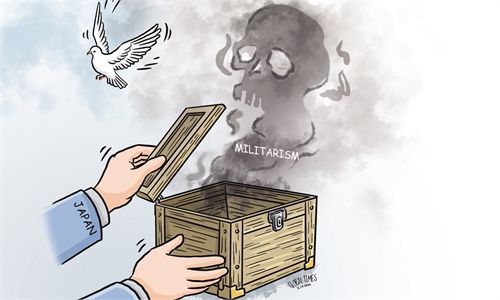
To conceal its true intentions, the Takaichi administration has packaged the intelligence system reform as a conventional national security measure. Yet a glance at Japan's security policy trajectory reveals that this institutional restructuring replicates the prewar logic of intelligence mobilization in support of external expansion. It serves as a significant signal of the revival of Japanese militarism and the comprehensive militarization of Japan's security system.
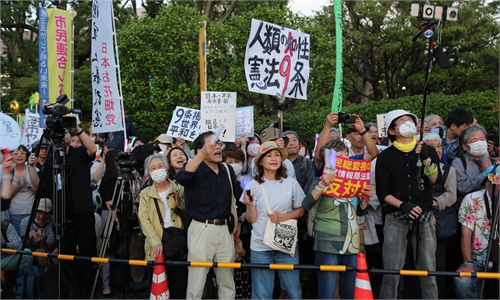
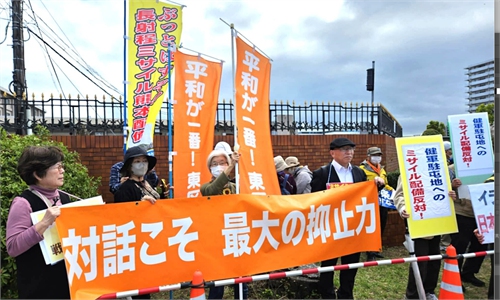
The creation of a national intelligence bureau has sparked widespread concern and ongoing protests in Japan. After the bill was first debated, large numbers of Japanese people had demonstrated near the Diet in Tokyo, firmly opposing the establishment of a highly centralized intelligence agency. They worry that the new body will lack strong parliamentary oversight and independent checks, that its powers will be poorly defined, and that it could easily be used to monitor ordinary citizens, control public opinion and silence anti-war voices - directly threatening people's rights and freedom of speech. Scholars, legal experts and mainstream media in Japan have also warned that an unchecked intelligence system could undermine the country's postwar democracy and push Japan toward becoming a surveillance state.
At a time when many people are struggling with daily living costs and weak social support, the Takaichi administration has ignored public calls for better livelihoods and peace. Instead, it is pushing ahead with intelligence reforms that clearly serve military expansion. This once again shows how right-wing forces are to push their agenda, even at high political risk.
Japan's radical overhaul of its intelligence system is also creating serious problems for security in Northeast Asia. Countries across Asia that suffered under Japanese militarism remain highly alert to every new step Japan takes in strengthening its security apparatus.
History has already shown that unchecked intelligence power and military expansion reinforce each other and eventually lead to conflict.
The author is a research fellow at the Institute of Northeast Asian Studies of the Heilongjiang Academy of Social Sciences and expert of China Northeast Revitalization Research Institute. opinion@globaltimes.com.cn
RELATED ARTICLES