‘Developed vs developing’ narrative insufficient to capture today’s diverse devt realities
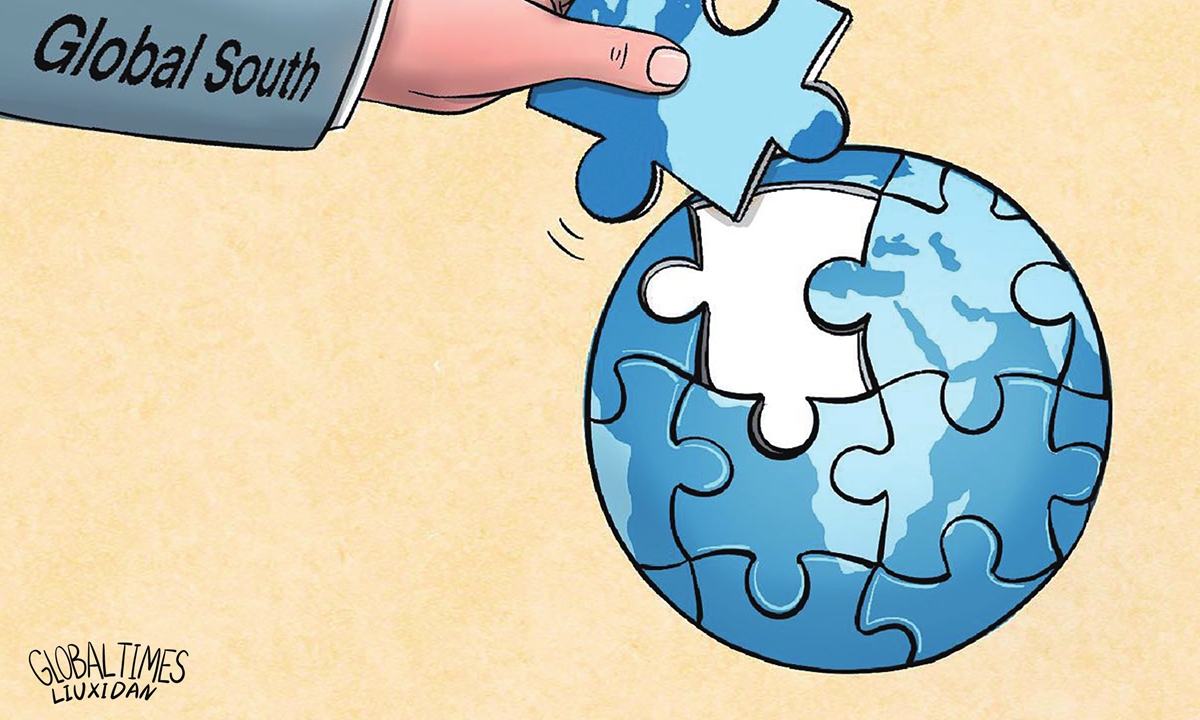
Illustration: Liu Xidan/GT
Recently, I led students from Tsinghua University's Wuqiong College on an overseas research trip to Switzerland and Germany. On our return journey, we transferred through Doha en route from Munich back to China. Arriving at Doha's Hamad International Airport, its modern infrastructure, efficient operations and high-standard international services stood in sharp contrast to the week-long experience of train delays and other public service shortcomings we had encountered in Germany. On the day we left Munich, I spoke with a young Indian man who was stranded due to a subway disruption; he remarked that even in India this would be a rare occurrence. Earlier, some students who had already arrived in Beijing joked that "returning to China felt like a rebirth."Of course, such impressions largely stem from the consecutive transportation disruptions during our stay in Munich and should not be taken as a simple measure of any country's development level. Yet these micro-level experiences offer a vivid and tangible window for observing shifts in global development patterns.
Over the past century, the narrative of global development has revolved around the Industrial Revolution led by Europe - exemplified by Germany-US economic and technological supremacy and the arduous catching-up efforts of developing countries.
Today, Germany retains a world-class industrial system, manufacturing prowess, and high-caliber research and innovation ecosystem. Visits to the BMW Museum and Bosch offered a direct sense of the German automotive industry's deep roots. From complete vehicle manufacturing to engines and components, Germany has developed a highly mature and integrated industrial ecosystem.
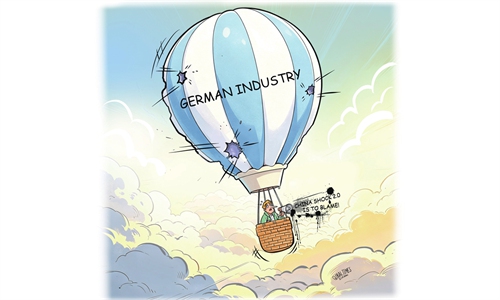
Yet, Germany's modernization model faces fresh challenges. Germany's innovation model - built on long-term R&D and engineering accumulation - now faces competitive pressures in fast-iteration fields such as artificial intelligence. What Germany confronts is not simple decline, but the adaptive challenge facing traditional industrial powers navigating the digital age and a new global competitive landscape.
In stark contrast, Gulf states like Qatar and major Global South economies such as China are pioneering modernization pathways distinct from the Western model, through national development strategies, infrastructure building and industrial upgrading. The core vision of Qatar's "National Vision 2030" is to leverage its energy advantages in oil and natural gas for primary capital accumulation and initial industrial modernization
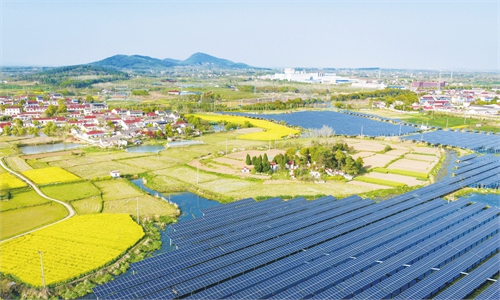
Meanwhile, Chinese modernization, presents an alternative large-scale development path. Anchored in a super-large population, it pursues continuous infrastructure improvement, technological innovation and industrial upgrading, transforming from a manufacturing powerhouse into an innovation-driven economy. The essence is to forge a development trajectory that integrates economic growth, social progress and green transition in line with national conditions. The experiences of Qatar and China demonstrate that Global South economies are enhancing their infrastructure, urban governance and public service capacities through diverse approaches.
Western industrial nations like Germany once occupied pivotal positions in the modern international economic order, thanks to capital accumulation, technological advantages and their role in the global value chain. Yet in recent years, the development of Global South economies - including China and Qatar - is profoundly reshaping global economic dynamics.
The conventional "center-periphery" structure, long dominated by developed countries and characterized by developing nations playing catch-up, is being recalibrated. The binary narrative of "developed versus developing" is increasingly insufficient to capture today's diverse developmental realities.
From infrastructure and urban governance to public service delivery, some Global South economies have demonstrated competitiveness and even leadership in specific domains relative to traditional industrial nations. This does not mean the advantages of the developed world have vanished; rather, it signals that global modernization is becoming more pluralistic. The rise of the Global South is reflected not only in growing economic heft, but also in the distinct paths countries chart based on their resource endowments, strategic choices and institutional capabilities. The global landscape of modernization is evolving from a single model toward a multiplicity of models.
The author is a scholar at the Center for International Security and Strategy of Tsinghua University. opinion@globaltimes.com.cn
RELATED ARTICLES