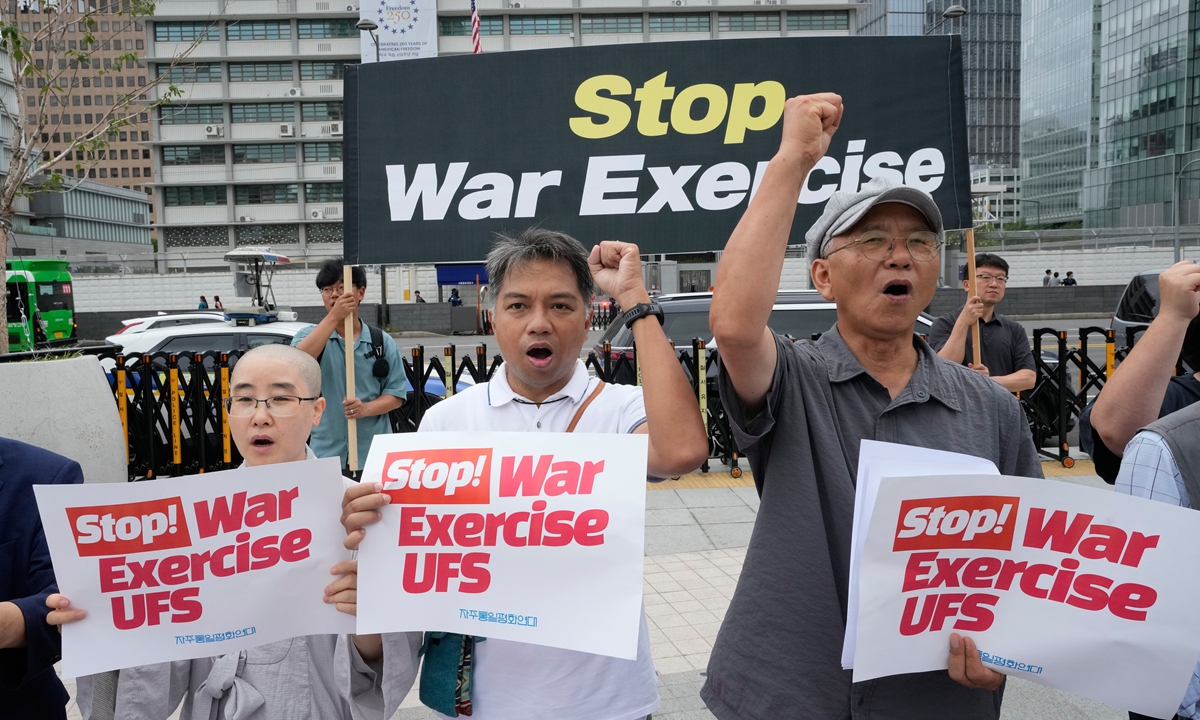
South Korean protesters stage a rally outside the US Embassy in Seoul to oppose the UFS joint military exercises by the US and South Korea, August 17, 2026. Photo: VCG
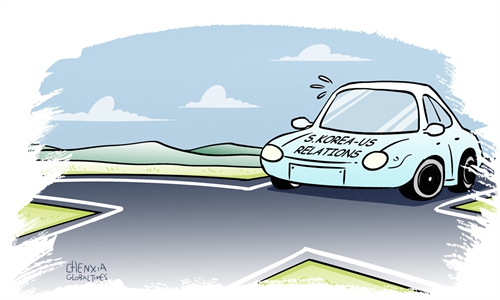
On Monday, South Korea and the US officially began their annual joint military exercise under the name of Ulchi Freedom Shield (UFS). Despite US President Donald Trump saying on Sunday local time that he had instructed the Pentagon to substantially reduce joint military exercises with South Korea, Seoul confirmed on Monday that the UFS exercise is proceeding as planned.Moreover, just days prior, in his Liberation Day address on Saturday, South Korean President Lee Jae-myung outlined a blueprint for "peaceful coexistence" on the Korean Peninsula, calling for a transition to a peace regime through multilateral dialogue. This series of events underscores a paradox of South Korea's current foreign and security policy.
Last week, some South Korean media outlets had already noted a reduction in outdoor field training exercises this year, suggesting that the Lee administration intends to dial down provocations toward North Korea. Yet, a reduction in scale does not alter the fundamental nature of the drills. As long as core components remain intact, the strategic deterrent value of the exercises remains unchanged.
The foundation of South Korea's security policy remains the US-South Korea combined defense posture. Any attempt to noticeably scale back the joint drills would trigger fierce pushback from South Korean conservatives and raise doubts in Washington over the South Korean military's operational readiness and the reliability of the alliance. Consequently, the Lee administration finds itself balancing pacifist rhetoric in politics with the continuation of institutional momentum in military operations.
A deeper paradox lies in South Korea's need to avoid provoking Pyongyang on the one hand, while using drills to advance the retaking of wartime operational control (OPCON) on the other. For South Korean progressives, reclaiming OPCON is a vital symbol of national defense autonomy and a step toward reducing over-reliance on the US. Yet OPCON transfer cannot be achieved unilaterally. While Seoul seeks to reclaim OPCON to reduce the dependence on Washington, the timeline, prerequisites and verification mechanisms of that transfer remain in the hands of the US-South Korea alliance framework.
What merits even greater scrutiny in this year's UFS exercise is not just its impact on inter-Korean relations, but its shifting strategic orientation. The US Eighth Army has emphasized that this exercise focuses on "alliance modernization" and projecting combat power into the First Island Chain. This extends far beyond traditional defense of the Korean Peninsula. Where US-South Korea drills were once framed primarily around deterring North Korean threats, they are increasingly integrated into the US "Indo-Pacific Strategy," deployment along the First Island Chain and strategic containment efforts aimed at China.
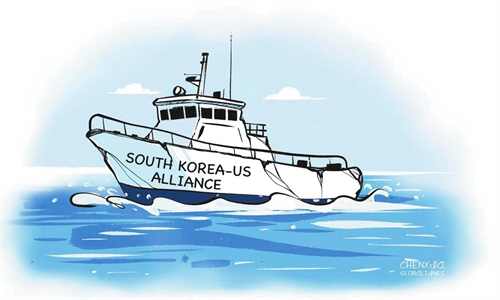
"Alliance modernization," in essence, shifts the US-South Korea alliance from a peninsular defense mechanism into a regional strategic alignment. This shift leaves South Korea in an increasingly awkward position.
Ultimately, Seoul and Washington approach UFS with divergent priorities. For South Korea, the exercise serves primarily to maintain alliance trust, sustain defense deterrence, reassure domestic conservatives and demonstrate force readiness for OPCON transfer. For the US, the drills are not merely a peninsular defense tool, but a crucial platform for modernizing the alliance, enhancing the operational flexibility of US Forces Korea, integrating regional allies in Northeast Asia and advancing its "Indo-Pacific Strategy." While both sides require joint exercises on the surface, their underlying strategic agendas do not fully align.
South Korea wants an alliance tailored to peninsular security that leaves room for strategic autonomy; the US expects South Korea to assume greater regional responsibilities in alignment with its global and "Indo-Pacific" priorities.
The core issue in US-South Korea relations is a structural misalignment of the alliance's role. This gap in strategic priorities ensures that friction over OPCON transfer timelines and defense cost-sharing will become a permanent feature of bilateral relations. Navigating the space between major powers represents the central long-term challenge for South Korean diplomacy.
The true cause for concern is not the scale of any single joint exercise, but the steady transformation of the US-South Korea alliance from a peninsular defense arrangement into an instrument of US regional strategy. Should Seoul fail to recognize this shift, it risks walking into significantly greater strategic danger under the banner of pursuing national security.
The author is director and professor of the Center for Korean Peninsula Studies at the Shanghai University of International Business and Economics. opinion@globaltimes.com.cn
RELATED ARTICLES