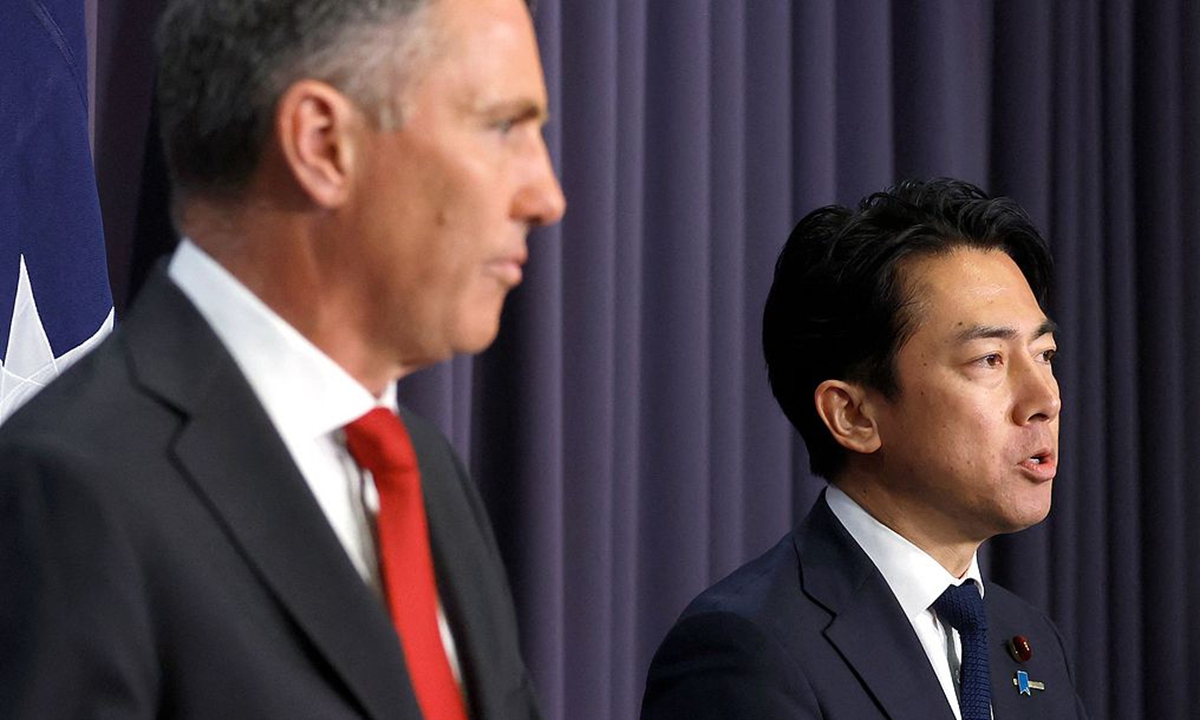
Japan's Defence Minister Shinjiro Koizumi (R) speaks as he stands with Australian Deputy Prime Minister and Defence Minister Richard Marles (L) during a press conference at Parliament House in Canberra on August 18, 2026. Photo: VCG
Japanese Defense Minister Shinjiro Koizumi is visiting Australia and India this week to bolster bilateral military ties. In Canberra, he and Australian Defense Minister Richard Marles prioritized intelligence sharing, defense procurement - including Japan's Mogami-class frigates - and joint weapons testing on Australian ranges. In India, Koizumi's discussions with Defense Minister Rajnath Singh focused on maritime security and expanding defense technology transfers under Japan's relaxed export rules.A crucial detail of Koizumi's trip warrants attention: For Japanese strategists, Australia and India are not just conventional allies, but the long-consoled contingency plan should the US withdraw from the Asia-Pacific. Koizumi's consecutive visits to the Australian Defence Force's Joint Operations Command and the Indian Navy's Western Naval Command served primarily to assess whether the security capabilities of both nations are truly sufficient for Japan to rely upon in the future.
Looking at specific policy objectives, Koizumi's trip aimed to achieve several distinct goals.
First, Japan seeks to turn Australia into a partner for developing its "counterstrike capabilities," a move that transcends standard military cooperation. In recent years, Japan has continuously developed its counterstrike capacity, with missile defense systems serving as a core component. Japan's limited territory forces it to look to Australia, whose sprawling landmass offers the ideal testing ground for long-range missiles.
Furthermore, by testing long-range missiles in Australia, Japan can demonstrate the level of "quasi-alliance" collaboration between the two nations and send a clear political signal of "collective deterrence" to potential adversaries. Should Japan successfully test long-range missiles in Australia, that would mean Australia will have transitioned from an ordinary security partner into a "quasi-ally," demonstrating a commitment to "collective deterrence."
Second, Japan aims to leverage the Australian and Indian defense markets to accelerate its transformation into a major international arms exporter. While Japan's defense expenditure ranks among the top 10 globally, its position in the international arms market stays way behind, largely due to restrictions imposed by the Three Principles on Transfer of Defense Equipment and Technology.
To address this, the cabinet under Sanae Takaichi significantly relaxed these principles in April 2026. The Ministry of Defense has explicitly proposed promoting arms exports through a "public-private partnership" model and indicated that "like-minded countries" are ideal targets for Japanese defense exports. In Australia, Japan has already secured a deal for Mogami-class frigates worth A$10 billion ($6.5 billion), while India's vast naval apparatus represents the next target for exports of Japanese frigates, conventional submarines and other military hardware.
Third, Japan is taking this opportunity to expand its "quasi-alliance" network beyond Southeast Asian countries into the broader Asia-Pacific region. Koizumi's trip undoubtedly falls under the scope of military diplomacy, a primary function of which is to foster cooperation while elevating bilateral military cooperation to a "quasi-alliance" level. In the "quasi-alliance" envisioned by Japan, Australia provides weapons testing grounds and maritime intelligence, India assumes responsibility for maritime security in the Indian Ocean direction while offering a domestic defense market, and Japan outputs arms, equipment and military technology.
Naturally, this network of cooperation does not equate to a formal alliance, and India maintains its commitment to strategic autonomy. Nevertheless, Koizumi's trip demonstrates that Japan is actively attempting to build an assertive "quasi-alliance" framework as the US gradually scales back its presence in the Asia-Pacific.
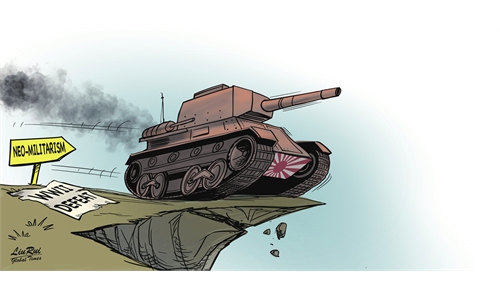
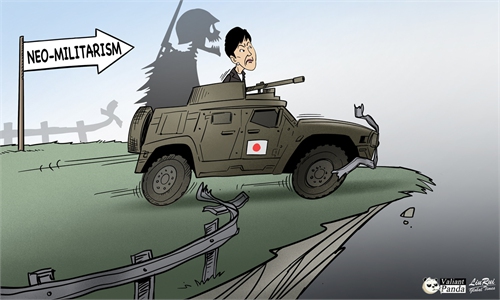
It must be emphasized that the "quasi-alliance" framework Japan seeks to construct and expand will not contribute to strategic stability in the Asia-Pacific; instead, it will polarize the regional security landscape and stimulate Japan's militaristic ambitions. To begin with, Japanese arms exports to Australia and India will inevitably heighten the risk of a regional arms race. At the same time, joint Japan-Australia hypersonic missile testing goes beyond the reasonable boundaries of inter-state military cooperation, easily provoking neighboring countries into adopting hedging measures and creating a security dilemma.
Furthermore, security cooperation among Japan, Australia and India may further evolve into a "quasi-alliance" system, driving the strategic stability of the Asia-Pacific toward bloc politics.
Finally, as a country that has launched wars of aggression, Japan has a strategic tradition of seeking allies; the same logic might apply today. Should Australia and India become "quasi-allies" of Japan, it will inevitably inflame Japan's ambitions for external expansion once again. The international community must pay close attention to Japan's efforts to broaden its "quasi-ally" network in order to safeguard the hard-won pacifist international order of the post-World War II era.
The author is a lecturer at Shanghai University of International Business and Economics. opinion@globaltimes.com.cn
RELATED ARTICLES