Deepening good-neighborly ties over 34 years, China and South Korea embark on a new chapter of cooperation
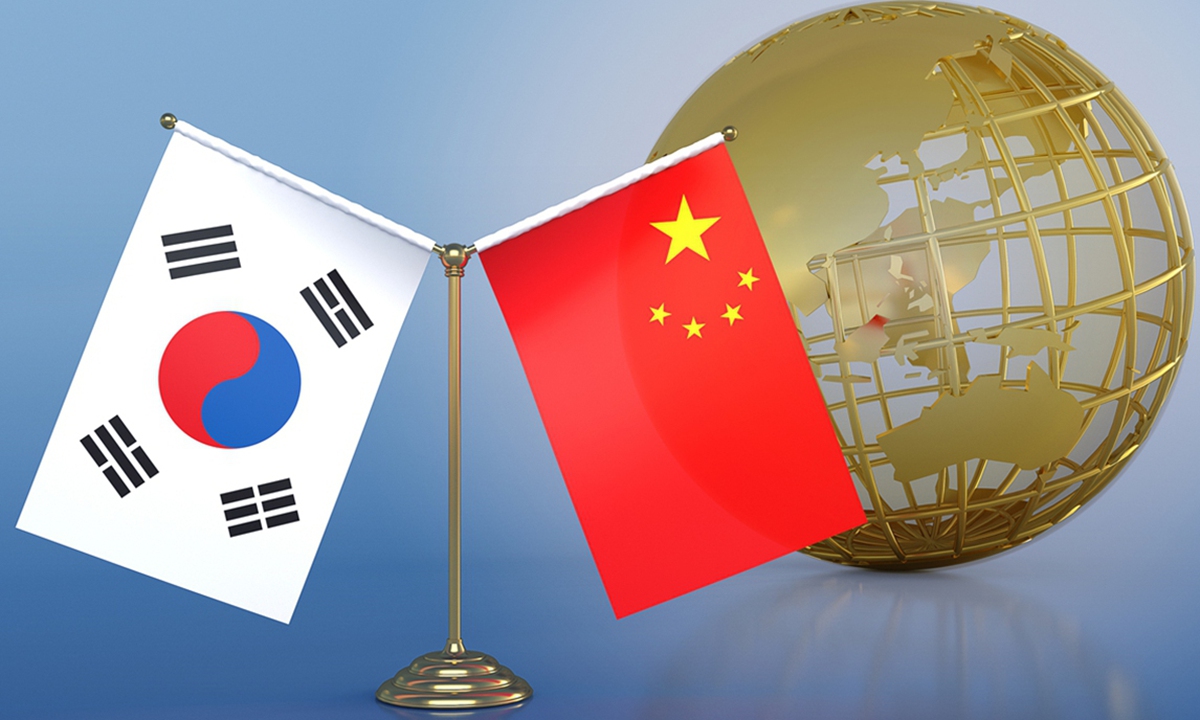
China South Korea Photo:VCG
The year 2026 marks the 34th anniversary of the establishment of diplomatic relations between China and South Korea. Over the past three decades and more, the two countries have steadily cultivated a path of good-neighborly friendship and mutually beneficial cooperation.
In August 2026, at this pivotal juncture marking the 34th anniversary, Chinese Foreign Minister Wang Yi visited South Korea at invitation and held in-depth high-level talks with South Korean President Lee Jae-myung. This visit represents the concrete implementation of the consensus reached by the two heads of state, carrying both strategic significance in linking the past with the future and practical value in stabilizing the broader situation. It consolidates the foundation for the medium- and long-term development of bilateral ties.
The high-level meeting once again underscored the prevailing trend of good-neighborliness and win-win cooperation between China and South Korea. During his visit, Wang said "the comprehensive restoration of China-South Korea relations and positive progress made since the beginning of this year have demonstrated that a rational, pragmatic and positive policy toward China fully serves South Korea's interests and is in keeping with the trend of the times."
The outcomes of the visit are pragmatic and substantive, establishing an institutionalized and sustainable framework for all-around cooperation beyond the 34th anniversary. The talks focused on four core areas - political mutual trust, regional security, practical cooperation and people-to-people exchanges - while identifying key priorities such as industrial upgrading, cooperation in emerging sectors, multilateral coordination and strengthening public support. The two sides aim to move from fragmented, surface-level engagement toward deeper, more standardized coordination, laying a solid foundation for enhanced cooperation as they approach the 35th anniversary of diplomatic ties.
The significance of this meeting extends far beyond bilateral relations, injecting much-needed stability and certainty into a turbulent and changing Asia-Pacific region. Amid global economic fragmentation, rising protectionism and mounting regional security risks, China and South Korea are working together to maintain peace and stability on the Korean Peninsula, stabilize regional industrial and supply chains, and support economic recovery. This reflects the responsibility and vision of both countries as neighboring partners. It also demonstrates that China-South Korea relations not only benefit their peoples but also serve as a stabilizing anchor for long-term peace and prosperity in the Asia-Pacific, offering a valuable model for regional cooperation and development.
The 34th anniversary marks a critical point of continuity and transition for China-South Korea relations. Practice has shown that their friendly cooperation aligns with the trend of the times and serves the shared interests of both nations. It is an important pillar for maintaining regional stability and advancing coordinated development.
Strategic mutual trust remains the fundamental guarantee for the steady and long-term growth of bilateral relations. In the face of a complex geopolitical landscape and external interference, both sides should continue to improve mechanisms for regular high-level exchanges and build institutionalized platforms for communication and consultation.
Economic and trade cooperation serves as core driving force of China-South Korea relations. The two countries should strengthen multilateral economic coordination, counter the impacts of protectionism and fragmentation, and contribute to regional economic integration.
People-to-people connectivity is also the foundation for the lasting development of bilateral ties. Looking ahead, both sides should establish regular exchange platforms, enhancing mutual understanding among their peoples and consolidating public support.
Starting from the new point of the 34th anniversary, the two countries should deepen coordination in multilateral affairs, uphold multilateralism and the vision of a shared future for the Asia-Pacific and jointly address common challenges such as sluggish global economic recovery, geopolitical tensions and supply chain restructuring. Through stable bilateral cooperation, they can empower regional development, inject greater certainty into the Asia-Pacific and set an example of mutually beneficial good-neighborly cooperation.
The author is a professor at the School of Northeast Asia Studies at Shandong University, and director of the Network of Trilateral Cooperation Think-Tanks Weihai Research Base. opinion@globaltimes.com.cn
RELATED ARTICLES