China-Swiss cooperation. Illustration: Xia Qing/GT
At a time when economic globalization and free trade are repeatedly running into headwinds, one piece of news stands out. China and Switzerland concluded negotiations on the enhancement of their Free Trade Agreement (FTA) on August 20. Just as some governments around the world are discussing how to mitigate risks and shield domestic industries, the two countries have chosen a different path: further lower trade barriers, expand market access and make a clear case for openness, cooperation and free trade. This choice is worth pausing over.
Why Switzerland and China?
As an archetypal export-driven economy, Switzerland's prosperity depends on open markets, international trade and global value chains. Its economy is deeply internationalized, with its most competitive sectors - including pharmaceuticals, precision manufacturing, machinery, finance and chemicals - relying heavily on markets beyond its borders. Free trade, therefore, is not merely a slogan, but rather the cornerstone sustaining Switzerland's international competitiveness.
This helps explain why Switzerland has consistently been among the European countries at the forefront in developing economic ties with China. In 2013, China and Switzerland signed the FTA, making Switzerland China's first free-trade partner in continental Europe. The experience over the past decade and more has made one thing clear to both countries: free trade is not about who wins or loses, still less about who gets the better deal. Its premise is mutual benefit.
Why Now?
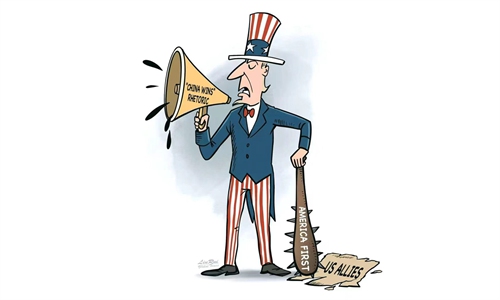
Over the past year, US tariff policies have sent shockwaves through the global trading system, and neither Switzerland nor China has escaped the fallout. On August 1 last year, the US abruptly announced a 39 percent tariff on Swiss imports - a rude awakening delivered on Switzerland's National Day, and a blow to long-held assumptions about its close ties with Washington. Although the two countries later reached an agreement to lower the tariffs, the damage to Swiss foreign trade and overall economy cannot be undone easily.
The US then launched investigations against Switzerland, China and some other countries over so-called "forced labor," and slapped new tariffs of 12.5 percent, the full economic impact of which remains uncertain. This experience offers a clear lesson: in a global trading system fraught with uncertainty, economies with more open markets and more diversified trading partners enjoy greater room for maneuver when external shocks strike.
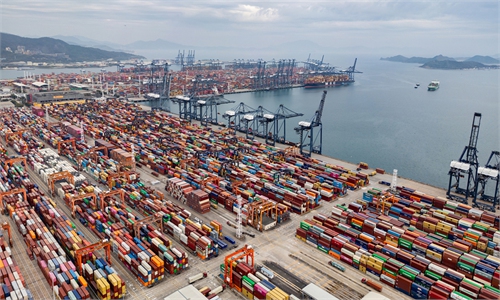
But tariffs are only part of the story. A new wave of technological and industrial transformation is reshaping the global economy. Emerging industries are altering traditional patterns of international division of labor, while creating new opportunities for cooperation. China has emerged as one of the most prominent players in this transformation. It has evolved from the world's factory into an innovation hub, with strong capabilities in AI, advanced manufacturing, green technologies and the digital economy.
As China's strategic innovation partner, Switzerland fully understands that it has much to gain from working together given the two countries' highly complementary strengths. Switzerland boasts world-class research institutions, a deep pool of talent and a strong record of turning scientific research into commercial applications through close collaboration between academia and industry.
China, meanwhile, possesses a comprehensive industrial base, an extraordinary range of real-world applications and an enormous market. In frontier fields, the two countries can therefore build on their respective advantages and create new growth opportunities for cooperation in high-end technologies of the future.
What Can We Learn from This?
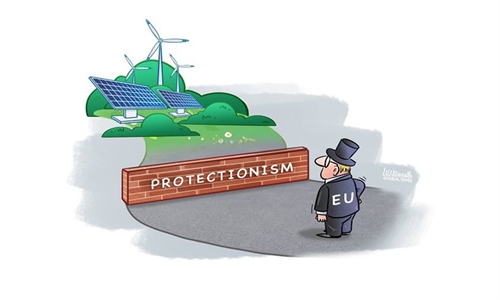
The world in which free trade once flourished is changing rapidly. Protectionism and unilateralism are on the rise, geopolitical conflicts continue to intensify, and global production and supply chains are being reconfigured at speed. Instability and uncertainty are becoming the greatest costs facing economic development around the world. Countries are therefore asking themselves a basic question: which is the right way to build economic resilience and competitiveness amid the new wave of technological and industrial transformation - to close markets' doors more tightly or open them wider?
The upgrading of the China-Switzerland FTA provides an answer: instead of scaling back economic and trade ties because of potential risks, the two countries have chosen to update trade rules in step with changing circumstances, thus creating a more stable, transparent, and predictable institutional environment for businesses. Though China and Switzerland each have their own economic interests and priorities, they have demonstrated that differences need not be a roadblock, dialogue can help refine the rules, cooperation can produce mutual gains, and openness can support shared development.
In fact, China and Switzerland are far from alone. Since the beginning of this year, the EU has signed FTAs with Mercosur and India. The UK has reached an FTA with the Gulf Cooperation Council and concluded negotiations on an expanded FTA with Switzerland. This steady stream of new FTAs demonstrates the falsehood of the claim that free trade is a thing of the past. Nor is free trade simply about cutting tariffs any more - it can provide a much-needed shot in the arm for global economic stability and predictability.
The author is a commentator on international affairs, writing regularly for Xinhua News, Global Times, China Daily, CGTN, etc. opinion@globaltimes.com.cn
RELATED ARTICLES