Photo: Screenshot from media reports
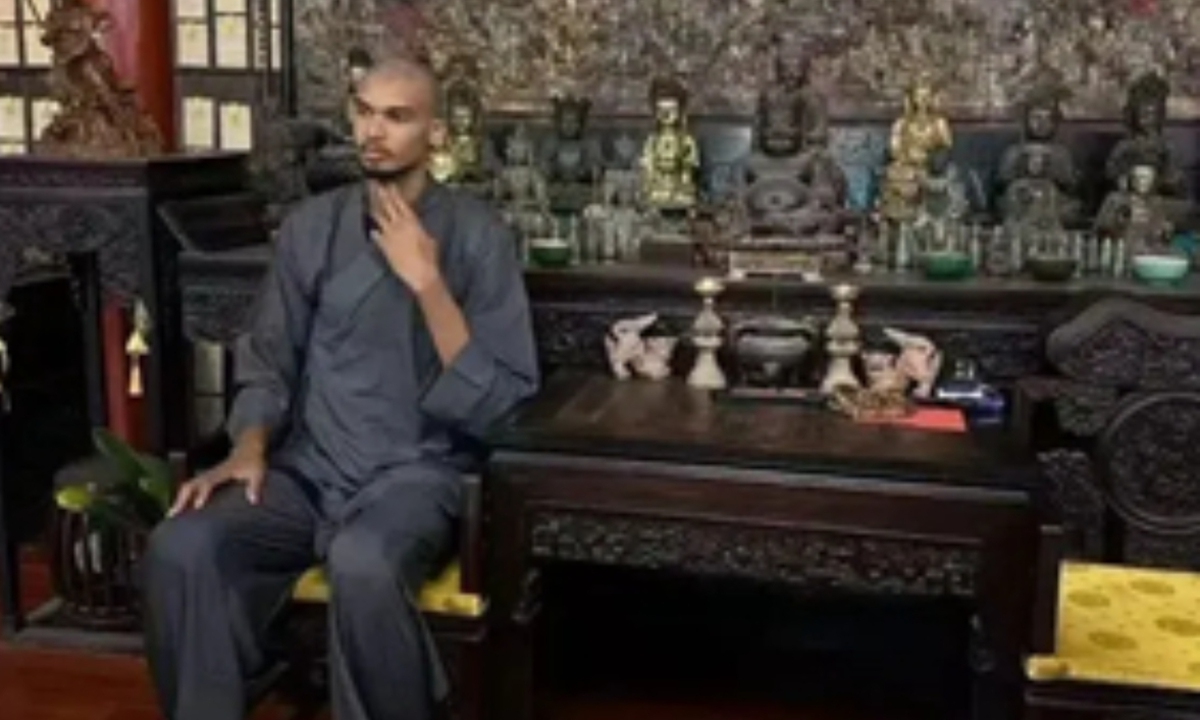
In recent days, NBA player Dillon Brooks' visit to China's Wudang Mountains in Central China's Hubei Province to learn martial arts has once again sparked a wave of interest in kung fu on overseas social media. From NBA star Victor Wembanyama spending several days at a spiritual retreat at a Shaolin Temple last year to multiple basketball stars visiting China's martial arts landmarks this year, the growing trend of overseas sports stars "checking in" at Chinese kung fu destinations has generated considerable buzz on social media.
While such "kung fu experiences" may not be entirely free from considerations of commercial promotion and marketing, the foreign athletes' pursuit of Eastern martial arts and the cultivation of body and mind, as well as the natural affinity between the self-cultivation emphasized by Chinese martial arts and that pursued by modern professional sports, both reflect the unique appeal and powerful pull of traditional Chinese culture for people from around the world.
China's inbound tourism has long moved beyond the traditional model of sightseeing tours at a quick pace, but entered a phase of "deep experiences" that reaches into the very fabric of Chinese culture. These overseas athletes stepping into Shaolin and Wudang, learning from kung fu masters and experiencing the philosophy behind the Chinese martial art, are vivid examples of this trend. They are no longer merely outside observers, but participants in cultural exchange, sharing their personal insights from learning kung fu and their firsthand experiences of the East through overseas social media platforms. Grassroots channels for telling the story of Chinese culture to the world are opening up, one after another.
From another perspective, martial arts also share deep resonances with modern sports. Wembanyama once said in an interview that his visit to the Shaolin Temple was his own choice, motivated by a desire to build his inner and physical strength. Over the following year, his performance on the court showed visible improvement, seemingly suggesting that the experience may have had a positive impact on his physical and mental state. Modern sports have evolved into complex forms of competition combining intense physical confrontation with tremendous psychological pressure. The Chinese martial arts tradition, together with the wisdom underlying it - emphasizing the balance of yin and yang, the interplay of motion and stillness, and inner order - speaks directly to the spiritual struggles faced by modern people living in a fast-paced, high-pressure world.
A country's cultural appeal ultimately stems from an inclusive spirit that embraces diversity, as well as a profound and enduring cultural heritage that encourages people from around the world to willingly step inside and immerse themselves. As more and more foreign friends leave China with a sense of wonder and admiration for Chinese wisdom, the stories of China in the new era are being written on the world stage through these vivid, grassroots encounters - in ways that are both natural and deeply moving.
RELATED ARTICLES