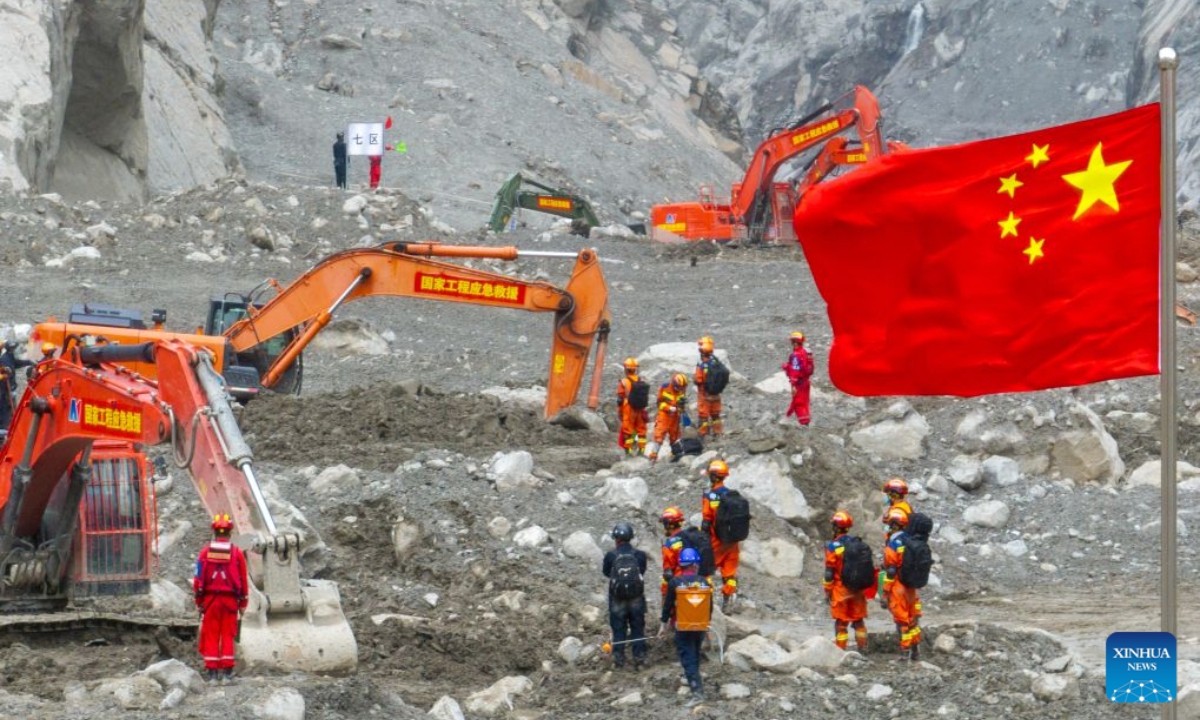
A drone photo taken on Sept. 6, 2026 shows rescuers working at the core affected zone of the mudslide-hit Gyirong Port in southwest China's Xizang Autonomous Region. China has deployed more than 2,500 rescue personnel after a mudslide struck Gyirong Port on the China-Nepal border in southwest China's Xizang Autonomous Region on Aug. 26, the emergency response and rescue headquarters said on Sunday. The mudslide, triggered by a high-altitude glacier collapse in Nepal, had left 43 people dead and 519 others missing at the border port as of 6 p.m. Saturday, officials told a press conference. As of 6 p.m. Saturday, more than 2,500 people and over 500 vehicles had been deployed to join rescue operations, and more than 1,000 flights of drones had air-dropped 5.43 tonnes of supplies, officials said. (Xinhua/Tenzin Nyida)
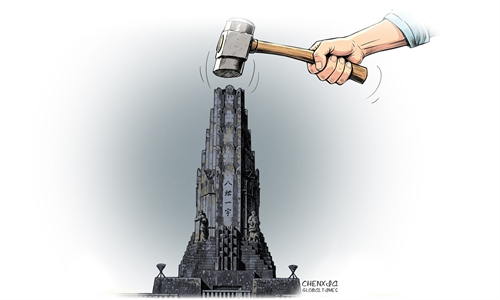
Recently, a video showing cooks from a brigade under the logistics department of the Xizang Military Command and officers from the Xigaze detachment of the People's Armed Police preparing hot meals at the Gyirong Port for frontline rescuers went viral on social media. Unexpectedly, it also seemed to "burn" some Japanese netizens. Some questioned whether "the rescue team was camping," others boasted that "Japanese Maritime Self-Defense Force curry can be bought in supermarkets," and some even compared China's hot meals with Japan's cold-food habits. What these comments reveal is not only ignorance about disaster relief, but also a troubling indifference to human suffering and a lack of respect for both rescuers and victims.
In high-altitude, harsh plateau search-and-rescue operations, where conditions are severe, risks are high, and physical exertion is heavy, a hot meal is crucial for boosting the physical strength and morale of rescue personnel. Ensuring hot food supply in such a complex environment demonstrates China's strong logistical support capabilities.
Providing hot meals for rescuers at the Gyirong Port rescue site is not as simple as just "cooking"; it is an operation that can last more than 10 hours a day. Without proper stoves, they set up four tables and two large pots; without a chopping board, they crouched on the truck's rear hydraulic tailgate to cut vegetables. The temperature difference between day and night on the plateau is extreme. The soldiers' hands ache from washing vegetables in ice-cold water, but once the stove is lit, steaming hot meals begin to boil in the pot. This is the essence of the Chinese military's logistics - never about appearances, but about making sure those on the front line can have warm food.
What no one expected was that these very scenes of preparing hot food would strike a raw nerve among some Japanese netizens. In response, Chinese netizens offered straightforward rebuttals such as "Are rescuers supposed to give up eating?" and "Only with sufficient strength can they complete their mission." These responses are enough to counter the baseless "camping" accusations. Still, one cannot help but ask: What kind of mind-set leads people to make such ignorant and cold-hearted remarks at a moment when every second counts and lives are at stake?
To see hot meals being prepared in the field and immediately think of "camping" is, quite simply, a display of ignorance. This August, Japanese media reported that after an earthquake in Kumamoto, some individuals impersonated Self-Defense Force personnel to loot homes. There is a possibility that cannot be ruled out: The outcry from some Japanese netizens may reflect a form of emotional overreaction, or simply serve as a channel for expressing dissatisfaction with their own country's disaster response.
Ensuring that every rescuer on the front line can have a hot meal reflects not only the warmth of the Chinese military's logistical support but also the warmth of the country in caring for its people. Whatever the reason, those Japanese netizens shouldn't make irresponsible remarks about it.