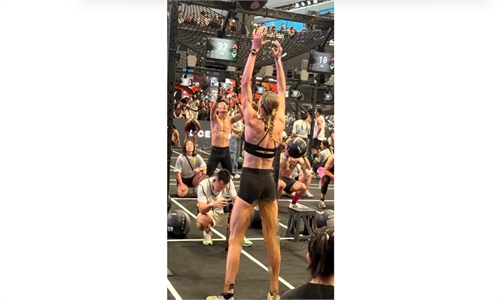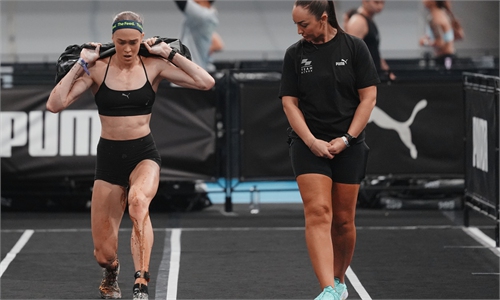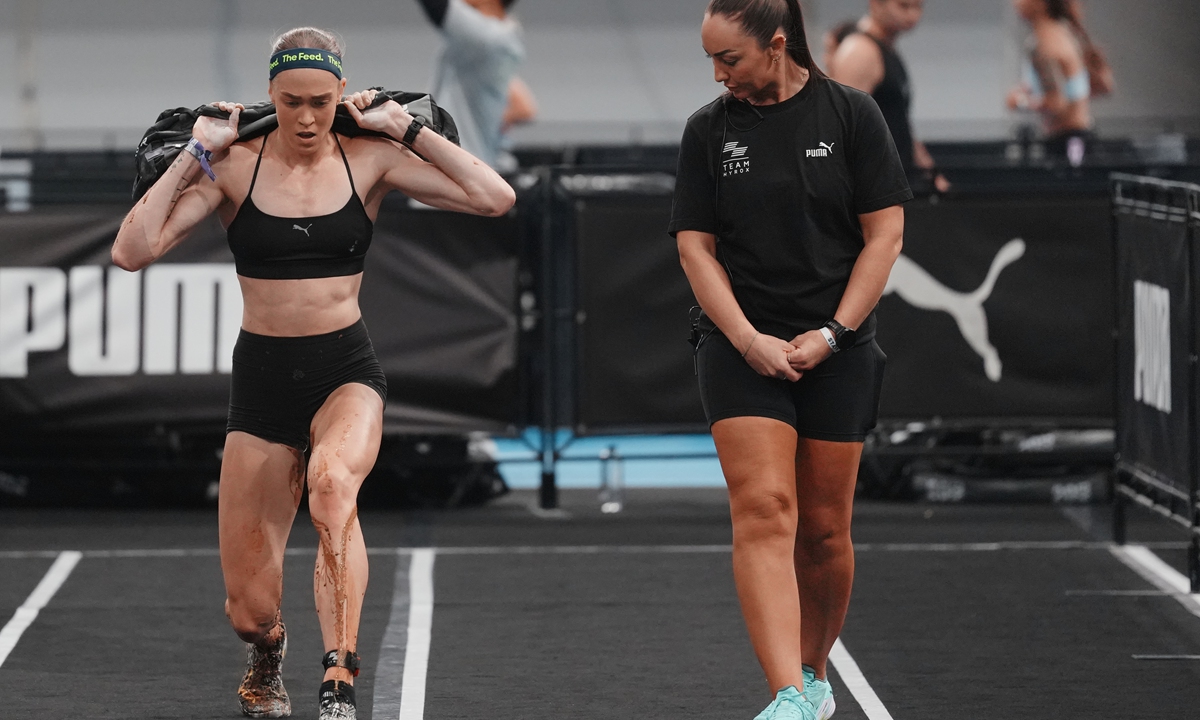
Australian athlete Joanna Wietrzyk (right) competes in the women's elite race at the Hyrox event while suffering bowel incontinence on September 12, 2026 in Beijing. Photo: VCG
As a commercial fitness and physical endurance competition that has taken China by storm, HYROX has found itself embroiled in a massive public controversy over the past few days. The root of the issue is straightforward. During its Beijing stop on September 12, an Australian competitor suffered incontinence, leaving bodily waste on the course. Since subsequent athletes needed to traverse the same section of the course and use the same equipment, concerns arose regarding whether on-site disinfection was carried out in a timely and thorough manner and whether the hygiene rights of other athletes were adequately protected.
However, the organizer's response caused the controversy to escalate. HYROX China issued two statements on September 12 and 14, outlining remedial measures such as track disinfection and equipment replacement; the supplementary announcement on the 14th also acknowledged oversights in on-site management. Yet many netizens quickly noticed that the English-language statement posted by HYROX World - the official account of the headquarters - on overseas social media platforms struck a completely different tone.
The statement praised the athletes' spirit of "pushing themselves to the highest levels," attributing the incident to ambiguities in the rules between "the elite competition and mass participation," and downplaying the responsibility for the referees' mishandling of the situation. There was no apology in the statement to the other athletes affected by the contaminated course. Instead, the company said it will investigate and hold accountable netizens who made personal attacks and threats against competitors, with violators facing permanent bans from all HYROX events worldwide.
The comments section under this statement on HYROX World was flooded with skepticism and dissatisfaction from netizens around the world. Many comments pointed out that the public's concerns were not directed at the athletes themselves, but rather at the event organizers' management failures.
Some fitness enthusiasts said the incident was a public safety issue at the competition venue and should not be packaged as an inspirational story celebrating the spirit of extreme sports. An Australian athlete who also participated in the event told local media that "[This shows] no respect for other people." These voices deserve to be humbly heeded by HYROX headquarters, as this will be beneficial for their improvement.
Opposing cyberbullying and protecting athletes' personal dignity are fundamental social consensus; no one supports malicious abuse or personal attacks against athletes. If the organizers label all reasonable questions raised by participants and netizens regarding the event's organizational capabilities and public health contingency plans as "malicious online attacks" - and then threaten a "global ban" - it not only raises doubts about whether the organizers are deflecting responsibility but also gives the impression of arrogance. As one netizen questioned, if the athlete who encountered the incident had not been white, would HYROX World have responded in the same way?
On the evening of the 14th (Beijing time), a HYROX co-founder posted on his personal account, stating, "I apologise to all that were directly or indirectly affected, as well as to everyone who felt like we did not handle this situation like we should have." This suggests that HYROX recognizes, to some extent, that promoting sports culture is not inherently wrong and does not conflict with respecting the feelings of local consumers. The two are fundamentally aligned.
However, if this apology is sincere, HYROX should issue a formal statement on its official account that does not shirk responsibility and conveys a genuine sense of remorse. Simply attempting to defuse the controversy through a "personal statement" is insufficient.
RELATED ARTICLES