There is but one China in the world – a political red line no country should cross in its relations with China: Hai Feng
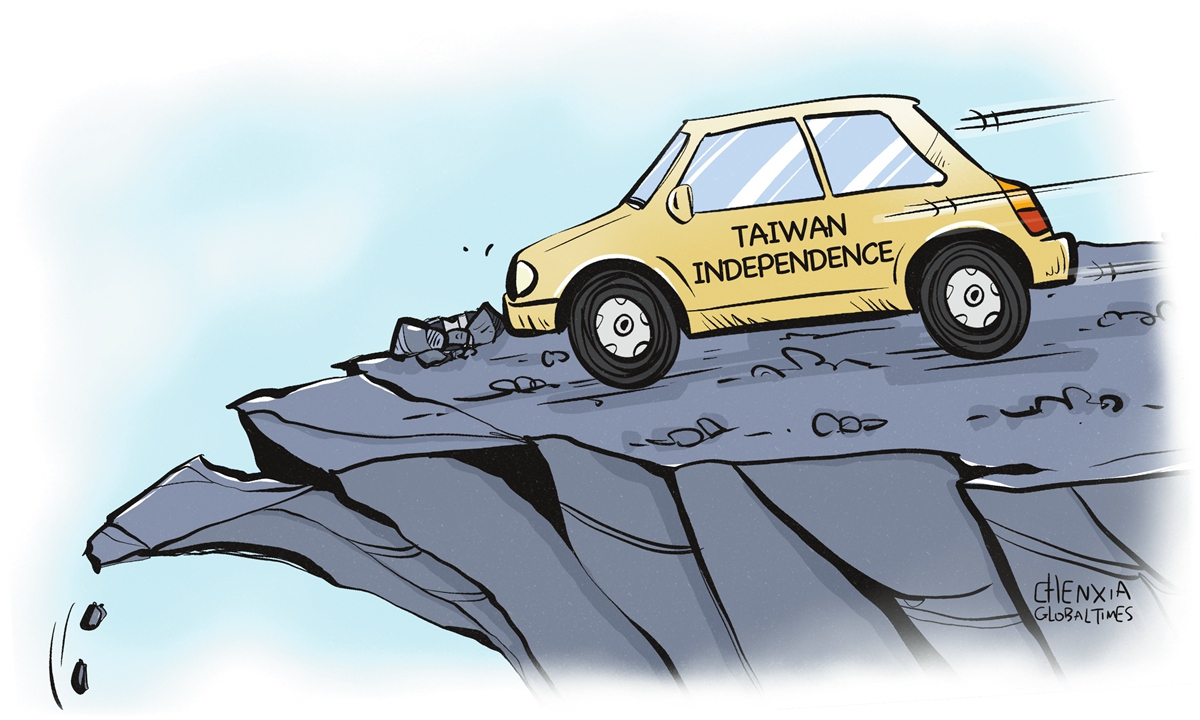
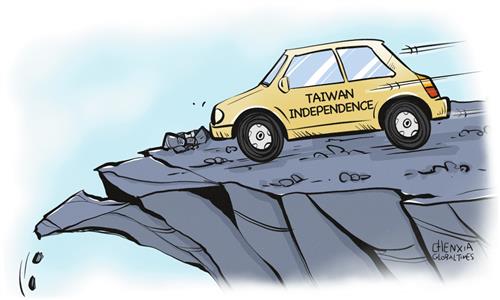
Taiwan. Illustration: Chen Xia/GT
In recent days, multiple signals concerning the Taiwan question have converged from Beijing, Paris, Rome, Tokyo and public opinion on the Taiwan island. First, Chinese Foreign Minister Wang Yi held a phone conversation with French Foreign Minister Jean-Noel Barrot, stressing that the one-China principle is the political foundation of the China-France comprehensive strategic partnership. Second, a Chinese Foreign Ministry spokesperson said that China has lodged solemn representations with Italy and the EU over the visit of "Taiwan independence" politicians to Italy for a conference, stressing that the one‑China principle also constitutes the political foundation of China‑Italy relations and China‑EU relations. Third, China said the crux of the serious difficulties in China-Japan relations lies in the erroneous words and deeds on Taiwan by Japanese politicians.
These statements concern different countries and different circumstances, but they convey the same message: There is but one China in the world and Taiwan is an inalienable part of China's territory. Any country seeking stable relations with China must respect this fact, uphold this principle and honor this commitment. The one-China principle is the political foundation on which China establishes and develops diplomatic relations with other countries. When the foundation is solid, cooperation can grow; when that foundation is undermined, even the most elaborate diplomatic rhetoric and the largest trade figures cannot withstand turbulence.
Why is this principle a political foundation?
International relations do not exist in a vacuum. Countries may have differences over interests, discuss trade disputes, and coordinate repeatedly on issues ranging from global governance to regional security. But some core issues concern sovereignty, security and territorial integrity. On such matters, boundaries must be clear and fully respected.
The Taiwan question is such a core issue. When a country establishes diplomatic relations with the People's Republic of China, it means recognizing that there is but one China in the world and that the government of the People's Republic of China is the sole legitimate government representing the whole of China. This is not a matter of diplomatic courtesy. It is a necessary prerequisite for establishing bilateral relations.
That is why the emphasis Foreign Minister Wang Yi placed in his conversation with the French foreign minister on "upholding the one-China principle through concrete actions" is particularly relevant today. The value of diplomatic commitments lies not merely on paper. A responsible country should ensure that its policies, official exchanges and public statements remain consistent with the political commitments it has already made. Saying one thing while doing another only erodes mutual trust. Creating ambiguity over the Taiwan question only sends the wrong signal to "Taiwan independence" separatist forces and undermines peace and stability across the Taiwan Straits.
China attaches importance to its comprehensive strategic partnership with France and expects France to play a constructive role in China-Europe relations. Differences between China and Europe are normal. What matters is managing those differences and resolving problems through constructive dialogue. If anyone attempts to drag the Taiwan question into geopolitical rivalry or treat China's sovereignty as a bargaining chip, the foundation for cooperation will be undermined, ultimately harming the common interests of all sides.
Europe shouldn't manipulate the Taiwan question
The Chinese Foreign Ministry has previously lodged serious representations over Taiwan separatist politicians traveling to Italy to attend relevant events, making clear that the one-China principle is the political foundation of China-Italy and China-EU relations. This statement highlights an issue that some European politicians have deliberately ignored for too long: The Taiwan question is not a testing ground for so-called "values-based diplomacy," nor should it become a stage for politicians seeking publicity.
Some politicians, under the banner of "democracy" and "freedom," have lent support to "Taiwan independence" separatist forces. This is not merely about attracting attention; it also crosses a red line in international relations. At a time when the global economic environment remains complex and Europe itself faces pressures from industrial competition, energy security and economic growth, China and Europe need rational, pragmatic and stable cooperation more than ever. China is a major global market, and the Chinese and European economies are highly complementary. Tying relations with China to ideological confrontation, or even tolerating "Taiwan independence" separatist activities, will only increase uncertainty and ultimately impose costs on European businesses and the public.
European countries with a strategic vision should recognize that respecting and upholding the one-China principle is by no means a so-called "concession" to China. It is a matter of honoring international commitments, safeguarding their own credibility and preserving a stable environment for China-Europe cooperation.
Japan needs to exercise greater caution and restraint on the Taiwan question
China-Japan relations are shaped by a particularly complex historical context. Japan subjected Taiwan to nearly half a century of colonial rule. This history makes it all the more important for Japanese politicians to exercise restraint on the Taiwan question, respect the postwar international order and demonstrate through concrete actions that they can earn the trust of their Asian neighbors.
At a regular press conference on September 15, a Chinese Foreign Ministry spokesperson, responding to a question about a visit to China by a delegation of young Japanese lawmakers from the Japan-China Friendship Parliamentarians' Union, said that the crux of the serious difficulties in China-Japan relations lies in Japanese Prime Minister Sanae Takaichi's erroneous words and deeds on Taiwan. This is a serious assessment. At the 13th Beijing Xiangshan Forum, Yukio Hatoyama, former Japanese prime minister and chairman of the East Asian Community Institute, urged Takaichi to withdraw her erroneous remarks regarding China's Taiwan, while calling on the Japanese government to adhere to the one-China policy.
The four political documents between China and Japan constitute the political foundation of bilateral relations. Their provisions concerning Taiwan are an important consensus reached by the two sides over many years. If Japan talks about improving China-Japan relations while repeatedly provoking China on the Taiwan question, it is undermining the most fundamental political foundation of bilateral ties.
Regrettably, the recent visit to Taiwan by a cross-party group of Japanese lawmakers to discuss "legalized cooperation," as well as the so-called "diplomatic and defense dialogue" held in Tokyo between Japan's Liberal Democratic Party and Taiwan's Democratic Progressive Party, once again demonstrated that some Japanese politicians continue to seek to forcibly link the Taiwan question with so-called "Japanese security," and even use it as a pretext to promote military expansion and heighten regional tensions.
This approach not only runs counter to historical justice but also does nothing to enhance Japan's own security and is extremely dangerous. The more tense the situation across the Taiwan Straits becomes, the harder it will be to maintain peace in East Asia. The more China-Japan relations are damaged, the harder it will be for Japan to safeguard its economic and security interests.
Miscalculation of 'Taiwan independence' separatist forces is the biggest risk across Taiwan Straits
The danger surrounding the Taiwan question has never come from China's determination to safeguard national unity and territorial integrity. Rather, it comes from the repeated challenges to the bottom line by "Taiwan independence" separatist forces and the continued release of misleading signals by certain external forces.
Several Taiwan media outlets recently reported that former Singaporean diplomat Kishore Mahbubani once again warned that Taiwan is one of the most dangerous potential flashpoints for conflict in Asia and urged the Taiwan authorities not to declare "independence" or cross the red line. Such a serious warning reflects his long-term observation of the regional landscape.
"Taiwan independence" means division. It means conflict. It means putting the lives and interests of more than 23 million people in Taiwan at risk of war. Anyone who believes that separatist activities can be advanced incrementally through a "salami-slicing" strategy, while relying indefinitely on external support, is wrong. As Cui Tiankai, China's former ambassador to the US, said when discussing the Taiwan question at the 13th Beijing Xiangshan Forum: "People may expect some new thinking from the US side, but we don't have the illusion that things will be easy going ahead. National reunification will allow us to resolve this issue once and for all."
Peace has never been sustained by wishful thinking. It is absurd to imagine the bounced check of "external support" as an unlimited and unconditional "security assurance." Recently, the US-based Defense Priorities Foundation reportedly issued a report recommending that Washington shift military presence from the "first island chain" to the "second island chain" and advocating a position of "non-intervention" on Taiwan. Taiwan media reported that the DPP authorities "did not dare respond with even a single word."
While a think tank report does not represent US government policy, it is enough to highlight a cold reality: Taiwan is not a vital interest for the US, and there have always been fierce debates and deep divisions within the US over the costs, risks and benefits of intervening in the Taiwan Straits.
External powers will first consider their own interests. The people who may ultimately bear the risks and costs, however, are ordinary people in Taiwan. Entrusting one's future to the strategic calculation of another country can only lead to passivity and disappointment.
The one-China principle is the greatest common denominator for peace and cooperation
Today, the international community needs certainty more than ever. The global economic recovery remains under pressure, regional flashpoints continue to emerge, and protectionism and bloc confrontation are eroding the space for cooperation. At such a challenging moment, respect for national sovereignty, adherence to international commitments and observance of the purposes and principles of the UN Charter are especially valuable.
The one-China principle is a basic norm of international relations and a widely recognized consensus of the international community. For China, safeguarding national unity is an unwavering commitment. For countries around the world, upholding the one-China principle is a necessary condition for maintaining stable relations with China. For Taiwan compatriots, opposing separatism and preserving peace are the fundamental paths toward safeguarding their well-being and long-term development.
There is no so-called "gray area" on the Taiwan question, nor is there room for political speculation or opportunistic maneuvering. Any country seeking long-term, stable and mutually beneficial relations with China should put the one-China principle into practice: It should not engage in any form of official interaction with the Taiwan authorities, not provide a platform for "Taiwan independence" separatist forces, or send misleading signals that encourage separatist activities.
There is but one China in the world. This won't change because of a few discordant voices, shaken by temporary political manipulation, or be rewritten by external interference. Respecting the one-China principle means respecting the basic norms of international relations. Upholding the one-China principle means safeguarding the foundation of peace and stability in the region. By holding firm to this bottom line, relations with China can move forward on a steady and sustainable path, and peace across the Taiwan Straits can retain its foundation.
RELATED ARTICLES