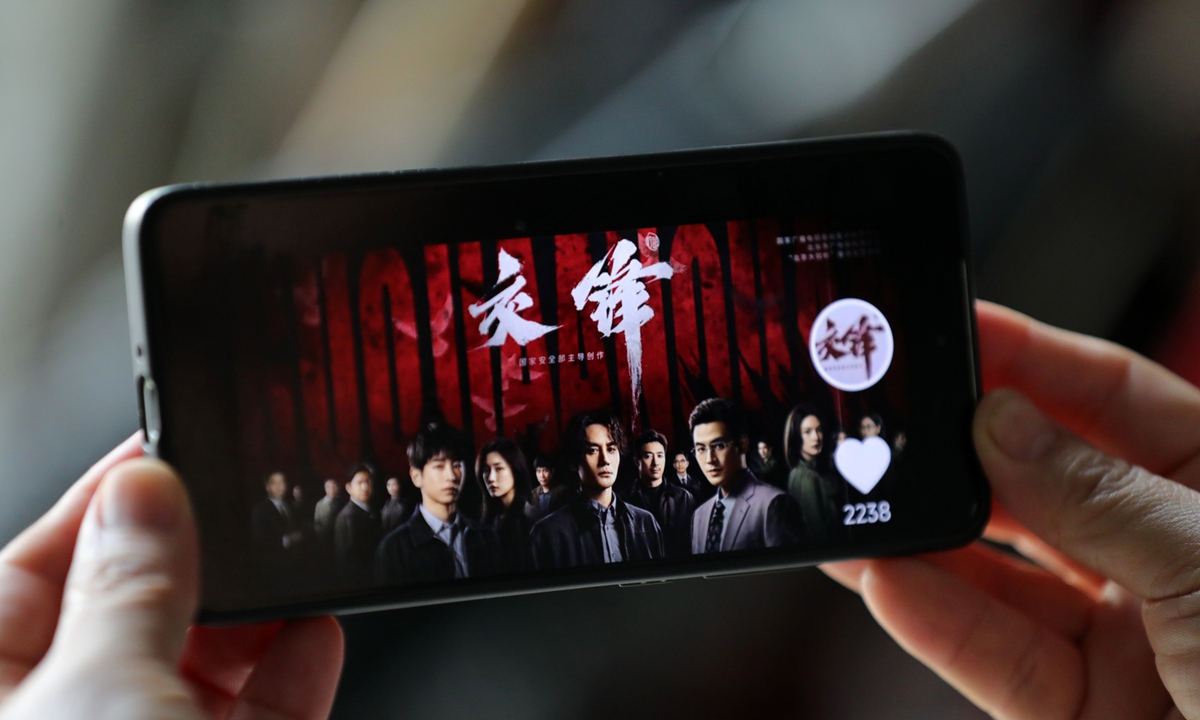
Chinese espionage drama Jiaofeng Photo: VCG
Jiaofeng, a Chinese espionage drama with cross‑Taiwan‑Straits storylines and internationally titled The Long Watch, has unexpectedly become a hit.
Unlike past spy dramas, which were mostly set against the backdrop of the War of Resistance against Japanese Aggression, the civil war fought between the forces led by the Communist Party of China and the Kuomintang, or the early days of the People's Republic of China, the plot of this series is set during the 1995 Taiwan-Straits crisis triggered by Lee Teng-hui's visit to the US. It is a cross-Straits spy drama "taking on a subject rarely treated so directly: the modern history of [cross-Straits] tensions."
While the series has reaped massive acclaim, the responses from the Democratic Progressive Party (DPP) and certain Western media outlets are intriguing. Taiwan's so-called "Mainland Affairs Council" claimed that the Chinese mainland produced the series out of "extreme anxiety," while Britain's The Guardian, though acknowledging that the show has "proved a sensation" across the Straits, snidely portray it as "propaganda."
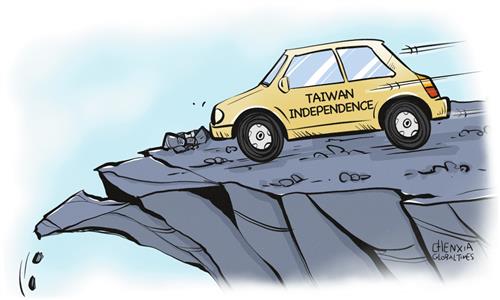
As a TV series with sound values and a "bold" narrative approach, who has Jiaofeng really stung? First and foremost, it has stung those forces that have long deceived residents on the island with one-sided narratives. For a long time, the DPP authorities have downplayed the true root causes of the Taiwan Straits crisis and used political manipulation to cover up their separatist deeds.
Based on real cases, Jiaofeng exposes the undercurrents of the covert front in the Taiwan Straits during the 1990s, as well as the despicable acts of "Taiwan independence" separatist forces colluding with external powers to undermine stability. This has exposed the DPP's lies, which is one of the reasons why they have reacted with anger and resorted to twisting the facts to criticize the series.
Although Jiaofeng has not yet officially aired in the Taiwan region, numerous local media outlets there have already covered the show's content, and many netizens on the island have expressed a strong desire to watch it.
The DPP authorities, who have long prided themselves on "freedom and democracy" and used this as a pretext to deceive the international community, should actually work to bring Jiaofeng to Taiwan as soon as possible.
The quality of TV dramas from the Chinese mainland is improving, and watching and appreciating these excellent productions is not only the strong wish of Taiwan residents but also their fundamental right.
It comes as no surprise that some Western media outlets are echoing the "Taiwan independence" camp. After all, they want tensions across the Taiwan Straits to persist. Otherwise, how could they peddle arms and use Taiwan region as a pawn? However, spy thrillers are a traditional genre in the Western film and television industry, with countless related works. Why is it that Western spy thrillers are hailed as "patriotic and just," while Chinese ones are dismissed as "simply propaganda"? Such double standards will only cause them to steadily lose credibility.
The widespread popularity of Jiaofeng is an innovative breakthrough in the spy genre and a profound lesson in patriotism and national identity. From last year's Silent Honor to this year's Jiaofeng, both series have helped people on both sides of the straits recognize the dangers of division and appreciate the unsung heroes, while also making it clear to the outside world that China's resolve to defend national sovereignty, counter separatism, and safeguard peace across the Taiwan Straits has never wavered and will never yield. The series may come to an end, but the historical trend toward national reunification will never stop.
RELATED ARTICLES