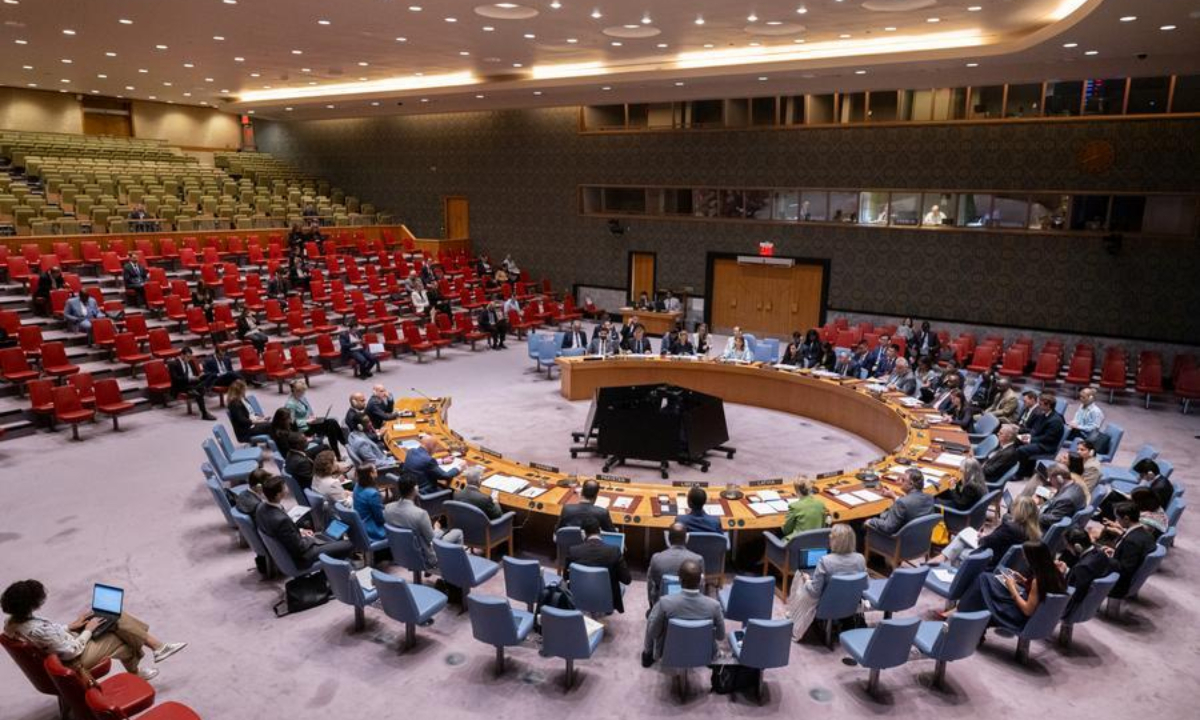
The Security Council holds a meeting on the situation in Syria at the UN headquarters in New York, Sept. 17, 2026. (Manuel Elias/UN Photo/Handout via Xinhua)
As part of the 81st session of the UN General Assembly, the high-level General Debate is scheduled from September 22 to September 28. The podium is built. What should the world expect to hear? Gaza's children weeping, small island states crying for help, the Global South demanding development and fairness.Iran is right: Attendance is a legal right, not a favor. By extension, peace is a right, development is a right, and so is not being left behind in the AI era. This is the fair word China will speak: an equal and orderly multipolar world, and universally beneficial and inclusive globalization - not one that controls others, but one where everyone survives and thrives together.
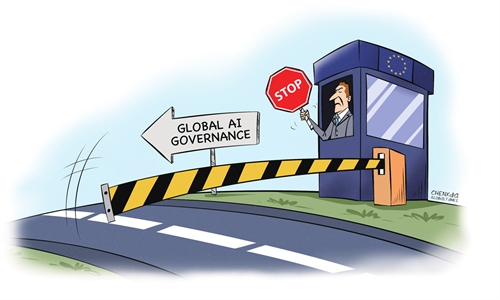
If delegates can enter the UN hall only at the host's discretion, confined by travel limits and a compressed delegation, then international law and the Agreement regarding the Headquarters of the UN are already hollowed out.
Harder still: Between the two states at war, Israel is admitted while Palestinian representatives are shut out for taking its war with Israel to international courts. Yet in Gaza's ruins, families still search for remains, and the blood of women and children remains wet. To whom can victims appeal for justice? The podium shouldn't exist only for the strong.
For more than 80 years, the UN General Assembly has been a forum for global change, from the Cold War to UN reform. All 193 members vote equally; even the weak are heard. History has proven again and again that rules apply equally; rights do not depend on size. Hegemony dictates whose voice should be heard and whose voice should not, and it never buys peace - it only pushes the hall into being the drawing room of the powerful.
The world should hear Gaza's children first. That weeping is not background noise but an interrogation of conscience. Bombing, blockade and starvation rotate there; aid is cut off; hospitals and schools are not safe. Sudan's war is equally brutal, millions displaced, yet almost forgotten by the cameras.
China demands an immediate cease-fire, humanitarian access, an end to annexation and a two-state solution. No cease-fire, no development. No justice, no lasting cease-fire.
Global South climate voices are needed; developed nations must fulfill their climate finance promises. China is planting trees, installing solar power panels and promoting electric vehicles at scale, sharing technology with its Southern partners because, in the face of the climate crisis, we are all in the same boat.
The world must also hear the Global South's demand for development and fairness. The South holds most of the world's population and most of its growth, yet it still lacks seats at the Security Council, the IMF, and the WTO. It wants opportunity, not charity: stable supply chains, open markets, affordable technology and finance that is not weaponized. Politicizing trade, securitizing investment and walling off tech cooperation hurt everyone's livelihood.
By sharing markets, building infrastructure and boosting green capacity, China wants to prove that modernization is not the patent of a minority of countries. This is exactly why the Assembly remains irreplaceable today.
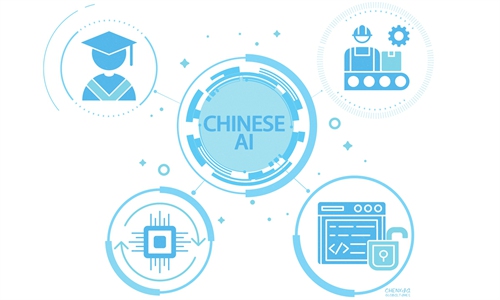
Not being left behind in the AI era is a right, too. AI is running faster than humanity's understanding of its risks. It can diagnose illness, aid teaching and forecast disasters, but it can also deepen surveillance, bias and unemployment. If rules are written only by a few firms and states, and if data is monopolized, the South will be left behind once again.
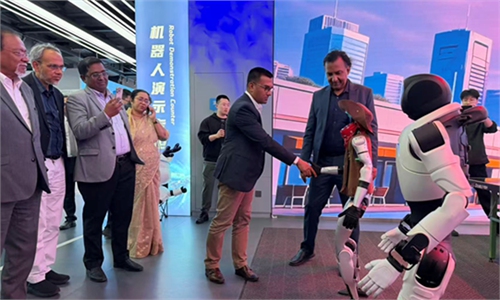
China advocates "AI for good and for all," promoting it as a shared resource through open-source initiatives and capacity building, so that African doctors, Southeast Asian teachers and Latin American farmers can all benefit. China seeks no AI hegemony; it simply hopes no child misses out on the future because of where they were born.
China's fair word at the UN is not complicated. First, peace: de-escalation and dialogue, not sanctions and bombing. Second, development: bring the 2030 Agenda back to the center by prioritizing poverty reduction, food security, health and education. Third, fairness: reforming global governance is not about building a new stove, but about making the table bigger, the voices more numerous and the rules fairer.
China is ready to stand with all countries that cherish peace and pursue development, transforming "surviving" into "thriving," and "you lose, I win" into "everyone wins."
RELATED ARTICLES