Illustration: Chen Xia/GT
From September 23 to 25 local time, the Chinese president paid a state visit to the US. Among the eight deliverables and understandings reached was the following: "The two heads of state recall that China and the US were allies in World War II and fought side by side to win the war."
At the arrival ceremony at the White House on Thursday, the Chinese leader pointed out that during the Second World War, Chinese and Americans fought shoulder to shoulder against fascist aggression. Chinese people have never forgotten that part of history, nor have the American people, he said. A statement released by the White House likewise noted that the two leaders recalled that the US and China were allies in World War II and fought side by side to win the war. According to media reports, the US president said, "Look at the greatness that we had together fighting in World War II" and "the pursuit of common interests has connected our people across the vast oceans and many differences and even made us allies in World War II."
The Chinese and US leaders' reference to the history of World War II sent a significant signal to the international community that the two countries share a commitment to upholding the postwar international order. It injected a measure of stability into a turbulent world and was widely welcomed by the international community. Japan, however, was rattled. Japan's Kyodo News reported that the Japanese government was "deeply confused and unsettled" by the development, while Japanese Prime Minister Sanae Takaichi was "considering calling Trump for a briefing on the China-US summit as soon as possible." Jiji Press, meanwhile, reported that the US president's remark had "caused confusion within the Japanese government."
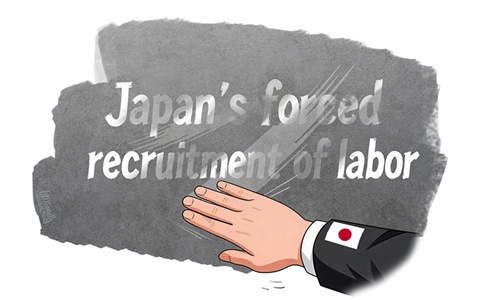
Japan's militarist aggression during World War II brought profound suffering to the people of China and other Asian countries, while also sending Japan itself down a disastrous path. China and the US' joint efforts to resist Japanese fascism are an objective historical fact recorded in the annals of world history and an integral part of the victory in World War II. If Japan truly believes, as it claims, that "militarism belongs to the past generation" and that it is now a "peaceful nation," what is there to be unsettled or confused about? Only those seeking to overturn the postwar order and revive militarism would have a reason to panic.
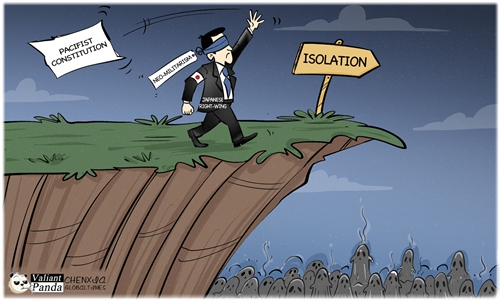
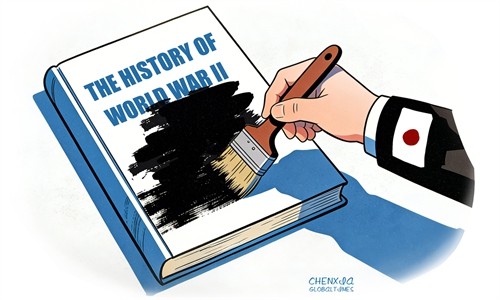
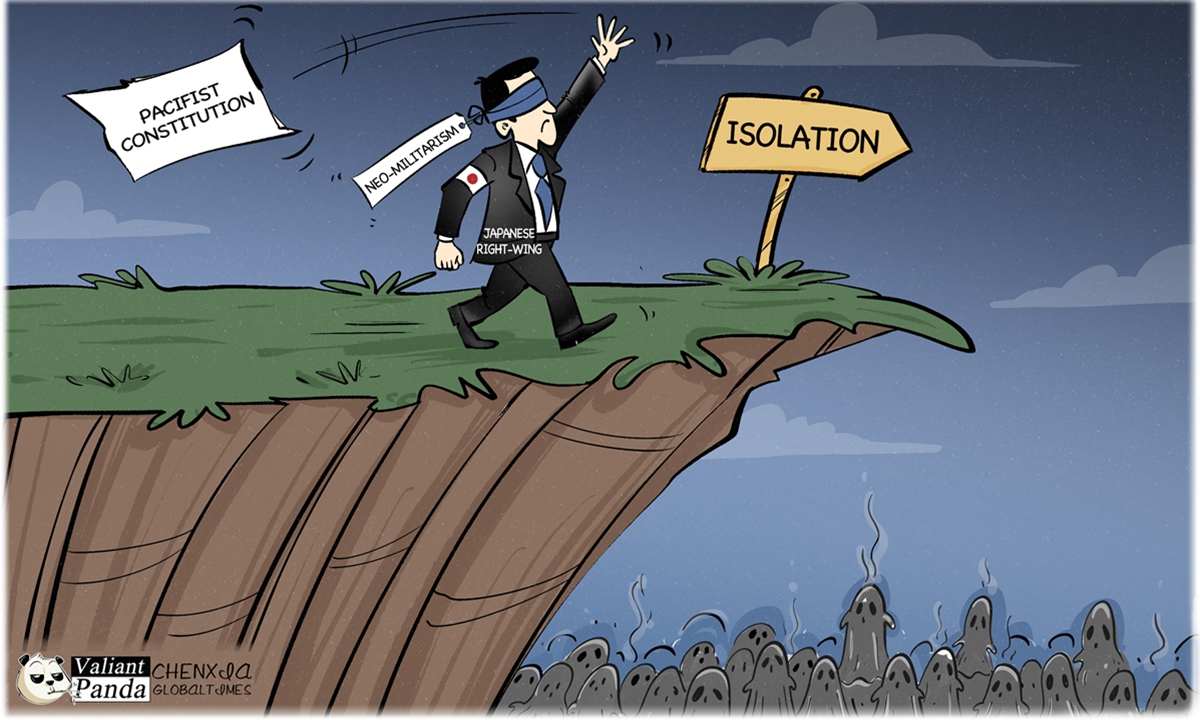
Japan's overreaction has exposed the lingering sense of unease within the country. It appears intent on using confrontation to evade historical responsibility and break free from the constraints imposed by peace. But history cannot be rewritten, nor will justice compromise. Any attempt to run against the tide of history, revive militarism, or undermine regional peace will meet firm opposition from the international community and is ultimately bound to fail. Just days ago, Takaichi was loudly calling at the UN General Assembly for the deletion of the "enemy state clauses" from the UN Charter. Yet before the echoes of her remarks had even faded, she was met with a cold dose of reality.
Distorted historical perceptions are the ideological root of the emergence of "neo-militarism" in Japan. Unless this root cause is eliminated, the lingering poison of militarism cannot be completely eradicated, and Japan will not be able to truly earn the respect of the international community.
RELATED ARTICLES