Chinese Foreign Minister to attend CICA summit, visit four Eurasian countries
CICA an important mechanism for security dialogue, cooperation in Asia
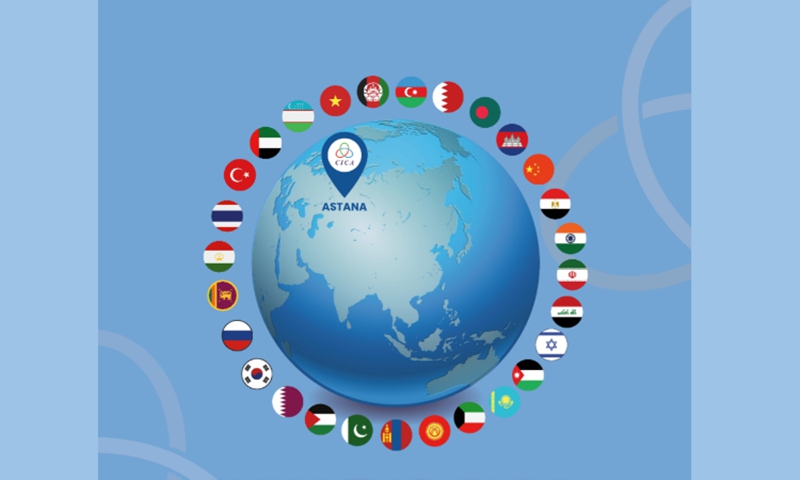
The members of CICA Photo: screenshot of CICA website
Member of the Political Bureau of the Communist Party of China Central Committee and Chinese Foreign Minister Wang Yi will attend the Seventh Summit of the Conference on Interaction and Confidence-Building Measures in Asia (CICA) held in Baku, Azerbaijan on October 15 as Special Representative of President Xi Jinping, the Chinese Foreign Ministry announced on Monday.
Wang will visit Azerbaijan, Croatia, Montenegro and Bulgaria from October 14 to 20, the ministry said.
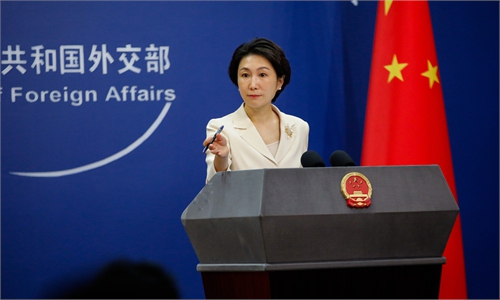
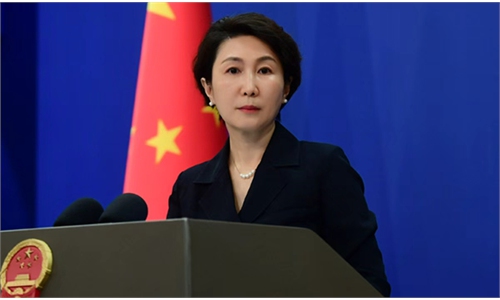
At a regular press briefing on Monday, foreign ministry spokesperson Mao Ning said CICA is an important mechanism for security dialogue and cooperation in Asia. Since its inception, CICA has been committed to enhancing interaction and confidence-building among countries and made important contribution to security, stability and development in the region.
With growing complexity and volatility in the international and regional landscapes, Asian countries are increasingly keen to ensure peace and tranquility and promote economic growth, Mao said.
At the upcoming summit, China will engage in extensive dialogue and consultation with various parties to practice multilateralism, actively implement the four global initiatives, and enhance Asian governance, so as to make new contribution to building an Asian community with a shared future, she said.
According to its website, CICA is a multi-national forum for enhancing cooperation towards promoting peace, security and stability in Asia. Its members reaffirm their commitment to the UN Charter and seek to build a common, indivisible area of security through dialogue and cooperation, where countries coexist peacefully and their peoples enjoy peace, freedom and prosperity.
CICA promotes mutual trust, places particular emphasis on people-to-people and cultural exchanges, and supports regional security and stability, Liu Zongyi, director of the Center for South Asia Studies at the Shanghai Institutes for International Studies, told the Global Times on Monday. It also plays a role in economic cooperation, he said.
The forum reflects Asian countries' desire for solidarity, cooperation and mutual trust, Liu said, adding that it can also help encourage peace talks on regional hotspot issues.
On Wang's visit to Azerbaijan, Mao said the China and Azerbaijan are comprehensive strategic partners. China-Azerbaijan relations have maintained strong momentum of growth, with ever-deepening political mutual trust, steady progress in Belt and Road cooperation and fruitful collaboration on international affairs.
This will be Foreign Minister Wang Yi's first official visit to Azerbaijan in seven years. He will hold talks with Foreign Minister Jeyhun Bayramov. We believe the visit will help fully implement the important common understandings reached by the two heads of state and deliver new outcomes for bilateral cooperation across various fields, Mao said.
China and Azerbaijan have made rapid progress in energy cooperation in recent years and have also developed defense cooperation, with considerable potential for further growth, Zhang Hong, a research fellow at the Institute of Russian, Eastern European and Central Asian Studies at the Chinese Academy of Social Sciences, told the Global Times on Monday.
Beyond Azerbaijan, Wang will also visit three countries in southeastern Europe. "Croatia, Montenegro and Bulgaria are China's important cooperation partners in Southeastern Europe," Mao said. In recent years, China has maintained close exchanges with the three countries. Notable results have been achieved in cooperation on economy and trade, investment, tourism and infrastructure. There is extensive common ground on safeguarding multilateralism, tackling global challenges, growing China-Europe relations and other topics.
During the visit, Foreign Minister Wang Yi will hold talks with the foreign ministers of the three countries and have in-depth exchange of views with their leaders, Mao said.
Croatia is China's important partner in the EU. The Chinese-built Pelješac Bridge is a landmark project of China-Croatia and China-EU cooperation, Mao said. The two countries have enjoyed a more mature and stable partnership of comprehensive cooperation.
Through the visit, China looks to better synergize development strategies and expand practical cooperation with Croatia, so as to promote the steady and sustained growth of bilateral ties, she said.
This year marks the 20th anniversary of China's diplomatic relations with Montenegro. Throughout those two decades, the two sides have always treated each other with respect and as equals. Together, the two countries have built a series of landmark projects, such as the South-North Expressway in Montenegro, Mao said.
China hopes that through the Chinese foreign minister's first visit, the two sides will expand the breadth and depth of mutually beneficial cooperation, carry forward the traditional friendship, and inject new impetus into bilateral relations for the next 20 years, she said.
Bulgaria is the second country in the entire world to establish diplomatic relations with New China, Mao said. In recent years, China-Bulgaria strategic partnership has grown steadily, with close high-level exchanges and fruitful outcomes of practical cooperation, she added.
Through this visit, China looks to cement mutual trust, advance cooperation and deepen friendship with the new Bulgarian government, so as to further advance and deepen bilateral ties, she said.
The visits to Croatia, Montenegro and Bulgaria reflect China's longstanding diplomatic friendship with the three countries and will help consolidate cooperation and mutual trust, Zhang said. They will also help improve the quality and level of China's cooperation with these countries and southeastern Europe more broadly, he added.
RELATED ARTICLES