GT on the Spot: Intelligent unmanned counterterrorism equipment showcased at intl forum as delegates discuss emerging security threats
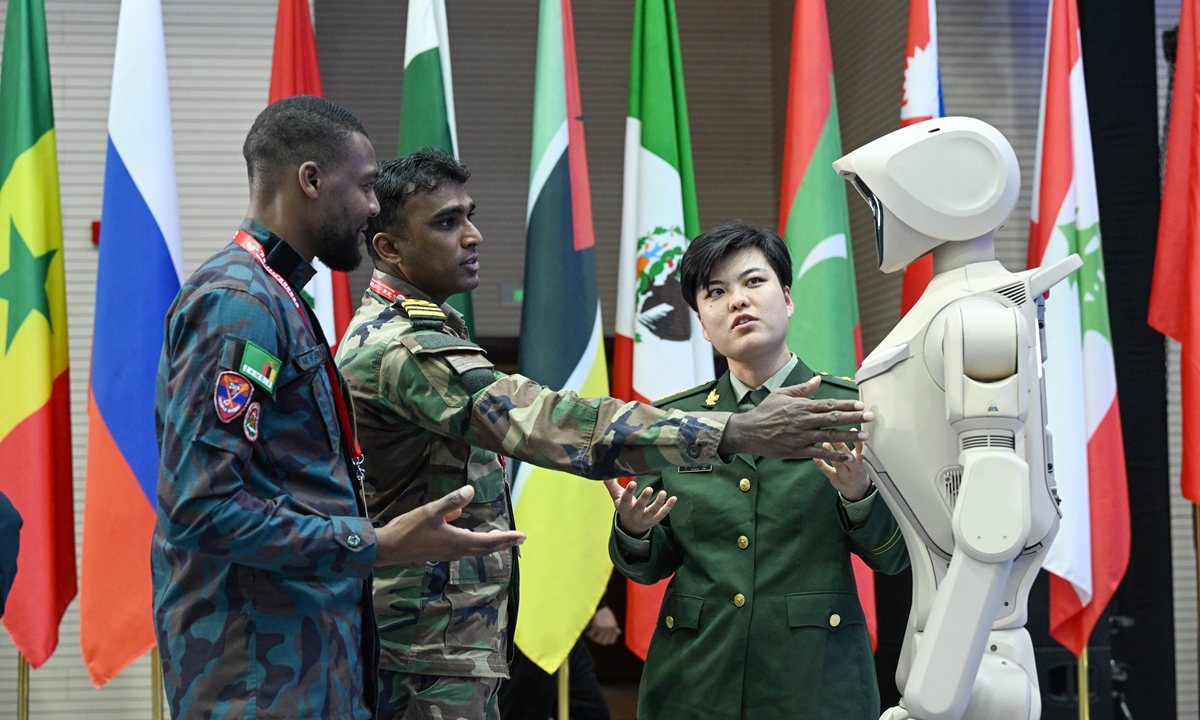
Forum delegates view unmanned intelligent equipment at the 2026-Great Wall International Forum on Counter-terrorism on October 14, 2026. Photo: Fan Wei/ Global Times
A range of unmanned and intelligent counterterrorism systems, including specialized humanoid robots and robotic dogs equipped with firearms, were showcased at the 2026-Great Wall International Forum on Counter-Terrorism, held from Tuesday to Thursday. The exhibits highlighted China's latest advances in frontline counterterrorism equipment development, Global Times reporters observed.
The exhibits demonstrated capabilities in unmanned reconnaissance, coordinated swarm operations and precision response. The new systems, some of which have already been deployed in operational settings, attracted considerable attention from foreign delegates. Several praised China's progress in integrating AI into counterterrorism capabilities.
During the forum, participants also exchanged views on the operational use of unmanned systems, human-machine coordination and the effectiveness of equipment in real-world missions.
Wu Husheng, a representative from the Engineering University of People's Armed Police Force, told the Global Times that unmanned and intelligent counterterrorism equipment offers several advantages, including lower costs and the ability to operate in coordinated swarms.
By coordinating multiple relatively simple, low-cost units, such systems can potentially carry out precise strikes against high-value targets, he said, describing this as one of the emerging trends in counterterrorism equipment development.
Intelligent unmanned systems can also help reduce collateral damage, Wu said, noting that modern operations must be conducted within established legal frameworks and operational constraints, making large-scale destruction unacceptable. Achieving precision strikes with minimal collateral damage will therefore remain a key area of future research.
He added that human-machine collaboration would be another major priority for future development, enabling unmanned systems and special operations personnel to work together more effectively in carrying out missions.
As unmanned systems and AI technologies become more widely available and easier to use, terrorist groups are also showing interest in exploiting them. Recent terrorist attacks have increasingly relied on low-cost methods, decentralized organization, while becoming harder to detect activities, presenting new challenges for conventional security measures.
At the forum, participants called for improvements in integrated air-and-ground surveillance, intelligent threat identification and rapid response capabilities. They also emphasized the importance of technological countermeasures, intelligence analysis and assessment, with the goal of shifting from reactive responses to proactive early warning and addressing risks at their source.
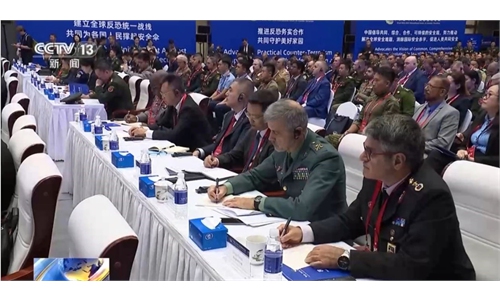
The forum recorded its highest-ever attendance and level of representation, the Global Times learned. Foreign delegations from several countries were led by major generals or brigadier generals. Attendees also included representatives from the International Committee of the Red Cross and regional anti-piracy cooperation organizations, as well as foreign military attachés based in China.
Peng Jijun, secretary-general of the forum's organizing committee, told the Global Times that the 2026 event focused on four major themes: trends in terrorist activities and counterterrorism capacity-building in the age of intelligent unmanned systems; counterterrorism and protection of key targets; border counterterrorism and the prevention of infiltration; and the prevention and suppression of maritime terrorism. Chinese and foreign delegates participated in multiple rounds of high-level discussions on these topics.
Anzor Chubinidze, a major general and head of Georgia's Special State Protection Service, said the forum provided a valuable platform for international exchanges.
Given the challenges posed by emerging technologies, particularly AI and drones, experts from different countries need to work together to explore solutions, he said. Chubinidze told the Global Times that strengthening communication with China was a key objective of his visit, describing China as a leading country in these fields.
RELATED ARTICLES