Militaristic emblem Illustration: Liu Rui/GT
Recently, the US and Japan held the second "Free and Open Indo-Pacific Dialogue" in Tokyo. The two sides pledged to continue the close alignment between US priorities and the so-called "free and open Indo-Pacific" proposed by Japanese government, coordinate maritime security assistance to the Southeast Asian and Pacific Island countries, and acknowledge progress in US-Japan defense industrial cooperation.The dialogue sent two notable signals. First, coordination between the US and Japan on the "Indo-Pacific Strategy" is deepening. The fact that the two sides pledged to maintain close alignment with the "free and open Indo-Pacific" vision indicates that Japan is taking the initiative in setting the agenda for US-Japan policy coordination. Second, the two sides are seeking to bring third parties into their "Indo-Pacific Strategy," with Southeast Asian and Pacific Island countries as key target areas.
In light of Japan's recent moves to build "quasi-alliances," it is clear that Japan is no longer content with acting merely as a follower of the US strategy. Instead, it is seeking to proactively shape the regional policy agenda and serve as a "coordinator" of the region's security networks.
As the "free and open Indo-Pacific" concept approaches its 10th anniversary, Washington should reassess its role in the "Indo-Pacific." While the US seeks to make Japan shoulder more alliance responsibilities to ease its own burdens, it may even turn the US-Japan alliance into a prop for Japan to expand its military influence.
First, Japan's engagement in Southeast Asia and with Pacific Island countries is not simply an extension of the US "Indo-Pacific Strategy"; it also serves Tokyo's own strategic objectives.
In recent years, Japan has steadily eased legal restrictions on overseas arms sales. This has enabled Japan, under the guise of "transfers of defense equipment," to establish deeper military cooperation with countries such as the Philippines and Australia. Maritime security assistance is precisely one of the most suitable forms of such cooperation. From patrol boats and shore-based radar assistance to personnel training and port construction aid, every form of assistance serves as a tool for Japan to project its military influence abroad. Moreover, when the aforementioned countries become dependent on Japan's security assistance, it will be difficult for the US to put a stop to it.
Second, Japan relies on the US-Japan alliance to legitimize its expanding military influence. As the US begins a selective strategic retrenchment, Japan's strategic community has grown skeptical of Washington's security pledges. For this reason, Tokyo is clinging tightly to the US-Japan alliance, while using a "quasi-alliance" strategy to court countries such as India, Australia and the Philippines to secure a fallback option for itself. By labeling its security assistance to Southeast Asian countries and South Pacific Island countries as "US-Japan coordination," Japan can lower the guard of the recipient countries and shift any potential political and security costs onto the US.
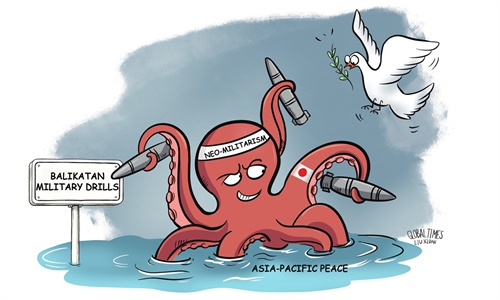
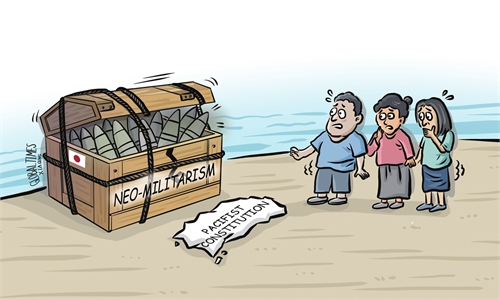
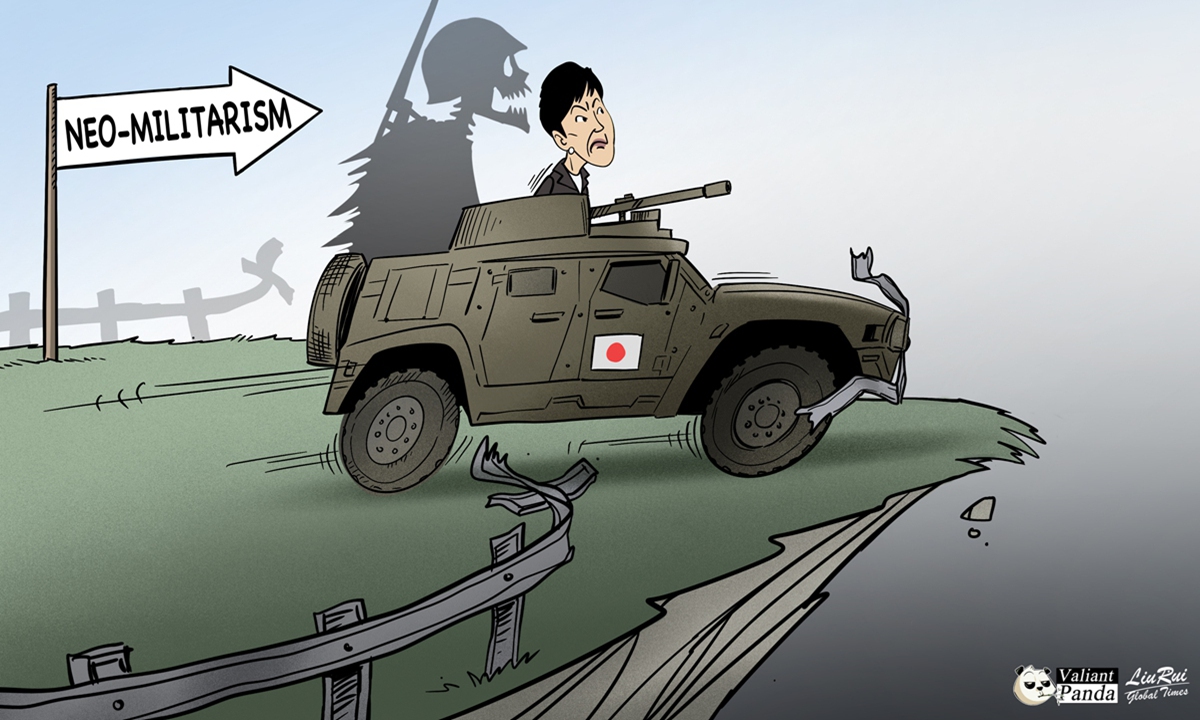
What merits vigilance is that Japan has not yet completely severed ties with its militarist past. Against the backdrop of growing "Taiwan abandonment" discourse within the US, Tokyo is adopting an even more radical stance on the Taiwan question than Washington. Should the aggressive foreign aid strategies of such an ally - one that continually crosses the line - become tied to the US, the US could find itself dragged into conflicts it did not seek.
Of course, both the US and Japan will emphasize that their coordinated assistance helps enhance the maritime capabilities of the relevant countries to meet their practical needs for strengthening maritime law enforcement. The problem lies in the fact that when security assistance is tied to Japan's unilateral military expansion, the aid begins to resemble a collective containment strategy targeting specific countries. Southeast Asian countries and South Pacific Island countries would much rather be participants in development cooperation than pawns in the power struggles of major powers. They are even less willing to see their region become a "partner" in Japan's efforts to expand its military influence.
As one of the architects of the post-World War II international order, the US should be committed to maintaining the stability of that order, rather than acting as a vehicle for Japan to expand its military influence. Washington should clearly recognize that letting Japan continuously expand its military influence under the banner of "coordination" may seem to share alliance burdens in the short run. However, in the long term, it could cause the US to lose control of the situation. What truly contributes to peace in the Asia-Pacific region is for all parties to exercise strategic restraint and pursue open and inclusive cooperation, not to use "coordination" as a pretext for creating a bloc-based security landscape.
The author is a lecturer at Shanghai University of International Business and Economics. opinion@globaltimes.com.cn
RELATED ARTICLES