China EU relations
Among the topics discussed during the recent EU summit in Brussels, "competitiveness" has been listed as the first substantive item on the official agenda, reflecting the EU's heightened attention to its economic capacity and changing position in global competition.For Europe, the issue of competitiveness is no longer limited to economic growth in the traditional sense but has gradually become linked to the EU's strategic position within the global economic system.
The development of major economies such as the US and China has indeed reshaped the global industrial competitive landscape, but Europe's challenges are more fundamentally the result of insufficient adjustment to its long-standing economic structure and development model. External competition is accelerating Europe's reconsideration of its industrial model and economic strategy.
For decades, the automobile, machinery and chemical industries, among others, not only supported European economic growth but also served as important foundations for Europe's participation in global competition.
However, this development model has come under increasing pressure.
Internally, Europe's traditional strengths have not fully translated into competitiveness in emerging industries. Although Europe maintains strong scientific research capabilities and industrial foundations, it has fallen behind in areas such as artificial intelligence, semiconductors and digital technologies. Compared with the US, which has produced many globally influential technology companies, Europe still lacks large-scale firms capable of leading the next wave of technological transformation. Also, Europe's market structure has constrained the growth of innovative companies. Beyond these domestic constraints, changes in global industrial competition have added new pressure on Europe.
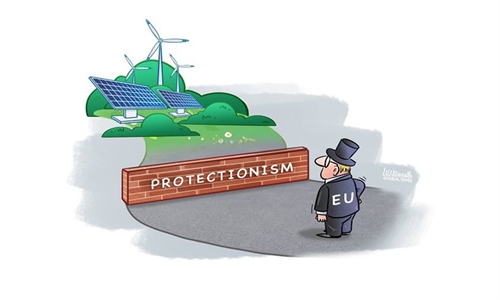
The EU has attempted to adjust its economic strategy in recent years. Compared with its previous development model that relied more heavily on market openness, rule-making and advantages in global trade, the EU is gradually strengthening industrial policies, the development of key technologies and supply chain security.
The biggest challenge facing Europe's competitiveness reform lies in structural contradictions accumulated over a long period of time. The differences exist among 27 EU member states in terms of industrial structures, fiscal capacities and development priorities. As internal reforms have struggled to quickly address competitiveness challenges, economic security has gradually become an important framework through which the EU responds to external competition. The "de-risking" strategy emerged in this context.
Meanwhile, in policy practice, the boundary between economic security and industrial competition has become increasingly blurred. This approach may ease short-term pressures faced by some European industries, but it cannot replace fundamental reforms aimed at improving the innovation capacity and restructuring the economy.
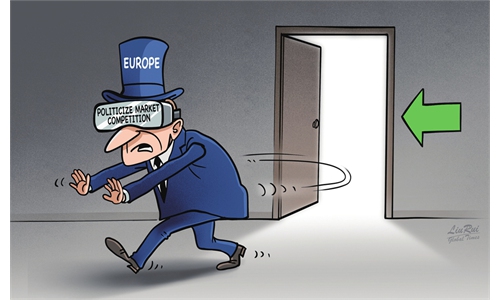
Europe's economic and trade concerns regarding China have become deeply intertwined with its anxieties over its own competitiveness, with China increasingly becoming a target onto which these anxieties are projected. The EU has expressed dissatisfaction with its trade deficit with China, attributing it to "unequal market access" between the two sides and China's "abuse of subsidies." Thus, it has pursued the anti-subsidy investigations into Chinese products, while even treating its heavy dependence on Chinese raw materials as a "fundamental problem."
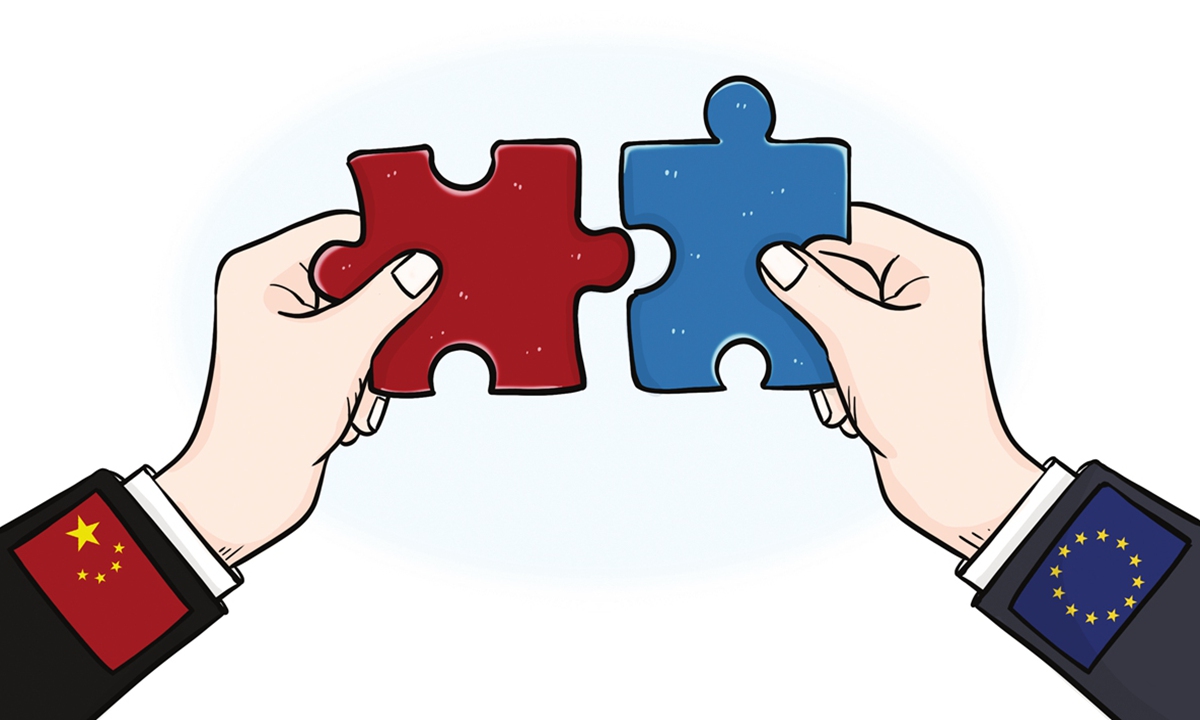
The EU's approach toward China reflects a complex stance of intensifying competition while avoiding outright confrontation. Europe's green transition and industrial upgrading will continue to depend on stable global supply chains, access to critical raw materials and cooperation in international markets, leaving considerable room for shared interests between China and the EU. Thus, while China-EU economic and trade relations are unlikely to return to their previous pattern of strong economic complementarity, the conditions for complete decoupling are not in place either.
For Europe, the key to improving its competitiveness lies in addressing long-standing domestic challenges, including insufficient innovation, underinvestment and slow industrial transformation. If the EU fails to tackle these underlying weaknesses and instead attributes its difficulties to external factors, it will struggle to achieve any fundamental improvement in its economic position, and may undermine the foundations of China-EU economic cooperation.
In the long run, the risk of further trade frictions between China and the EU will remain, while Europe may lose sight of its own challenges in its search for external adversaries.
The authors are affiliated with the School of Global and Regional Studies, University of Chinese Academy of Social Sciences. opinion@globaltimes.com.cn
RELATED ARTICLES