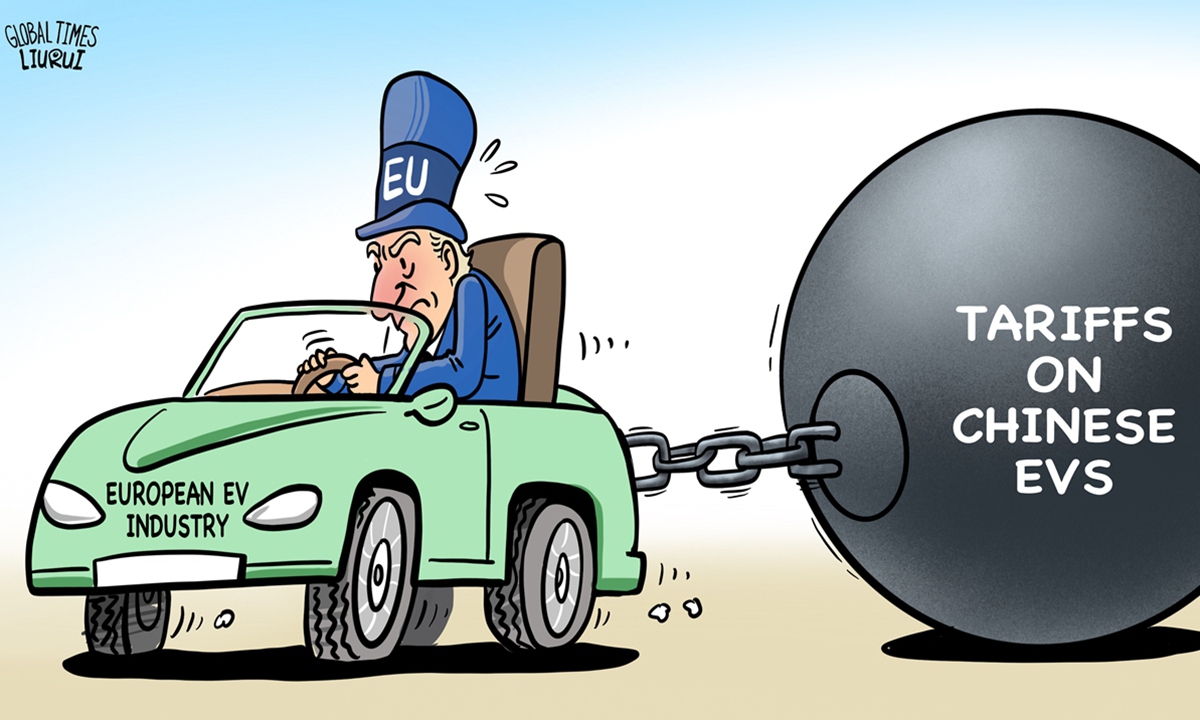
This "threat," voiced against a backdrop of looting, arson and widespread disorder across France, is both farcical and lamentable. Setting aside how shocking it is that a celebrated Nobel laureate economist would openly advocate trade protectionist measures, the irony could hardly be starker. At almost the very moment he made these remarks, French streets were engulfed in fires and basic public order was fraying.
These harsh realities unfolding right on his doorstep have failed to jolt this "economist" into focusing on resolving his country's pressing domestic crises. Instead, he is preoccupied with dreaming up punitive measures against China. It lays bare how profoundly out of touch many European elites have become.
Regarded as one of France's top economists and among Europe's "sharpest economic minds," Aghion was awarded the Nobel Prize for his theory of "creative destruction." The theory holds that economic growth is driven by technological renewal through open competition and incentives for innovation.
In post award interviews, Aghion specifically warned against deglobalization, stressing that openness itself lies at the heart of growth. Yet when the European auto industry faces real world competition, his proposed remedy boils down to "produce locally on our terms and hand over your technology, or face tariff threats."
To champion competition and innovation in theory, yet instinctively reach for protectionist barriers when competition arrives, is a telling display of the arrogance and bias afflicting segments of the European elite. Clinging to a Euro centric mindset, they reflexively label China's success as "unfair competition." They take for granted that European workers, European standards and European markets represent the "norm," while China is expected to act merely as a supplier of technology and goods.
Such blind prejudice prevents them from confronting their own deep seated problems: soaring energy and labor costs, rigid welfare and union systems, cumbersome administrative red tape, erratic industrial policy shifts, and governance failures stemming from social polarization, to name but a few.
It's obvious that China is not the root cause of Europe's woes. If even top tier economists such as Aghion indulge themselves in hard line posturing toward China while refusing to confront Europe's unavoidable domestic realities, the outlook for Europe gives genuine cause for concern. The ongoing turmoil in France ought to serve as a wake up call for these China hawks.
RELATED ARTICLES