US approves sale of 500 Patriot missiles: A blank check to Ukraine, a bill for Europe?

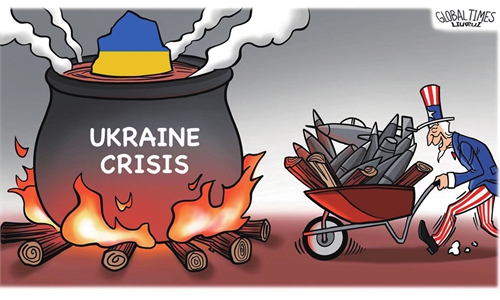
US' game of manipulation Illustration: Liu Rui/GT
At first glance, the US approval of the sale of 500 Patriot missiles to Ukraine may look like a long-awaited boost to Ukraine's air defenses. But a closer look reveals a rather different arrangement: Is this another blank check from the US, with the approved deal expected to be financed by US allies despite an unclear delivery timeline?
On Friday, the US State Department announced that Washington had approved the proposed sale of 500 Patriot Advanced Capability-3 Missile Segment Enhancement (PAC-3 MSE) missiles to Ukraine. The deal, which is still subject to congressional review, is valued at approximately $2.1 billion. According to the US government, “no US funds are involved in this sale.” Instead, the purchase will be “funded entirely by partners and allies,” particularly those in Europe. “Ukraine will pay for this purchase with donations from Canada, Germany, and Norway via the JUMPSTART program and national funds, financed by the European Union's Ukraine Support Loan,” the announcement said.
Why approve the sale now? On the one hand, Washington has faced growing questions from European allies about its approach to the conflict, particularly following its engagement with Russia and earlier tensions over intelligence support for Kiev. It appears that approving the sale is intended to send a signal that the US remains committed to supporting Ukraine, while offering some reassurance to increasingly uneasy European partners.
On the other hand, as Chinese military expert Song Zhongping told the Global Times, Patriot missiles are defensive weapons and are therefore less likely to provoke a strong reaction from Moscow. In this way, Washington can worry less about escalating tensions with Moscow. Crucially, however, it can do so without committing American taxpayer money to the purchase, while still bringing sound commercial benefits to the US politico-military-industrial complex.
Lockheed Martin will be the principal contractor. As Song points out, if other countries are willing to pay and American companies are ready to supply the weapons, why turn down an order worth more than $2 billion? This reflects the current US administration's increasingly transaction-oriented approach to the Ukraine conflict: The US can retain political influence and reap commercial benefits while shifting much of the financial burden onto its allies.
But there is a major gap between approving a weapons sale and actually delivering the weapons. According to the BBC, the 500 interceptors have yet to enter production and are not expected to be delivered soon. Production capacity is another constraint, as the US Department of Defense previously reported an annual PAC-3 MSE production capacity of around 600 missiles.
Ukraine, meanwhile, needs the interceptors now. Kiev has urged Washington to accelerate deliveries, but the US must also consider its own military requirements and commitments to other allies. The answer for Ukraine is clear: The timing of delivery remains largely in Washington's hands.
And even if all 500 Patriot missiles eventually arrive, how much difference will they make on the battlefield? Song argues that the number, while seemingly substantial, is unlikely to be enough to meet Ukraine's needs in the face of sustained Russian attacks. With Russia employing a range of strike capabilities, the interceptors could be used up quickly.
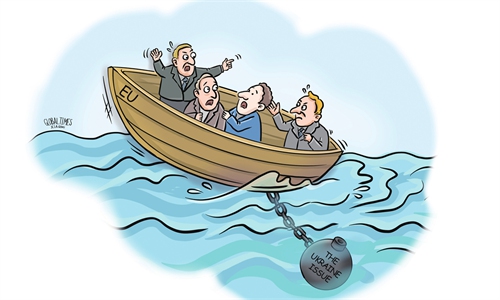
The implications for Europe go well beyond the cost of this particular purchase. On the surface, the arrangement looks like a straightforward division of responsibilities within the transatlantic alliance. In reality, it reinforces an increasingly unequal relationship. Washington retains control over the production and supply of critical military equipment, and American defense contractors secure valuable orders. European countries, by contrast, shoulder a growing share of the financial burden while remaining heavily dependent on US weapons and security guarantees.
More concerning still, this model risks locking Europe into a costly cycle. As the conflict continues, Ukraine will need more weapons; as those needs grow, European governments will face pressure to commit more funds.
Meanwhile, the financial and economic costs of a prolonged conflict continue to accumulate. Europe could find itself carrying an ever-greater share of the burden, and ultimately, it is ordinary EU citizens who have to bear the overall economic consequences.
This sale of 500 Patriot missiles offers a snapshot of the unequal distribution of influence, benefits, and costs among the US, Europe and Ukraine regarding the Russia-Ukraine conflict. The US sells, Europe pays, and Ukraine waits. For Kiev, the promised "timely assistance" may arrive far too late. For Europe, the more pressing question is how much longer it will be expected to foot the bill.
RELATED ARTICLES