People line up to enter a polling station after early voting for the Nov. 3 U.S. midterm elections started, in Plano, Texas, the United States, on Oct. 24, 2026. (Xinhua/Li Rui)
As the US midterm elections approach, the balance of power in Washington remains uncertain. According to conventional wisdom, this shift presents an opportunity for the US to adjust its foreign policy. However, while the midterm elections may reshape the landscape of the US Congress, they cannot alter the trajectory of the decline of the US alliance system. Regardless of the election results, the US will continue to prioritize its own national interests.Recently, the European and Australian media have run articles assessing the direction of the post-midterm election US, from which one can sense the anxieties in Europe and Australia.
The real question we must ask is why, no matter how the balance of power changes, the situation for US allies is unlikely to improve.
Historically, crises between the US and its allies have occurred from time to time. Back then, such conflicts could be resolved thanks to Washington's strong comprehensive national power in the postwar era and the shared interests of the Western alliance system during the Cold War.
Quite unlike past disagreements confined to single issues, the fundamental crisis now plaguing the US-led Western alliance system has emerged against the backdrop of profound changes in the international landscape and US strategic retrenchment - a crisis that cannot be resolved by a mere change in political parties. Whether in transatlantic ties or within the "Five Eyes" alliance, relations between the US and its allies have undergone substantial changes.
The primary prerequisite for the existence of the US-led alliance system has been America's formidable comprehensive national power and its position of absolute hegemony. Currently, as the US grapples with domestic crises and conflicts, it lacks the capacity to adequately address the tangible interests of its allies. Instead, it seeks to secure strategic space to maintain its own advantages by shifting its economic pressures onto its allies. The rifts in transatlantic relations, the "Five Eyes" alliance and US-UK-Australia relations are precisely manifestations of this structural shift in various aspects.
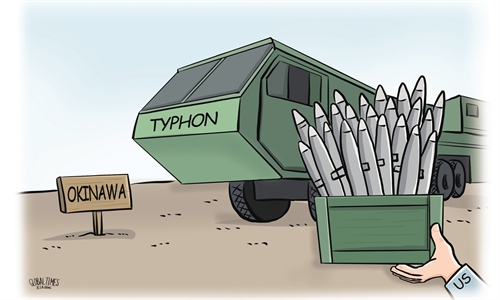
This shift is most evident in transatlantic relations. In the current US strategy, Europe is no longer a global strategic pivot that the US needs to resolutely defend; rather, it has been reduced to a buffer zone for the US to mitigate its own crises. On the economic, trade and industrial fronts, the US is exploiting European industries through tariff policies, energy monopolies and protectionist measures. On the security front, while excluding Europe from core decision-making circles during major geopolitical conflicts, the US is forcing Europe to foot the bill for the geopolitical turmoil and bear the security consequences alone. The transatlantic partnership, once founded on the principles of "defending shared values" and "strengthening collective defense," now exists in name only, having been replaced by blatant hegemonic extortion.
Even within the "Five Eyes" alliance, the inner core of the US led Western bloc, this structural contradiction persists. For a long time, the "Five Eyes" was viewed as a deep partnership built on cultural identity and intelligence sharing. However, under the impact of the US principle of prioritizing its own national interests, the foundation of trust within this inner circle is crumbling.
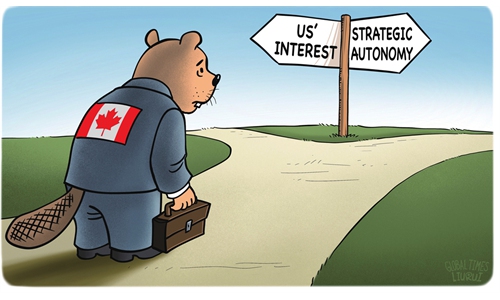
In recent years, conservative political forces in the UK have pinned their hopes on strengthening the US-UK "special relationship" to revitalize a "Global Britain." What they have received in return, however, is a heavier burden as an ally and an increasingly narrow space for strategic autonomy. Blindly following US global strategy has done nothing to reverse the fundamental decline of British society after Brexit. For Australia, deeply aligning itself with the US through AUKUS has not only failed to improve its surrounding strategic environment but has also severely depleted its fiscal resources and eroded its defense sovereignty.
No matter who holds power in Washington, the strategic trajectory of the US' efforts to reshape its alliances is already set. Even in the face of domestic political checks and balances, the White House can still rely on its executive privileges and legal authority to continue advancing its foreign policy agenda. Allies must clearly recognize that the US is attempting to force allies into constant compromises and concessions through maximum pressure. The traditional model of alliance is gone for good.
The unilateralism and "America First" strategy pursued by the US represent a radical form of strategic self-preservation amid the relative decline of its hegemony. But this has only accelerated the centrifugal tendencies within the alliance system.
The midterm elections will eventually come to a close, but no matter who holds power in Washington, what the alliance system faces is not a temporary fluctuation that can be reversed by a single election, but a structural collapse of trust.
Only by recognizing this can allies truly shed their illusions and turn toward an autonomous and pluralistic restructuring of the international order.
The author is a visiting research fellow at the Center for British Studies at Shanghai International Studies University. opinion@globaltimes.com.cn
RELATED ARTICLES