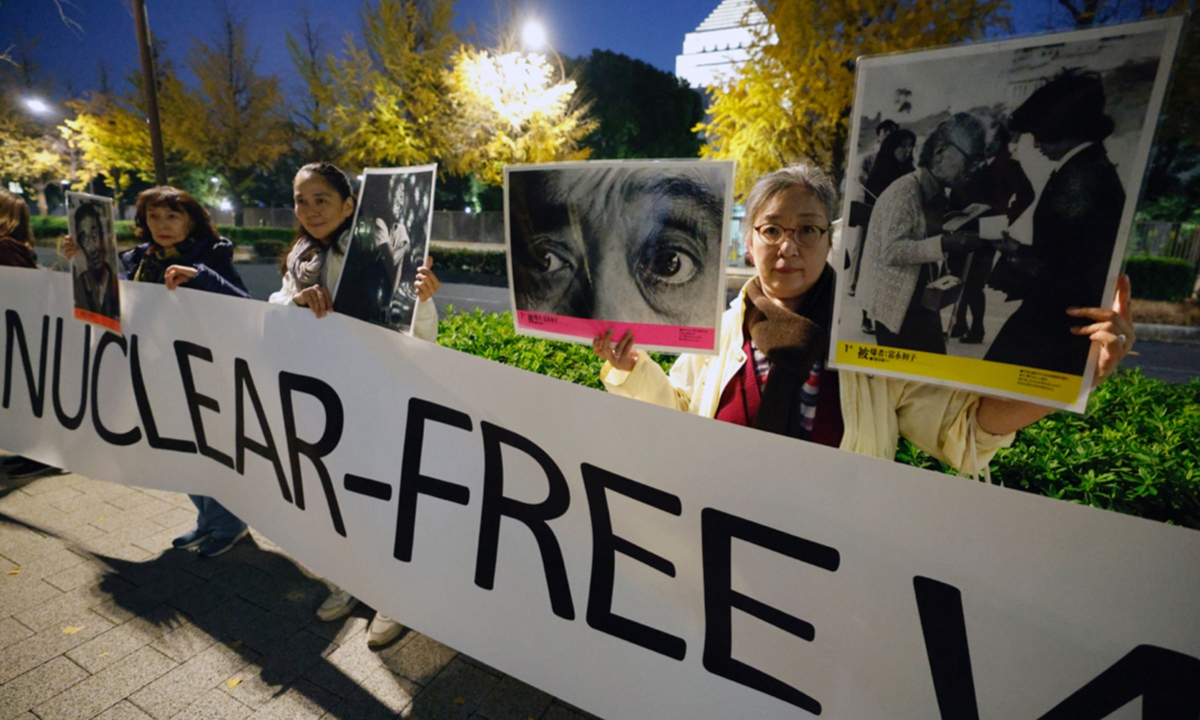
Protesters hold a banner during a rally in Tokyo, Japan, on November 21, 2025, after Japanese Prime Minister Sanae Takaichi criticized the country's traditional policy against nuclear weapons. Photo: VCG
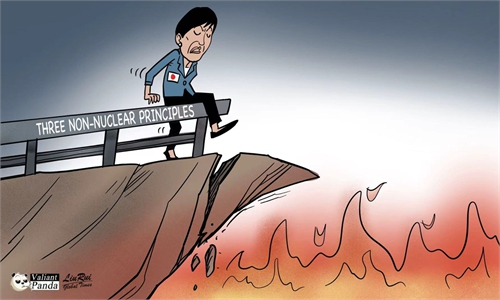
Just as Tokyo shows signs of breaking through its "Three Non-Nuclear Principles," some individuals have "conveniently" offered up a bad idea. According to Japanese media reports on Tuesday, some experts in Washington, including a US Navy official, have suggested that Tokyo "should consider acquiring nuclear submarines," with the aim of "enabling the Japan Self-Defense Forces to deter China more effectively." However, these American "experts" are nothing but Washington's "liability."
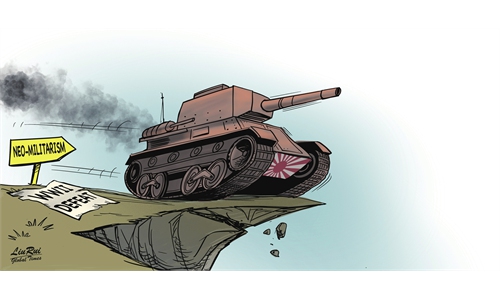
Since the Sanae Takaichi administration took office, certain Japanese politicians have become obsessed with "acquiring nuclear‑powered submarines." Japan's Defense Minister Shinjiro Koizumi has repeatedly and publicly advocated for the introduction of nuclear-powered submarines. In their narrative, nuclear‑powered submarines represent nothing more than an upgrade in propulsion and do not equate to carrying nuclear weapons - a word game they hope will allow them to pursue their agenda.
However, the fuel cycle, spent fuel reprocessing, and nuclear material controls for nuclear-powered submarines substantially overlap with pathways for developing nuclear weapons. Japan already stockpiles large quantities of separated plutonium and has well-established reserves of nuclear material, reactor-technology expertise and delivery-platform foundations. Should Tokyo achieve the technical and political breakthrough of "introducing nuclear-powered submarines," no insurmountable technical gap would stand in the way of it later developing its own nuclear warheads. "Buy the submarines first, then acquire nuclear-weapon capability" is the roadmap quietly plotted by Japan's right-wing forces.
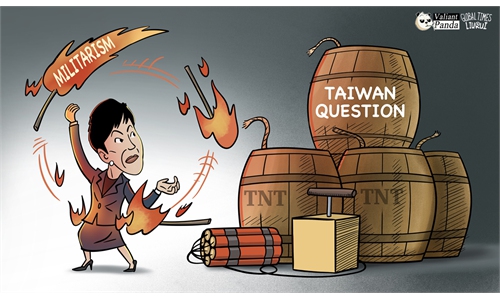
The US is aware of these risks, yet it has long turned a blind eye. Some US politicians harbor opportunistic calculations regarding Tokyo: They want to arm Japan as their forward‑edge spearhead in East Asia and make Japan bear more of the costs of confrontation. They imagine they hold the reins and can keep this "proxy tool" firmly in check to prevent it from turning on its master. This mind-set is steeped in short‑sighted arrogance. In essence, it gambles with the postwar international order and the non‑proliferation regime, allowing the dangerous "Pandora's box" to be slowly opened for the sake of short-term geopolitical gains.
Washington fantasizes that "limited rearmament of Japan" will serve its own strategy, but it underestimates the tenacity of Japan's right‑wing forces to shake off constraints. After Japan's defeat in World War II, segments of its right‑wing have relied on the US security umbrella while harboring deep‑seated resentment and frustration over the "humiliation of being bombed." Meanwhile, tens of thousands of US troops stationed in Japan serve both as a platform for US power projection and as shackles on Japan. Japan's current willingness to dance to Washington's tune stems from its insufficient strength for full independence; it needs US acquiescence to loosen restrictions. Such compliance is tactical pretense for the time being, not permanent submission.
It's obvious that if Japan crosses the bottom line and truly acquires nuclear‑deterrence capacity, it will never resign itself to being a US "outpost" forever. Should the US continue to indulge Japan in challenging the "Three Non-Nuclear Principles" and allow nuclear‑related capabilities to take root on Japanese soil, it will eventually reap what it sows. If Japan possesses nuclear weapons, it will surely bite the hand that feeds it.
RELATED ARTICLES