Translators’ Voices: China helps weave a greener Asia-Pacific by turning its development gains into shared opportunities: Thai scholar
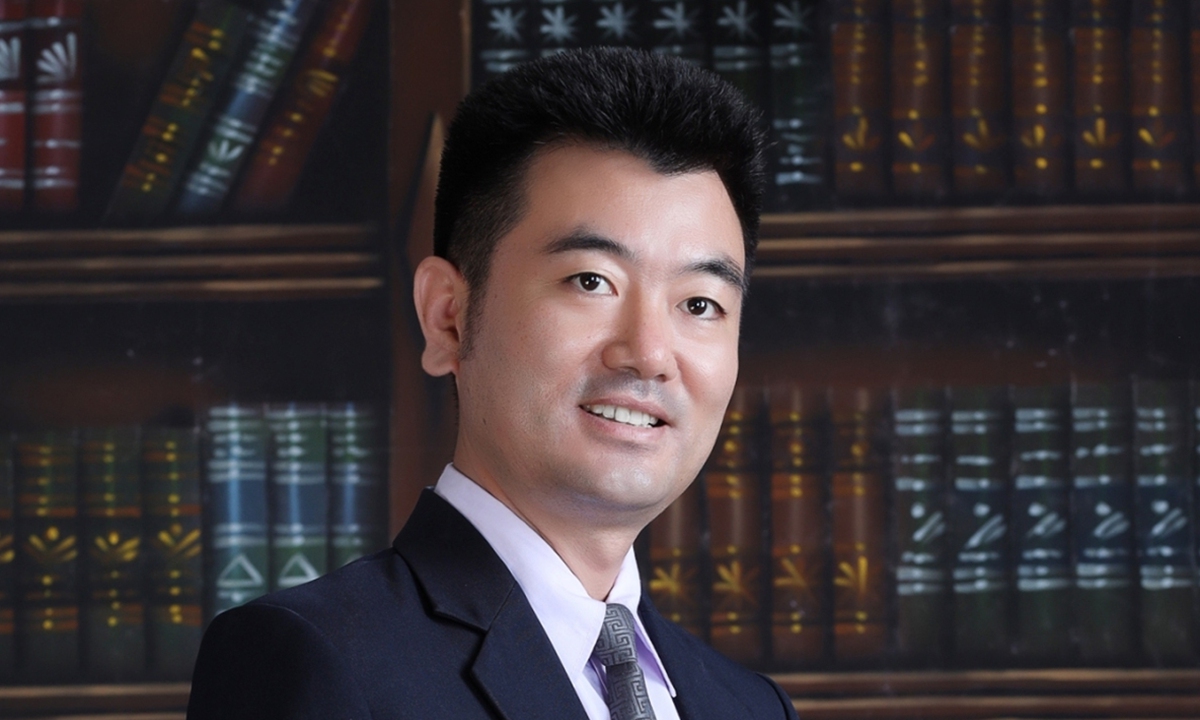
Wirun Phichaiwongphakdee. Photo: Courtesy of Wirun
Editor's Note:
The 33rd Asia-Pacific Economic Cooperation (APEC) Economic Leaders' Meeting is being held in Shenzhen from November 18 to 19.
This year marks the first time in 12 years that China is hosting the APEC meeting. "We are ready to work with all other parties to forge ahead with resolve, jointly build an Asia-Pacific community, and bring prosperity for all in our region," Chinese President Xi Jinping said in a keynote speech on Wednesday at the APEC CEO Summit 2026 in Shenzhen.
As a leader in regional cooperation, a defender of multilateralism and a main engine of the world economy, China's hosting of this grand event fully demonstrates the responsibility of a major country. It will inject strong impetus into Asia-Pacific regional cooperation and provide greater certainty, stability and positive energy for global economic growth and international cooperation.
In the 31st installment of the special series "Decoding the Book of Xi Jinping: The Governance of China," the Global Times, along with the People's Daily Overseas Edition, will explore the theme - "Building an Asia-Pacific Community to Prosper Together" - by inviting Chinese and foreign scholars, translators of the work, practitioners with firsthand experience, and overseas readers to share their perspectives.
In the 31st article of the "Translators' Voices" column, the Global Times interviewed Wirun Phichaiwongphakdee, director of the Thailand-China Research Center of the Belt and Road Initiative, who was responsible for translating and publishing the book's Thai edition.
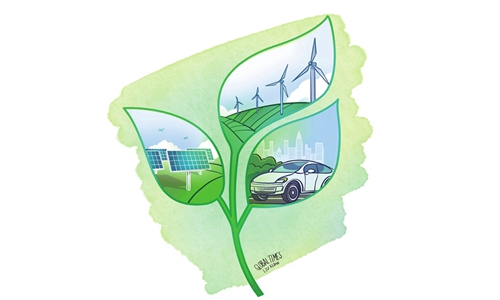
Green development and energy security remain important pillars of advancing Asia-Pacific cooperation. Thai scholar Wirun Phichaiwongphakdee has long followed developments in the region's green transition. In 2022, when Thailand hosted the APEC meetings and helped advance the Bangkok Goals on the Bio-Circular-Green (BCG) Economy, he participated in an energy think tank forum on the sidelines of the meetings. There, he focused on China's advances in clean energy technologies and practical experience, exploring how international cooperation could help developing economies strengthen their energy security. Four years later, as China-Thailand cooperation in the electric vehicle (EV) industry gathers momentum, those discussions are finding expression in a growing network of industrial partnerships.
In just a few years, discussions at the energy forum have gradually translated into a cross-border clean-energy industrial chain taking root in Thailand. In Wirun's view, this is a vivid example of how China is strengthening the Asia-Pacific cooperation network through openness, innovation and cooperation. By combining China's technological expertise, market potential and industrial capabilities with Thailand's manufacturing foundation and regional market advantages, the two countries are not only creating new development opportunities for each other but also demonstrating how one country's development can become another country's opportunity for growth.
Weaving the vision of an Asia-Pacific community with a shared future into regional development networks
As a translator of the Thai edition of Xi Jinping: The Governance of China, Wirun has long followed China's development philosophy and the evolution of Asia-Pacific cooperation. He likens the vision of an Asia-Pacific community with a shared future, proposed by Chinese President Xi Jinping, to a development network jointly woven by economies across the region. Roads, ports and power grids connect production and everyday life; trade, investment and technological cooperation link development opportunities; and industrial and supply chains bring economies into closer integration and interdependence.
Wirun believes that building an Asia-Pacific community with a shared future means further strengthening this network of development, enabling businesses to find markets, and allowing people across the region to enjoy more stable and secure lives. Industrial chains connect shared interests, while closer people-to-people ties pave the way for a shared future.
In 2020, President Xi called on APEC members to "build an Asia-Pacific community of shared future, one of openness, inclusiveness, innovation-driven growth, greater connectivity, and mutually beneficial cooperation." Wirun deems that these four principles link together the questions of how the Asia-Pacific should develop, what should drive its development, and how its benefits should be shared.
Openness and inclusiveness allow economies at different stages of development to identify new opportunities for cooperation. Innovation-driven growth provides fresh momentum for industrial upgrading. Connectivity brings technology, talent, goods and markets closer together, while win-win cooperation ensures that all parties can benefit from one another's development, the scholar says.
From China's innovation to shared regional benefits: extending the network of development
Wirun maintains that China's contribution to Asia-Pacific development lies in its ability to turn its market advantages, innovative technologies and industrial capabilities into development opportunities for partner countries, bridging the vision of shared regional development with practical pathways for cooperation. China's innovative capacity is increasingly being translated into a driving force for common regional development.
China's high-standard opening-up creates greater market opportunities for all parties. The Belt and Road Initiative has improved conditions for participation in international trade, while cooperation in EVs, clean energy and digital technologies is injecting new momentum into regional industrial upgrading, the expert says.
Wirun notes that Thailand is among the beneficiaries of this process. The technologies and supporting industrial ecosystems brought by Chinese EV companies are enabling Thailand to build new manufacturing capabilities based on its established automotive industry. Deeper local sourcing, joint research and development, and talent cultivation encourage more Thai businesses to shift their production further into the EV supply chain and foster a broader local EV market, the scholar stresses.
According to the Federation of Thai Industries, the sales of battery-electric passenger vehicles nearly doubled to more than 161,000 in the first nine months of 2026, with locally manufactured EVs gaining market share.
Wirun believes common prosperity involves far more than trade in goods, capital flows or technology transfer. More importantly, investment and technological cooperation should enable all parties to jointly develop new industrial capabilities. He notes that the most valuable contribution of Chinese modernization to neighboring countries lies in turning the fruits of China's development into development capabilities that other countries can build and sustain themselves.
From Bangkok to Shenzhen: creating new hubs for APEC development network
When Thailand hosted APEC in 2022, it helped advance the Bangkok Goals on the BCG Economy, which promote a climate-resilient global economy through an integrated model that leverages technology and innovation to create value, reduce waste, improve resource efficiency and foster sustainable business practices. In 2026, China adopted the theme "Building an Asia-Pacific Community to Prosper Together" and identified three priority areas for its APEC Year. In Wirun's view, the transition from Bangkok to Shenzhen reflects the continued deepening of Asia-Pacific cooperation, with China helping to translate the consensus reached in the previous stage into new capacities for regional development through practical collaboration.
Having visited Shenzhen many times, Wirun has developed a particular appreciation for the city. In his opinion, Shenzhen epitomizes openness, innovation and cooperation, where technological advances can be rapidly translated into industrial applications.
Looking ahead, he sees Shenzhen becoming an important hub for extending innovations in artificial intelligence (AI), clean energy, life sciences and the digital economy to Southeast Asia and other countries in the Global South. He hopes to see stronger cooperation in intelligent manufacturing, clean energy and AI, as well as greater participation by neighboring economies in joint research and development and talent training in the Guangdong-Hong Kong-Macao Greater Bay Area.
Wirun notes that, unlike mechanisms that advance cooperation primarily through binding treaty obligations, APEC emphasizes voluntary cooperation, consensus-building and equal respect for the views of all member economies. It is not a closed trade bloc governed by a fixed agenda, but a platform capable of accommodating economies with diverse levels of development.
He believes that this approach is particularly important for the Global South, as developing economies can bring their own industrial needs to the discussions. He hopes that, with China helping drive the process, APEC will continue to translate consensus into industrial collaboration, technological exchanges and talent development, creating new hubs of cooperation in areas such as clean energy and AI and enabling more economies to share in development opportunities.
"The deeper our shared interests, the stronger the foundation for peaceful development; the stronger our commitment to common development, the greater the certainty for the world," Wirun said, adding that this is the value of APEC cooperation and an important contribution that China can make to global governance at the Shenzhen meeting.
RELATED ARTICLES