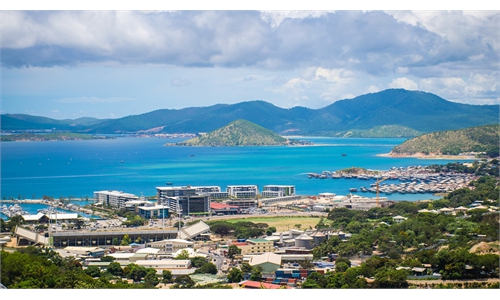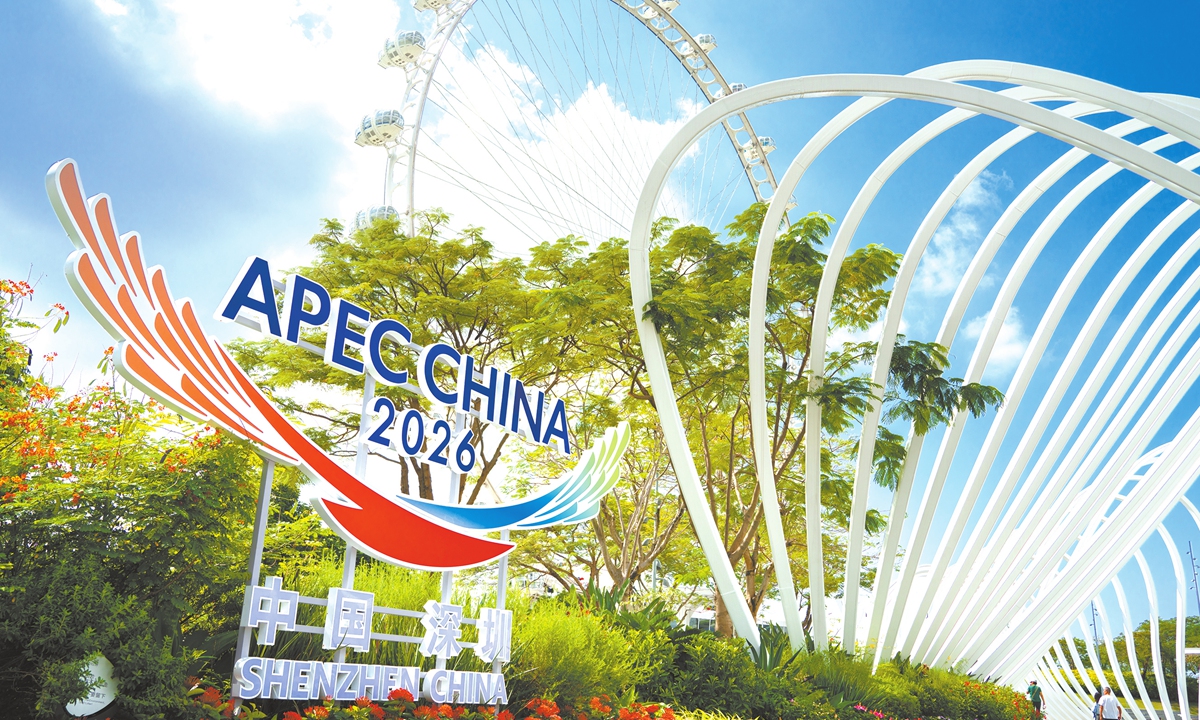
This photo taken on November 16, 2026 shows a view of Shenzhen, South China's Guangdong Province with APEC elements. China will hold the 33rd APEC Economic Leaders' Meeting in Shenzhen from November 18 to 19. Photo: VCG
Some local news coverage in Taiwan region often portrays the Chinese mainland as being in a state of "economic collapse." Yet along the Pearl River in Shenzhen, bright lights stream across the skyline and traffic flows nonstop, embodying a city brimming with innovative vitality. Both refer to the same Chinese mainland. Why, then, are the pictures so strikingly different?
A remark made during a cross-Straits media program held around the 33rd Asia-Pacific Economic Cooperation (APEC) Economic Leaders' Meeting in Shenzhen is worth reflecting on.
In a dialogue, Su Heng, Chairperson of the Cross-Straits Economic and Trade Exchange Association, shared her first visit to the Pearl River waterfront, where she saw a bustling, prosperous scene. She noted a stark contrast: back home in Taiwan region, mainstream reports repeatedly claim that the mainland's economy is "collapsing."
Why is there such a stark difference? Taiwan journalists covering APEC in Shenzhen offer a clear lens to examine this information gap.
Taiwan media have shown considerable interest in Shenzhen APEC meeting. Many Taiwan region reporters went to Shenzhen to cover the APEC meeting firsthand. Reporters from China Times and United Daily News documented life scenes in the city, from robots making coffee to drones delivering takeout. Autonomous taxis could be seen navigating the streets, while service robots were a common sight. In Shenzhen, technologies once confined to laboratories are being transformed into practical applications that are increasingly accessible to ordinary people.
However, audiences in Taiwan do not always receive the same story. Some "pan-green" media outlets disparaged Shenzhen's cityscape and focused on reports of robots malfunctioning. This contrast reflects Taiwan's Democratic Progressive Party (DPP) authorities' manipulation of public opinion.
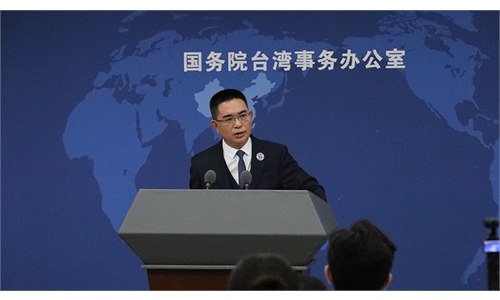
Taiwan singer and songwriter Lo Ta-yu criticized the DPP authorities in a recent radio interview, saying they had become a source of fear among Taiwan residents and are contributing to a decline in the island's cultural environment. His remarks have sparked widespread discussion on both sides of the Taiwan Straits. Chen Binhua, a spokesperson for the State Council Taiwan Affairs Office, stated clearly that the DPP authorities push "cultural Taiwan independence" for political gain, creating "green terror" and a chilling effect. These actions hurt the interests of Taiwan compatriots and spark widespread discontent.
The truth is not allowed to be heard because the DPP fears Taiwan residents will embrace joint development with the mainland.
As Zhang Wensheng, deputy dean and a professor at the Taiwan Research Institute of Xiamen University, told the Global Times, "pan‑green media and commentators have long smeared the mainland, portraying it as backward and closed. This narrative feeds the false sense of superiority held by 'Taiwan independence' separatist forces, built on biased imagination."
Such superiority, founded on distortion and lies, collapses when faced with real‑world facts.
Cooperation opportunities abound, while the authorities keep erecting cognitive barriers. This contradiction also shows in Taiwan authorities' APEC arrangements. Lai Ching-te once again sent Stan Shih, who represented Taiwan's authorities at APEC in 2007, to this year's summit with three "mandates": participate actively in APEC affairs, advance global tech cooperation, and deepen ties with key partners.
"These priorities center on tech and AI supply chains. In essence, they seek to coordinate with the US to compete against the Chinese mainland in supply chains, attaching Taiwan region to Washington in APEC. However, reliance on outside forces will only marginalize Taiwan within this regional framework.
The language is all about "cooperation," but behind it lies a political calculation to pursue "Taiwan independence" by relying on external forces.
Against this backdrop, some commentators in Taiwan region have lamented that many people on the island increasingly feel like outsiders looking in. The Chinese mainland's vast market and innovation momentum are within reach, yet Taiwan region's public is intentionally kept away from this development arena by DPP. Taiwan region's businesspeople who came to Shenzhen for APEC have simple, practical hopes: capture gains from the mainland's high‑quality growth. Ordinary people want to work together, but the DPP authorities keep building barriers and stoking confrontation.
The mainland has opened far more than just the window of this Shenzhen APEC meeting for Taiwan compatriots. It has opened the door for shared growth and mutual progress - and that door stays open.
Opportunity waits right outside. Why should all Taiwan compatriots be shut out just to serve the political interests of a select few?
RELATED ARTICLES