Takaichi claims to stick to bilateral diplomatic document with China, but does not amount to retraction of erroneous remarks: expert
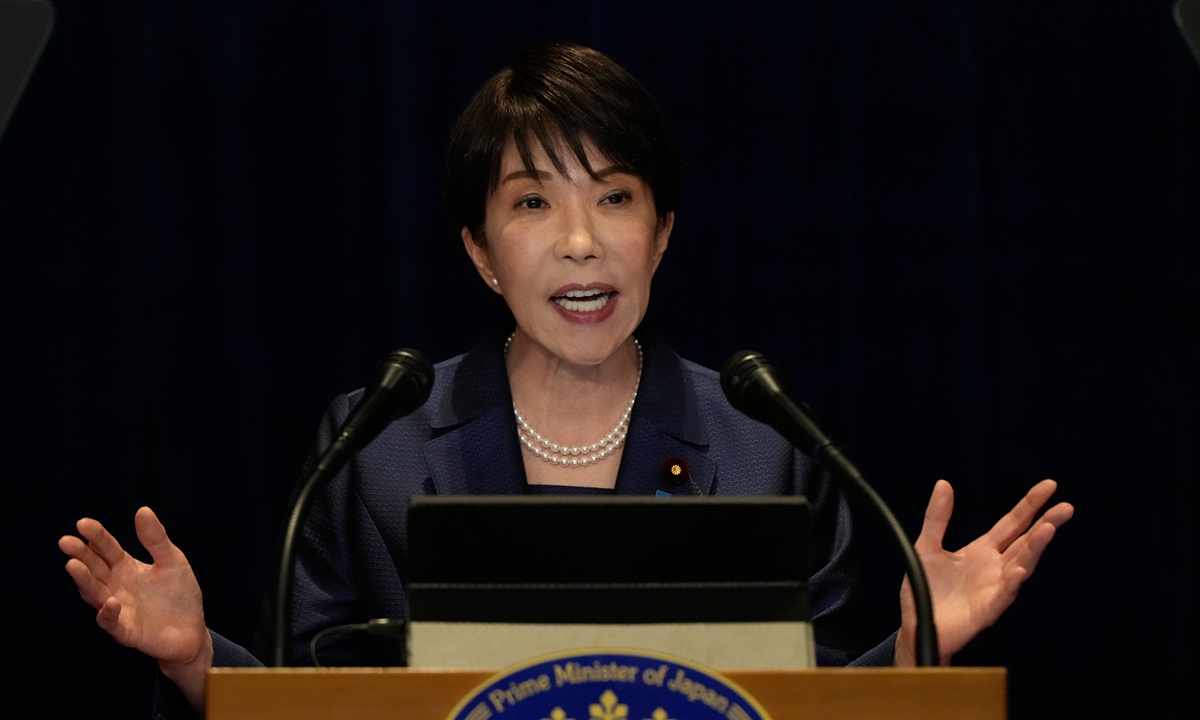
Japan's Prime Minister Sanae Takaichi speaks to the media during a press conference on the sidelines of the Asia-Pacific Economic Cooperation (APEC) summit in Shenzhen, South China's Guangdong Province, on November 19, 2026. Photo: VCG
Japanese Prime Minister Sanae Takaichi's latest remarks on Taiwan have done little to ease concerns over Tokyo's approach to the Taiwan question, as she reiterated that Japan's stance on China's Taiwan is "unchanged," while refusing to clarify or retract her erroneous remarks regarding the island of Taiwan a year ago. A Chinese expert said Takaichi is trying to balance pressure to stabilize ties with China against the need to retain domestic right-wing support, but without concrete corrective action, this approach will do little to improve bilateral relations.
Speaking at a news conference on Thursday after she attended the APEC Shenzhen meeting, Takaichi brought up the four documents signed when Japan and China normalized relations in 1972. "The status of the four basic documents between Japan and China remains completely unchanged," she claimed, Japanese media Asahi Shimbun reported.
"Japan's basic position on Taiwan is as stated in the Japan-China Joint Communique," Takaichi said. "There has been absolutely no change in this position."
However, when asked whether Japan would intervene in a conflict over China's Taiwan, Takaichi declined to elaborate, saying she could not answer hypothetical questions, according to Reuters.
The Sino-Japanese Joint Statement notes that the Government of Japan "fully understands and respects" the position of the Chinese government that Taiwan is an inalienable part of the territory of the People's Republic of China. However, Takaichi has not retold the specific requirements from the Sino-Japanese Joint Statement, and experts said this did not amount to a retraction of her previous erroneous comments.
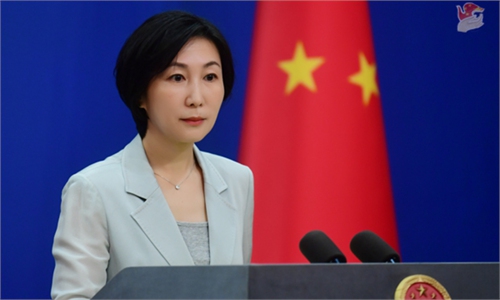
When asked to comment on Takaichi's remarks in Shenzhen that the Japanese government's position on China's Taiwan had not changed since 1972, Chinese Foreign Ministry spokesperson Guo Jiakun said at a regular press conference on Friday that honoring the four political documents between China and Japan is a political responsibility and legal obligation that the Japanese side must fulfill, and that this must be reflected not only in statements but also in actions.
Guo said Japan's immediate priority should be to promptly correct its erroneous words and deeds on the Taiwan question. What is important is to adopt a correct attitude toward historical issues, and what is fundamental is to truly develop an objective and rational perception of China, Guo added.
Lü Chao, an expert at the Liaoning Academy of Social Sciences, told the Global Times on Friday that plainly claiming to stick to diplomatic documents while refusing to correct erroneous remarks was an attempt to have it both ways. Takaichi was attempting to balance competing political pressures: responding to China's growing international influence and calls from Japan's business community and people advocating stable bilateral ties, while retaining support from right-wing political constituencies at home, he added.
The contradictory statements also appeared to reflect an effort to maintain ambiguity between Japan's diplomatic commitments and its practical security moves, raising concerns about Japan's evolving security policy, Lü added.
Recently, Japan has continued to strengthen its so-called "defense capabilities" and expand military buildup. Japanese Defense Minister Shinjiro Koizumi said on November 8 that the government will consider organizational reforms to break down traditional barriers among the Ground, Maritime and Air Self-Defense Forces to strengthen the military. The Japanese government plans to approve a revised version of the country's three key security documents in December.
For a country with a history of militarist aggression in Asia, any expansion of military capabilities beyond legitimate defense needs warrants close scrutiny, Lü said, warning that such a trajectory could undermine regional security and stability.
During the first-ever face-to-face meeting between the Chinese, Russian and US heads of state on Thursday, the Chinese leader said the three countries remember their history of fighting side by side during World War II and stressed the need to cherish the hard-won peace. Major countries should take seriously the legitimate security concerns of all nations, he said, Xinhua News Agency reported.
Lü said the groundbreaking meeting sent an important signal about the need to uphold the postwar international order, adding that Japan, as a defeated country in World War II, should reflect on its history and strictly abide by the international rules established after the war.
China-Japan relations remain strained over Takaichi's erroneous remarks concerning Taiwan, with tensions already affecting economic and trade ties, people-to-people exchanges and other areas. According to data released on Wednesday by the Japan National Tourism Organization, visitor arrivals from the Chinese mainland plunged 47 percent year-on-year to 379,500 in October, marking the 11th consecutive monthly decline.
Lü said that if Tokyo genuinely wants to improve relations with Beijing, it must first correct its erroneous Taiwan-related remarks and demonstrate through concrete actions that it respects the political foundation of bilateral relations. Without substantive corrective action, it will remain difficult for Tokyo's calls for dialogue and strategic reciprocity to translate into tangible improvements in bilateral relations, he added.
RELATED ARTICLES