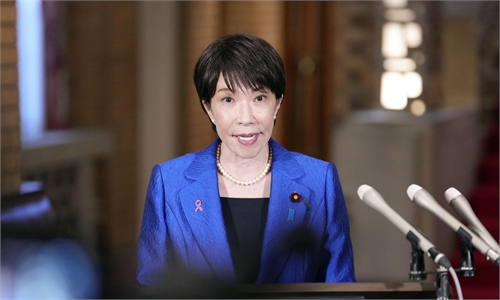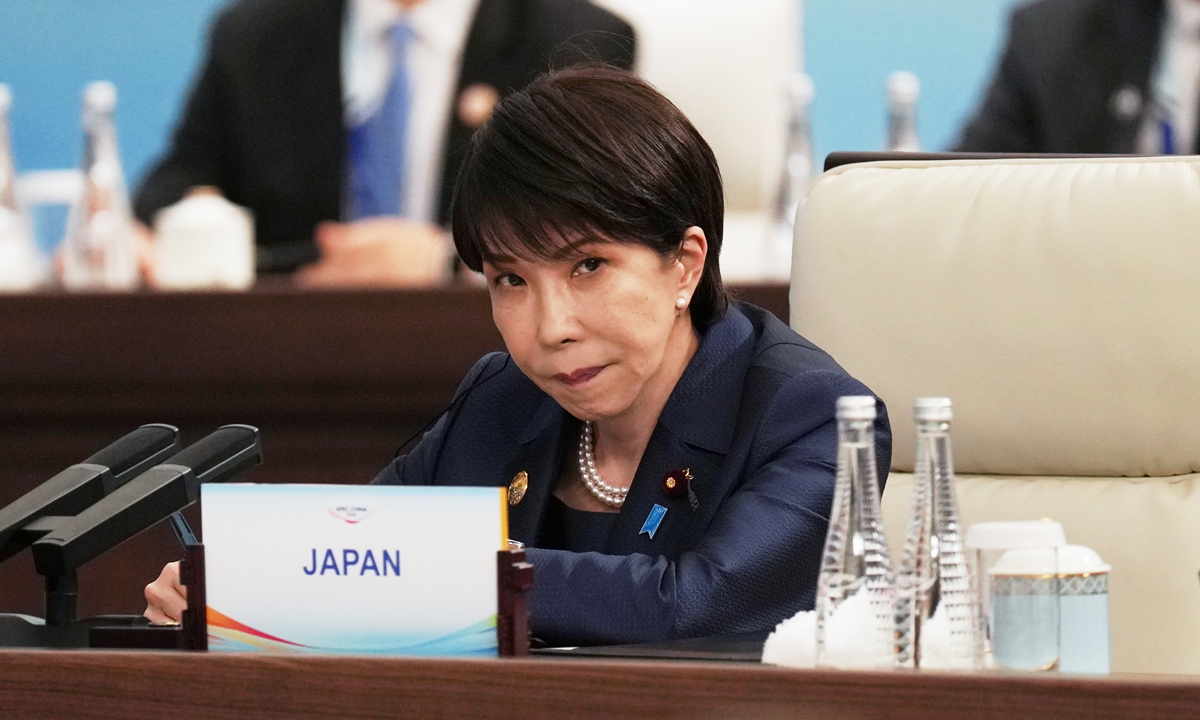
Japan's Prime Minister Sanae Takaichi attends the APEC Economic Leaders' Meeting on November 19, 2026, in Shenzhen, China. Phto: VCG
Was Sanae Takaichi "humiliated" by China in Shenzhen? This has been the most talked-about topic in Japan over the past two days, with many voices expressing "extreme indignation" - so much so that it seems as if they're about to spit right through the screen. Although the Japanese government has repeatedly clarified that the treatment was "in line with standard practice," some Japanese media outlets remain relentless in their criticism. This overly dramatic outburst actually raises the question: Had these Japanese media outlets already set their cameras rolling, hoping for Takaichi to be "humiliated"?Why did they do so? Some Japanese scholars said that hyping up Takaichi's treatment can provoke a reaction from conservative factions within Japan. Others argue that the viral footage from the meeting - such as the moment when Takaichi proactively approached US President Donald Trump after a group photo and lightly patted him on the back, only to receive no response - actually helps foster a tragic narrative among some Japanese with xenophobic sentiments, portraying Japan as being treated differently on the international stage.
Although many Japanese netizens have pointed out that Japan's official Boeing 777 300ER jet has a higher door to ground clearance than most aircraft, and that there was similarly a short gangplank gap during Takaichi's visit to the US, some Japanese media outlets have adopted this posture: Whatever the facts may be, "China is simply too bad."
Coincidentally, the Global Times recently revealed that some Japanese media outlets resorted to selective storytelling over an incident in Shanghai where two Japanese men got into a fight - resulting in one death and one detention. By reporting it as "one Japanese man died in Shanghai, and another was detained," they stoked a sensational narrative of Japanese nationals suffering "harm" in China, evoking associations with the "Lugou River Incident" in modern history. This shows that certain Japanese media outlets are habitual perpetrators of cognitive warfare.
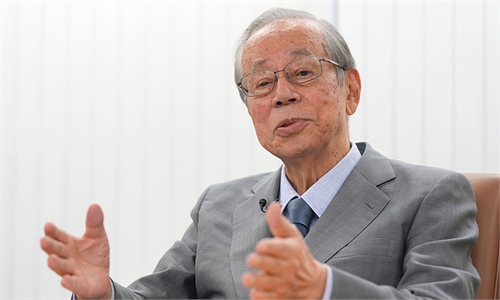
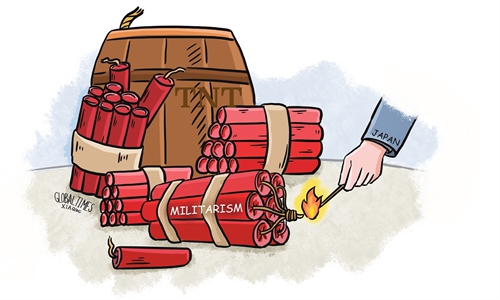
Numerous analyses and studies have pointed out that Japanese right-wing forces played an accomplice role in Japan's descent into militarism prior to World War II. Back then, they fabricated the lie that Japan was trapped in an "ABCD encirclement" formed by America, Britain, China, Dutch, and other nations, claiming that Japan was facing a "crisis of survival." They asserted that the Japanese people needed to make "extraordinary efforts" to "survive and defend themselves." This is strikingly similar to the narrative today that Japan is being "snubbed" and "harassed" by the international community. At that time, these Japanese right-wing forces stoked war fever by exploiting the anxiety and anger within Japanese society. What are the Japanese media trying to do today?
After World War II, Matsutaro Shoriki, owner of the Yomiuri Shimbun, was placed on the list of war criminals, while the president and senior executives of the Asahi Shimbun resigned en masse. Although the subsequent reckoning with these individuals was not thorough, they had pushed Japan to the brink of annihilation and were thus branded with eternal shame in history. Let us hope that certain Japanese media outlets will not tread this old path again.
RELATED ARTICLES