Illustration: Chen Xia/GT
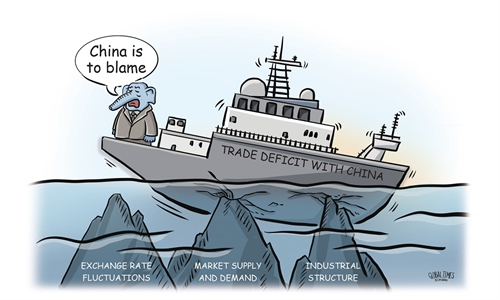
Chinese goods in the shopping carts of ordinary Europeans represent affordable supplies and reliable choices. Yet in Brussels' trade narrative, they are cast as footnotes of a trade deficit and warning signs of imbalance. Deficits can easily stir up emotions, but do the figures alone equate to real losses? Can a trade balance capture the full truth of China-EU economic and trade relations? Has Europe really gotten the short end of the stick in its trade with China?
Moving beyond "deficit anxiety" is key to gaining a fresh understanding of China-EU economic and trade relations. Assessing these ties solely on the basis of the trade deficit overlooks the complexity of bilateral economic links. China-EU economic and trade cooperation has long gone beyond simple buying and selling, forming a community of shared interests in which each side's economy is deeply intertwined with the other's.
Beyond trade in goods, alongside China's high-standard opening-up, China-EU trade in services is growing rapidly and becoming an increasingly important component of bilateral cooperation. According to Chinese statistics, China's services trade deficit with the EU reached $48.3 billion in 2025, making the EU China's largest source of services trade deficit, accounting for 41.6 percent of the total. Tens of billions of dollars in intellectual property royalties and other service revenues flow back to Europe each year. These tangible examples of mutually beneficial cooperation have been intentionally or unintentionally obscured by the EU's narrative of a daily 1-billion-euro deficit with China.
Looking beyond the figures on the books requires understanding how the benefits are distributed and returning to the essence of trade. Contrary to the picture portrayed by the European side - that China's electric vehicle industry has tucked Europe's traditional auto sector away into a corner - German automaker Volkswagen saw its new energy vehicle deliveries in China rise to 4.5 times their year-earlier level in October, reaching a record 28,000 units. This is a prime example of European automakers actively integrating into Chinese industrial and supply chains and achieving market success.
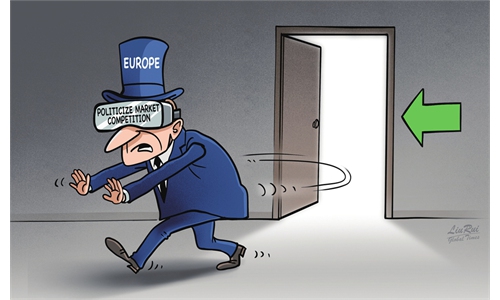
Even as the European Commission continues to push "de-risking" measures targeting China, European companies are voting with their feet. Today, there is widespread worry among European businesses that excessive market intervention by Brussels will drive up operating costs and further weaken Europe's industrial competitiveness.
The European side should face up to its own shortcomings rather than blame external factors for its domestic limitations. A growing number of insightful voices in Europe have publicly stated that the "root cause" of Europe's trade imbalance lies within, not beyond its borders, and that blaming China amounts to "treating an internal ailment with external remedies" rather than addressing the problem at its source. Currently, Europe is vigorously advancing its green transition in the hope of boosting its competitiveness, yet at the same time worries about becoming "overly dependent " on Chinese green products - a deeply conflicted mindset.
In reality, the China-EU trade gap in the green sector is not the result of unfair competition, but rather a "transition lag" arising from differences in the pace of carbon neutrality efforts and industrial production timelines. The EU's legislative commitment to achieving climate neutrality by 2050 has triggered a sharp short-term surge in demand for green products, while the long construction timelines for capital-intensive production facilities mean that domestic capacity cannot quickly bridge the gap. China's steady supply of cost-effective photovoltaic modules and energy storage equipment has lowered production costs for local European firms, helped stabilize market demand, enabled consumers to save money and strongly supported the EU's energy transition. Blaming others for a temporary supply-demand gap caused by one's own shortcomings not only disregards objective market principles, but also undermines the shared value of China and the EU jointly tackling climate change.
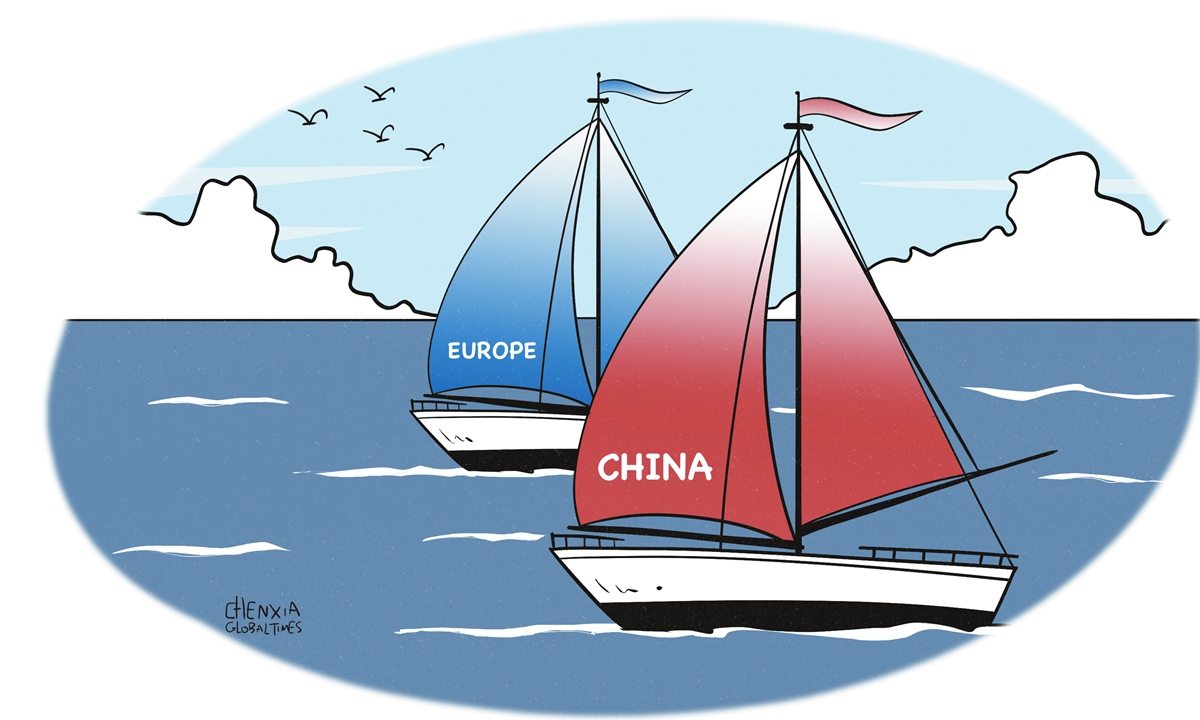
Embracing win-win cooperation and working toward a more balanced relationship through dialogue and communication is the way forward. From an economic perspective, a trade deficit does not equate to an economic loss. If one remains fixated on ledger figures, they will fail to properly understand the trade deficit and view it solely as a threat; left unchecked, the deficit narrative risks turning a ledger deficit into a cooperation deficit. Only by looking beyond the deficit and pursuing cooperation can China and the EU achieve greater mutual benefit.
The European side should cherish the 16-point consensus outcomes reached at the second meeting of the China-EU trade and investment consultation mechanism - including those on hybrid vehicle trade - and work with China, in the spirit of mutual respect, equality, and mutual benefit, to take into account each other's core concerns, cultivate new growth drivers for cooperation, and move China-EU economic and trade relations forward toward a more balanced and mutually beneficial relationship.
The author is an international affairs observer. opinion@globaltimes.com.cn
RELATED ARTICLES